
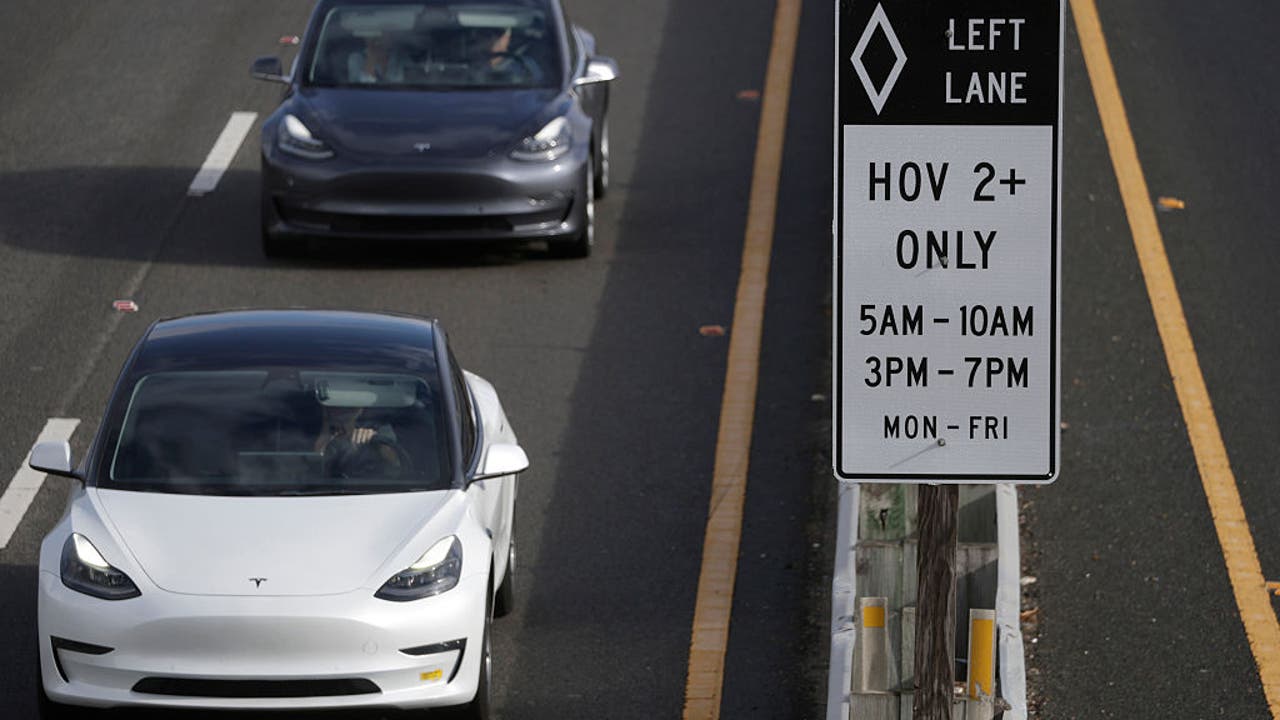
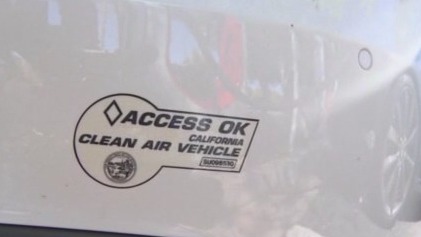
LOS ANGELES – The grace period for California’s popular Clean Air Vehicle Decal program, which allowed eligible clean-air vehicles access to carpool lanes, is officially over.
What we know:
Starting Monday, Dec. 1, solo EV drivers using carpool (HOV) lanes will be subject to citations and fines of up to $500.
The tax credit program, called the New Clean Vehicle Credit, officially expired on Sept. 30, no longer providing a tax credit of up to $7,500 to those who purchase new EVs and up to $4,000 to the buyers of used electric or plug-in cars.
PREVIOUS COVERAGE: California’s popular EV carpool lane decal program is ending: What to know
Although drivers were mandated to obey standard HOV rules (two or more occupants) since Oct. 1, the California Highway Patrol (CHP) had only been issuing warnings up until the grace period ended on Monday.
Local perspective:
The popular perk, which lasted 25 years, allowed electric vehicle drivers with a required decal on their car access to the carpool lane, even with only one person in the car. President Donald Trump’s administration decided against extending the program.
The final day to order a decal was August 29, according to the California Air Resources Board (CARB).
Over the life of the program, CARB says, more than 1.2 million decals were issued.
PREVIOUS COVERAGE: California EV drivers are about to lose a major perk after 25 years
The agency says that over the program’s quarter-century span, clean-air vehicles became more common, reducing “the environmental benefit of giving them solo access to the carpool lane.”
The backstory:
California was the first state in the country to implement an HOV decal initiative for clean vehicles.
The early version of California’s decal program dates back to Assembly Bill 71 which went into effect on July 1, 2000.
Under that law, certain approved vehicles that met “very stringent exhaust and evaporative emission standards” qualified for an HOV sticker.
The legislation evolved to extend and advance the efforts aimed at encouraging residents to purchase and lease clean vehicles by providing the preferential use of HOV lanes. Color-coded decals have been used to determine when a sticker was issued and when it expires.
What they’re saying:
CARB Chair Liane Randolph said the program has played a critical role in the push for more clean and zero-emission vehicles on California roads.
“But thanks to the federal government’s failure to act, this successful program is coming to an end. Despite the Trump administration’s ongoing efforts to undermine progress, California remains committed to moving forward with the global market toward a zero-emission future,” Randolph said in a statement to KTVU.
The Source: The information in this report comes directly from official state and federal sources, including the California Air Resources Board (CARB), which provided details on the decal program’s history, expiration timeline, and total decals issued. Enforcement information, including the ending of the warning period and the fine amount, is based on the rules established by the California Highway Patrol (CHP). Direct quotes and policy context regarding the program’s termination and the federal tax credit are attributed to CARB Chair Liane Randolph and reporting by KTVU and FOX Business.
Cars and TrucksTravel NewsTransportationTrafficCaliforniaEnvironmentTravel