
The CSU system announced Nov. 13 that it would implement a systemwide Native American Graves Protection and Repatriation Act policy.
Developed in collaboration with California Native Nations, the California Native American Heritage Commission and tribal leaders from throughout the state, the policy will comply with existing federal and state acts, which protect tribal rights and require campuses to return taken ancestors and cultural artifacts.
According to the CSU’s press statement, the CSU Chancellor’s Office has provided direct support through its establishment of the Office of Tribal Relations and allocation of $3.7 million to campuses for two consecutive years, which support necessary compliance training, staffing, consultation and infrastructure.
In addition to returning ancestors and cultural items, campuses are prohibited from using them to teach, research or display. Other features in the policy include the establishment of systemwide and campus-level committees, with the majority nominated from California Native Tribes, establishing bimonthly campus reports to the Chancellor’s Office, annual reporting to the California Legislature and consulting on reburial options, including appropriate potential use of CSU-owned land.
The systemwide policy will replace the previous campus policy that was in place at Cal State Fullerton, but CSUF’s CalNAGPRA Repatriation Coordinator Megan Lonski said there were mostly minor changes from the campus policy to the systemwide policy.
“There were minor tweaks that we needed to do, things like adding an anonymous reporting button on our website,” Lonski said. “It gave us guidelines and outlines for how our campus committee needed to be structured, meeting frequencies, things like that.”
According to Samantha Cypret, the executive director of the Office of Tribal Relations for the Chancellor’s Office, tribal leaders pushed for a more unifying policy “so that each tribe wasn’t having to learn potentially how 22 different campuses go through the NAGPRA process.”
Work began on the systemwide policy after the 2022 California State Audit gave recommendations to the CSU. Those were then put into legislation under Assembly Bill 389, which was introduced in 2023 by Assembly Member James Ramos.
Recommendations to require campuses with over 100 remains or cultural items to have full-time and experienced repatriation coordinators fully implemented. CSUF reportedly has around 8,300 Native American cultural artifacts and over 200 remains in its possession, according to the most recent statistic from a statewide audit from June 2023.
The policy will require some items being held in exhibitions to be removed in order to comply with the “duty of care,” though CalNAGPRA at CSUF has no influence on exhibits at Pollak Library.
Lined out in the systemwide policy, the “duty of care” requires prior and informed consent from tribes or descendants to conduct exhibition, research, handling or anything related to cultural materials.
AB 389 established the Native American Heritage Commission and deemed genealogical and cultural affiliation records of tribal members as exempt to the California Public Records Act if “received during a consultation by the commission relating to the inclusion or removal of a Native American tribe, person, or entity on the tribal contact list maintained by the commission, among other records relating to the commission.”
The bill also requires county coroners to call the commission by phone within 24 hours if they discover human remains they believe to be those of a Native American.
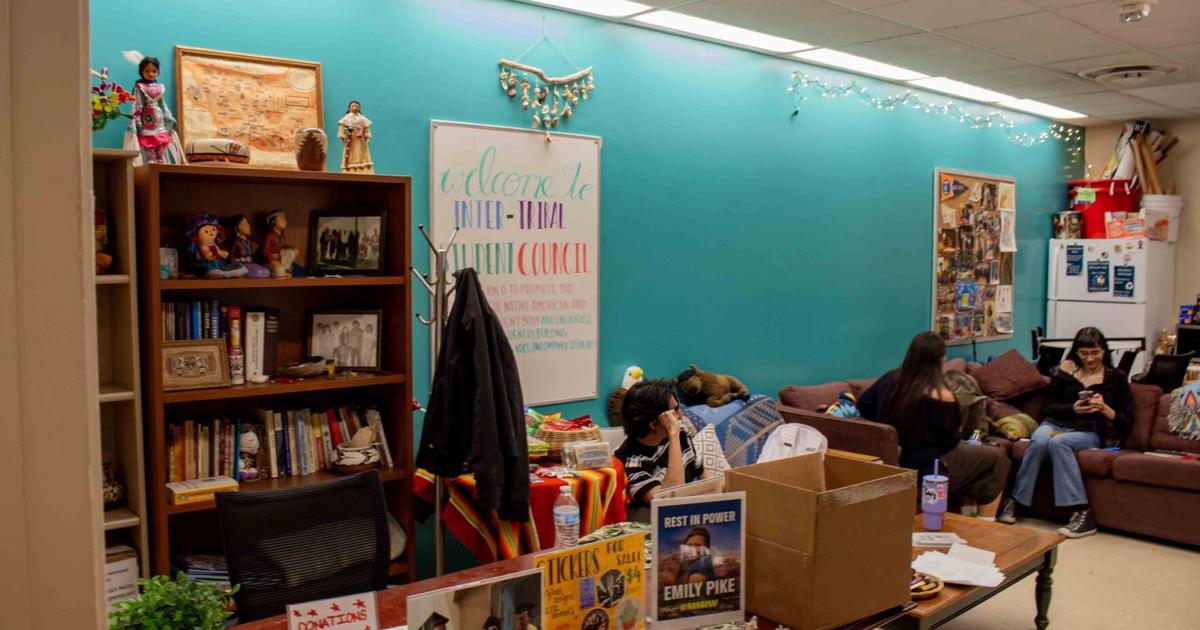
Cypret was hired by the Chancellor’s Office in December 2024 following recommendations to hire someone for direct project oversight. Her work involves collaboration and contact with student-led organizations, Native American studies programs and affinity groups like CSUF’s recently-established Native American Indigenous Resource Center, which was created separately from the NAGPRA policy.
“I am very excited to see that center open. I think it’s great for students to have a place where they can have community, even if they’re away from their traditional territory,” Cypret said. “Those centers are fantastic and serve such a valuable purpose.”
The policy is not expected to impact curriculum for Native American studies at CSUF, according to Cypret.
CSUF established a NAGPRA implementation committee in 2023 to give input and oversight for its repatriation. Currently the committee includes representatives for the Chicano and Chicana studies department, the anthropology department, the Gabrielino/Tongva Nation and the Morongo Band of Mission Indians. Committee spots for two more tribal representatives and a representative for Native American studies are currently vacant.
“We are doing as much outreach as we can, talking to as many people as we can, but those positions, the standard for serving is quite high,” Lonski said.