
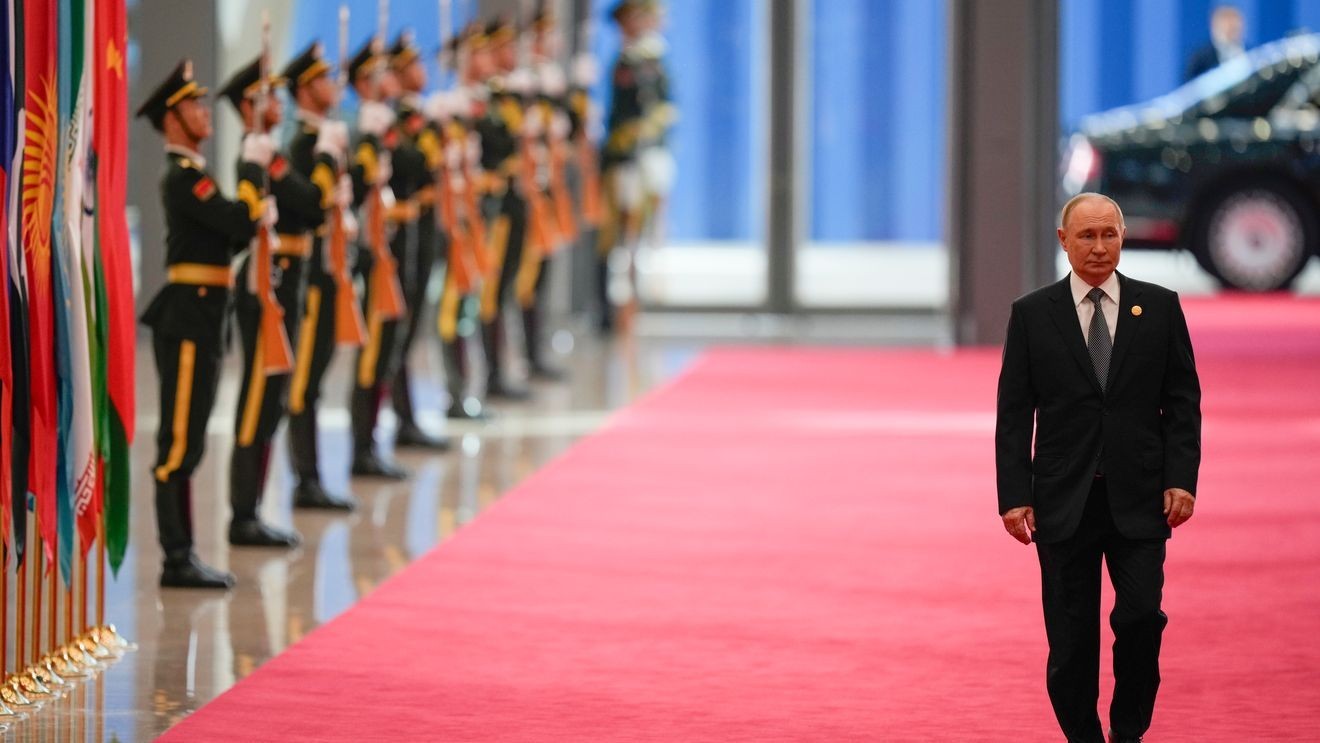
WASHINGTON (TNND) — As President Trump’s advisers continue their push to sell Russian President Vladimir Putin on a path toward ending the war in Ukraine, many in Washington and across Europe are still fixated on the first version of the peace plan, the leaked draft that drew immediate outrage from Kyiv and sharp criticism from Western officials.
The document was never a finished deal, according to Secretary of State Marco Rubio; it’s a “living, breathing” framework, one that would evolve. (TNND)
The document was never a finished deal, according to Secretary of State Marco Rubio; it’s a “living, breathing” framework, one that would evolve. But the headline elements of the original draft give a clear sense of the direction negotiators were heading.
What the Leaked Plan Actually Proposed
According to CSIS’s analysis of the draft agreement, the biggest provisions included:
Territorial concessions: Ukraine would be required to accept Russia’s control of Crimea, Luhansk, and all of Donetsk, while freezing the current front lines in the south. Military limits & NATO ban: Ukraine’s armed forces would be capped at 600,000 troops, and Kyiv would have to enshrine in its constitution that it will never join NATO. U.S. “reliable” security guarantees: The U.S. offered commitments to defend Ukraine, but the draft says those guarantees could be canceled if Ukraine is accused of “attacking” Russia. Analysts flagged this language as vague and potentially unenforceable.Elections and wartime amnesty: Ukraine would have to hold national elections within 100 days, and both sides would receive full amnesty for wartime actions.
One of the most controversial pieces of the draft wasn’t about territory or NATO; it was about money.
The Financial Provision Raising Eyebrows
Buried in Provision 14 of the draft plan is a U.S.-led reconstruction arrangement involving frozen Russian assets. CSIS notes the draft states:
“$100 billion in frozen Russian assets will be invested in US-led efforts to rebuild and invest in Ukraine; the US will receive 50% of the profits from this venture.”
Among those implicated is President Volodymyr Zelenskyy’s former business partner, and most explosively, Zelenskyy’s chief of staff, who is widely considered the second most powerful figure in the country. (TNND)
The rest of the frozen funds would reportedly flow into a joint U.S.–Russia investment vehicle. According to CSIS researchers, the terms are so favorable to Washington, and so politically toxic for Moscow and parts of Europe, that the financial structure alone proposes “a non-starter.”
A New Complication: A Major Corruption Scandal in Kyiv
All of this comes as Ukraine is grappling with one of the most high-profile corruption scandals since the war began. According to reporting from ABC News, Ukrainian investigators have charged or named a roster of senior officials, including a former deputy prime minister, in an alleged $100 million embezzlement scheme tied to the country’s energy sector.
Among those implicated is President Volodymyr Zelenskyy’s former business partner, and most explosively, Zelenskyy’s chief of staff, who is widely considered the second most powerful figure in the country. He resigned after the allegations became public and Zelenskyy released a statement in response to the corruption scandal, saying in part:
Internal strength is the foundation of our external unity and of our relations with the world.
Kyiv has long battled perceptions of corruption, especially as billions of U.S. dollars in military and humanitarian aid have flowed into the country since 2022. With Ukraine preparing to re-enter negotiations, the timing is far from ideal.
Could the Scandal Undercut Ukraine at the Table?
That’s the open question. Ukraine’s government argues it’s handling the scandal transparently. But Zelenskyy himself acknowledged the political risk, warning that Russia is eager to exploit every Ukrainian misstep.
The Kremlin now has fresh ammunition to argue Ukraine is too corrupt to manage Western aid or implement the terms of a peace agreement. And according to analysts, that could weaken Kyiv’s leverage, especially in talks already fraught with territorial concessions and security demands.