
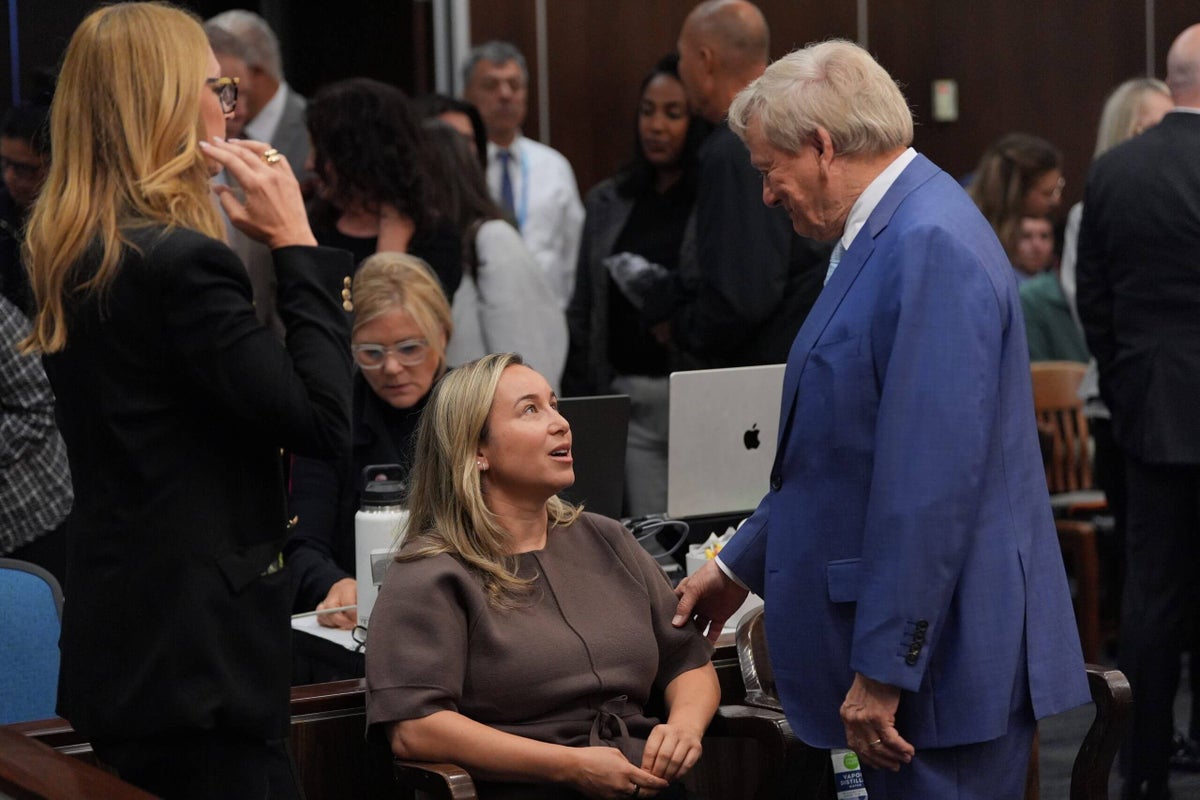
SANTA ANA, Calif. — In emotional testimony, the widow of former Angels pitcher Tyler Skaggs said through tears that she’s unhappy her husband, and other players, felt the need to trade pills among each other, or to acquire them under the table.
“I feel sad that this is what they felt like they needed to do,” said Carli Skaggs. “But they trusted each other to get clean pills.”
Carli’s comment came after Angels attorney Stephen Ladsous asked if she was OK with her husband getting illegal pain pills, after showing her a text message in which Tyler asked a teammate, former pitcher Matt Shoemaker, for one.
Carli was testifying for a second time in this trial — this time as part of the Angels’ defense, which officially began on Monday. Carli, along with Tyler’s mother Debbie Hetman and father Darrell Skaggs, is one of the plaintiffs in the wrongful death civil suit brought by Tyler’s family against the Angels.
Tyler died on July 1, 2019, after ingesting a fentanyl-laced pill provided by Angels ex-communications director Eric Kay. Kay is serving a 22-year federal prison sentence.
The Angels are trying to establish Tyler’s fault in his own death, and to show that he was a drug user whose use was known to the plaintiffs.
“Tyler was the ringleader,” Angels attorney Todd Theodora told the judge, outside the presence of the jury. “Tyler has his fingerprints over everything. Their claim is that Tyler is as pure as the driven snow.”
That comment came before testimony started on Monday, as Angels lawyers tried to argue that certain contents of Tyler’s cell phone should be allowed into evidence.
The Angels wanted to include evidence of Skaggs’ drug use prior to 2013. That was when Tyler had an admitted Percocet addiction, but told his family he quit the drug “cold turkey” in September of that year. The Angels’ aim, according to Ladsous, was to argue that the phone’s contents showed a pattern of Tyler’s drug use, and that he was using drugs recreationally, not just to deal with pain.
However, the judge didn’t allow much of that evidence, since she said the Angels haven’t proven that Tyler’s drug use was continuous after the 2013 Percocet addiction and recovery, and that as a result, showing evidence from drug use nearly 15 years ago wouldn’t be relevant.
Ladsous’ questions to Carli largely centered around her awareness of her husband’s drug use. She reiterated much of her testimony from her first time taking the stand — stating that she didn’t believe that Tyler had a problem when they were together. Tyler was “a healthy, hard-working, wonderful man,” she said, and she wasn’t concerned about his past Percocet use.
Ladsous showed Carli many text messages between the two, including one exchange from July 2015, when Tyler texted his wife, saying, “I’m a drug addict.” Further text messages showed that the message referred only to marijuana use.
In another message shown to Carli, there’s an exchange between Tyler and another former teammate, ex-Angels pitcher Shoemaker. In that text, Skaggs asks Shoemaker, “Waddup shoe anyway I can get one of those pain pills from you so I can take it during the game haha,” to which Shoemaker said “No problem man”.
It was then that Carli got emotional, saying it’s sad to know that players had to exchange pills to help get them through the season — but that they were using clean medication, not going to the online marketplace OfferUp, a reference to evidence about how Kay acquired pills for players. The Athletic reached out to Shoemaker for comment and will update this story if he responds.
At the end of the day, Ladsous showed Carli more messages about drug use. The Angels lawyer asked about Carli being prescribed Codeine, an opiate, and whether she had ever given any to Tyler. She said she had not, and Ladsous showed July 2014 text messages in which Carli said she was waiting on her Codeine prescription, and was excited because it would give her immediate relief. Tyler responds “haha nice. Can’t wait.”
The judge began sustaining objections relating to marijuana use, as Skaggs family attorney Shawn Holley objected on the basis of relevance. The two had sent various text messages about purchasing “tree”, referring to marijuana.
Carli will resume testifying later in the Angels’ case.
Skaggs family physician Dr. Manali Shendrikar was the only other witness on Tuesday. The Angels called her to go over her patient notes from Tyler’s visits in September 2013. He saw Shendrikar to help get treatment for his Percocet addiction.
She testified that she prescribed Suboxone to Tyler, an opiate that is designed to treat opiate addiction. She also noted that Tyler ultimately decided to quit Percocet cold turkey. Her patient notes state that he initially became dependent on Percocet while trying to treat an arm injury. She also testified that dependence can happen on any drug, even Tylenol.
On cross-examination by Skaggs attorney Rusty Hardin, Shendrikar said she enjoyed her interactions with Tyler, and noted that it’s rare for a 22-year-old to proactively deal with an addiction in the way he did in 2013.
After the jury was excused, the judge announced her decision on a critical motion to allow deposition testimony from a Southlake, Texas, police detective. Delaney Green’s deposition video is only about three minutes long, but, according to court testimony, she discusses a meeting she had with Kay before he was ever criminally charged.
During that meeting, according to arguments made before the judge, Kay disclosed that then-Angels vice president for communications Tim Mead was aware of Kay’s drug dynamic with Skaggs. Mead denied such knowledge during his own testimony earlier in this trial.
The Angels had hoped to prevent the deposition, with Theodora calling it “blockbuster” following the judge’s ruling. The team argued that it was a privileged proffer agreement meeting, but the judge disagreed.