
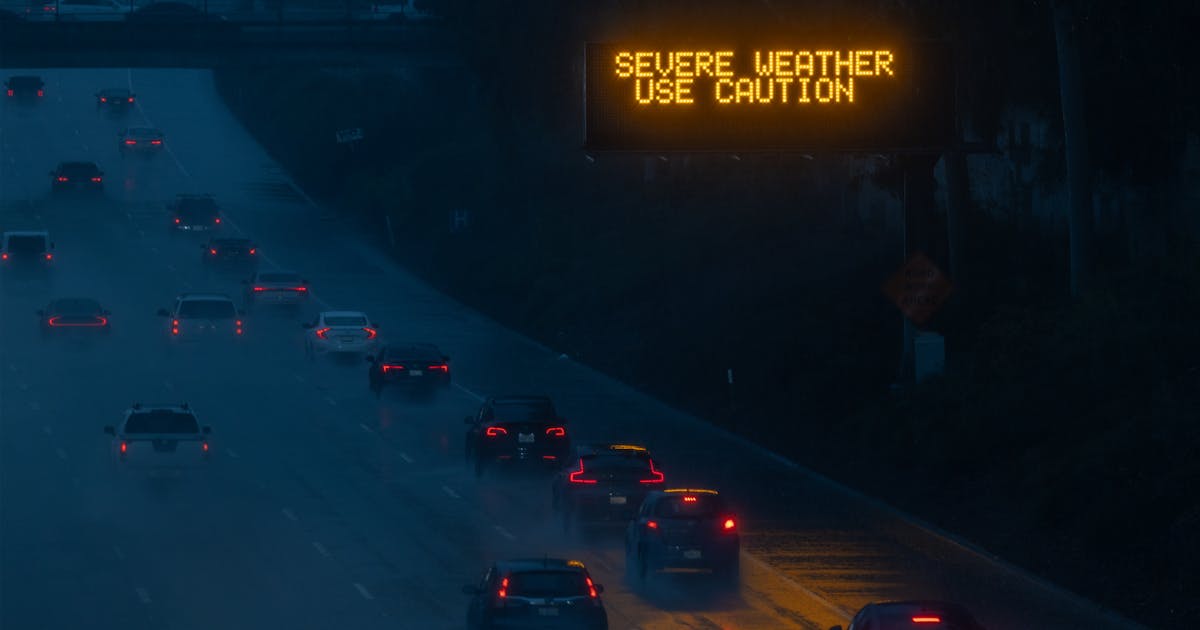
L.A. has spent over a century advertising its perfect Mediterranean climate. Now increasingly frequent severe weather events are triggering citywide soul-searching about who deserves protection, what neighborhoods get resources, which elected officials are to blame, and whether the promise of this place still holds. Some parts of L.A. County picked up close to a foot of rain in 10 days in February 2023, leaving more than 80,000 Los Angeles Department of Water and Power customers without power, while unhoused residents faced flooded encampments, freezing nights, and packed shelters. Almost exactly a year later, emergency crews pulled a pregnant, unhoused woman from a storm drain above a raging river. The January 2025 fires in the Palisades and Altadena further exposed the gap between the city we imagine and the one we actually live in. What happens when a city built on the mythology of sublime weather has to finally face how to live with a climate that refuses to stay in line?
The Los Angeles myth goes back more than a century: Between the 1880s and the 1920s, the Los Angeles Chamber of Commerce mailed millions of pamphlets eastward, selling Midwestern families on a kingdom of eternal spring. Sunkist built a national brand on winter oranges ripening while Chicago froze. Railroads sponsored booster fiction and postcards promising a life where weather was not an obstacle but an asset. In the dead of winter, “[you could] have a small, five-acre citrus farm and do really well and then hop on the streetcar and go to the beach for the day,” said professor Char Miller, a historian and environmental analysis scholar at Pomona College.
Miller has spent decades tracing how this mythology ossified. While the pitch obscured who paid the price—Indigenous communities pushed off their land, Chinese and Japanese residents marginalized or excluded—the promise endured in part because the landscape helped carry it. But for all the valleys, deserts, and coastlines, there were also floods, fires, earthquakes, and landslides: hazards only mentioned in the fine print.