
After a brutal few years where the city’s tourism and hospitality market was as good as dead, outside investors are once again paying attention to San Francisco.
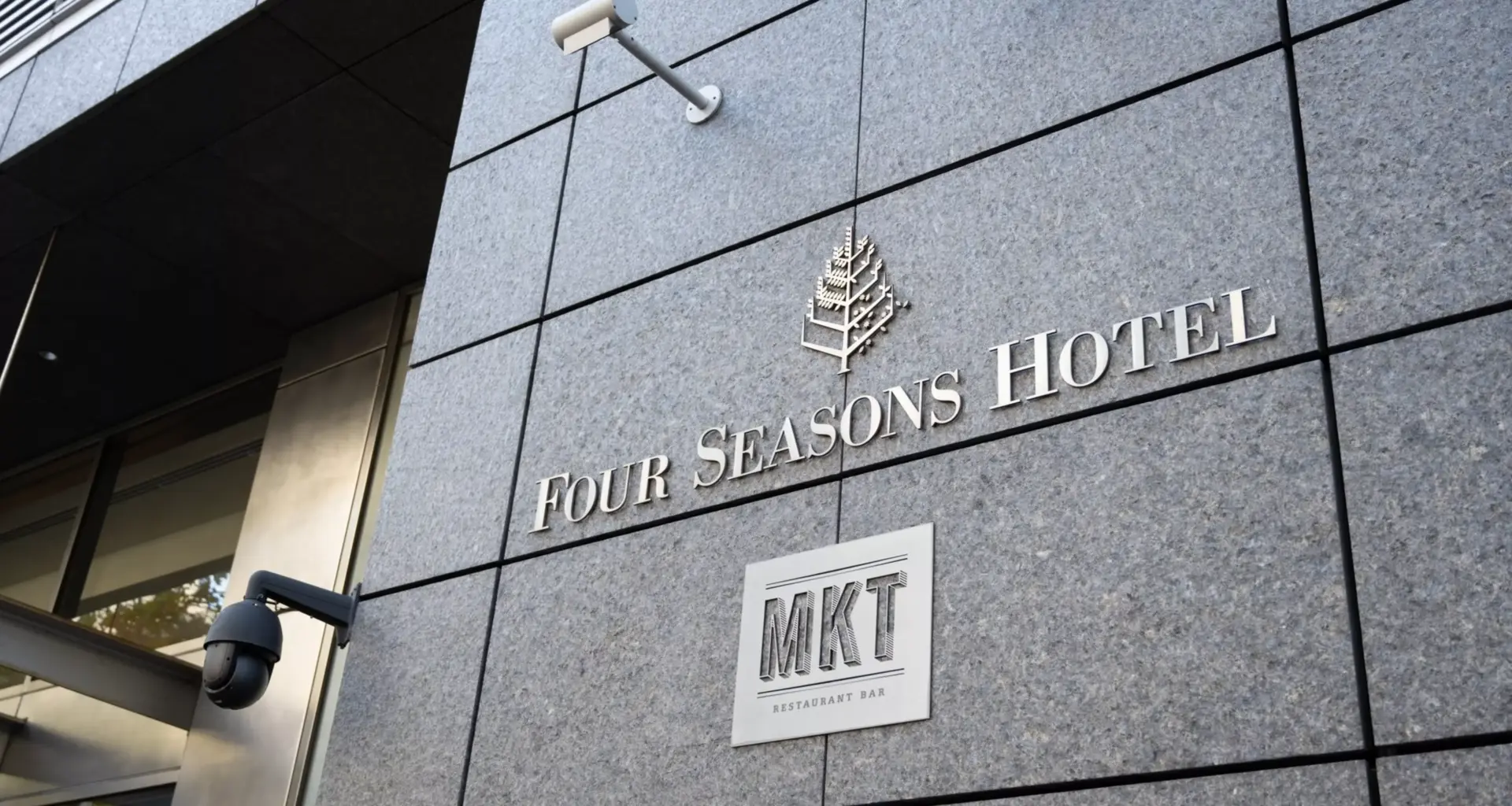
In the third massive hotel sale since September, Blackstone just announced that it acquired the Four Seasons on Market Street. The transaction, which closed last week, follows the turnover of Parc 55 and Hilton Union Square in November, and the former Hotel Union Square in September.
It’s the latest sign that investors are banking on downtown’s recovery — and on tourism and conventions specifically.
“People are seeing the city of San Francisco turning around,” said Alan Reay, president of real estate firm Atlas Hospitality. “It’s a huge endorsement of what they see long term for the city and for the luxury sector.”
Blackstone CEO Jon Gray said as much in a sweaty video (opens in new tab) posted to his LinkedIn last month, in which he praised Mayor Daniel Lurie and the city, which he unfortunately called “San Fran.”
“My enthusiasm here is about as high as it can get,” Gray said, apparently during a pre-dawn run in which he attributed the city’s comeback to Lurie’s leadership and AI.
“Tourism is gonna come back,” Gray continued. “Very simply: buy some real estate here.”
Weeks later, he took his own advice. Blackstone has not announced the price it paid for the Market Street hotel, but the Wall Street Journal reported (opens in new tab) the firm was set to pay $130 million, a slight premium over its $127 million sale in 2019. Even that modest increase over the hotel’s pre-pandemic value would make the firm’s purchase a far cry from the sale of Parc 55 and Hilton Union Square, which traded at a 75% discount.
“That says a lot about what Blackstone and investors are seeing as the long term prospects for the city of San Francisco,” Reay said.
Park Hotels, a Virginia-based real estate investment trust, bought the Hilton in 2000 and Parc 55 in 2015. A year later, the trust took out a $725 million loan for renovations. But in 2023, the owner defaulted on the debt, letting the hotels lapse into foreclosure amid a post-pandemic upswing in remote work and decline in tourism.
The new owners, Newbond Holdings and Conversant Capital, said they want to invest $200 million into upgrading the hotels.
The increase in hotel sales accompanies a jump in convention space reservations and a decline in office space vacancy, both driven in part by the artificial intelligence boom.
In a mid-year report (opens in new tab), Atlas found that hotel sales in San Francisco were up 150%, with dollar volume increasing by 332%. And that was even before this fall’s acquisition frenzy.
The volume of visitors to S.F. has risen each year since 2020, although growth tapered off last year with only a modest increase in tourism from 2023. Approximately 2.3 million tourists (opens in new tab) visited the city in 2024, and slightly more are projected to visit in 2025.
The sale follows close on the heels of another downtown acquisition: the historic Odd Fellows temple, which sold for the first time in its 145-year history.