
 Photo courtesy Miles Daniels/NOAA Fisheries/UCSC
Thousands of fall run Chinook salmon pushed beneath the Golden Gate Bridge and into the Sacramento River system this fall, and a small group of them carried tiny tracking tags that allowed scientists to follow their journey in real time.
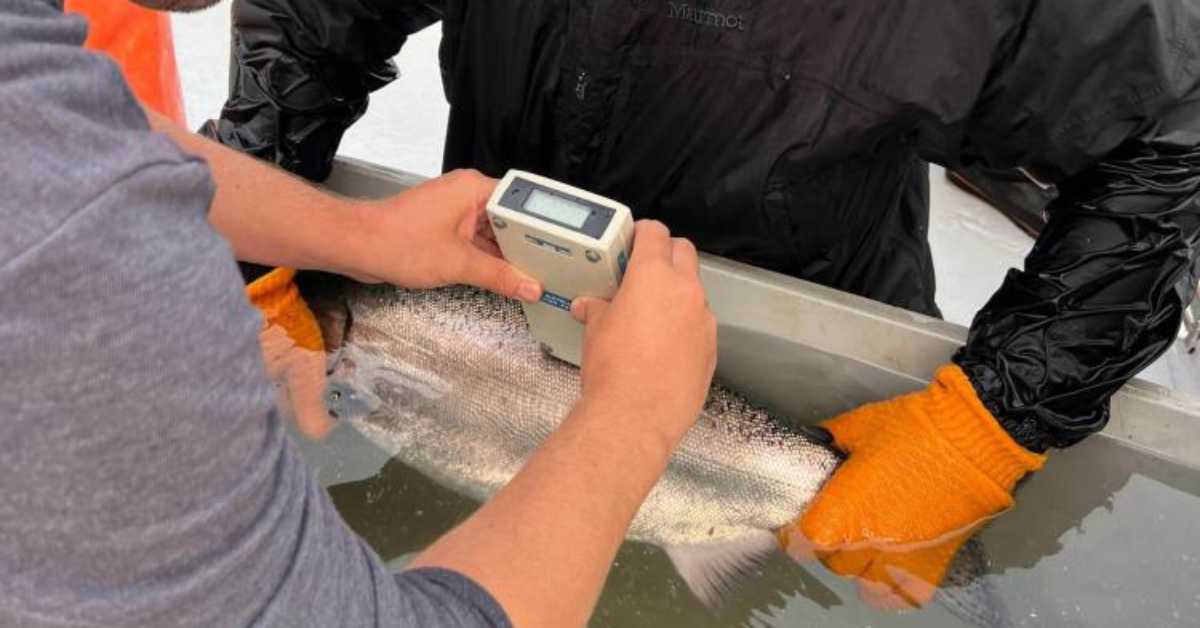
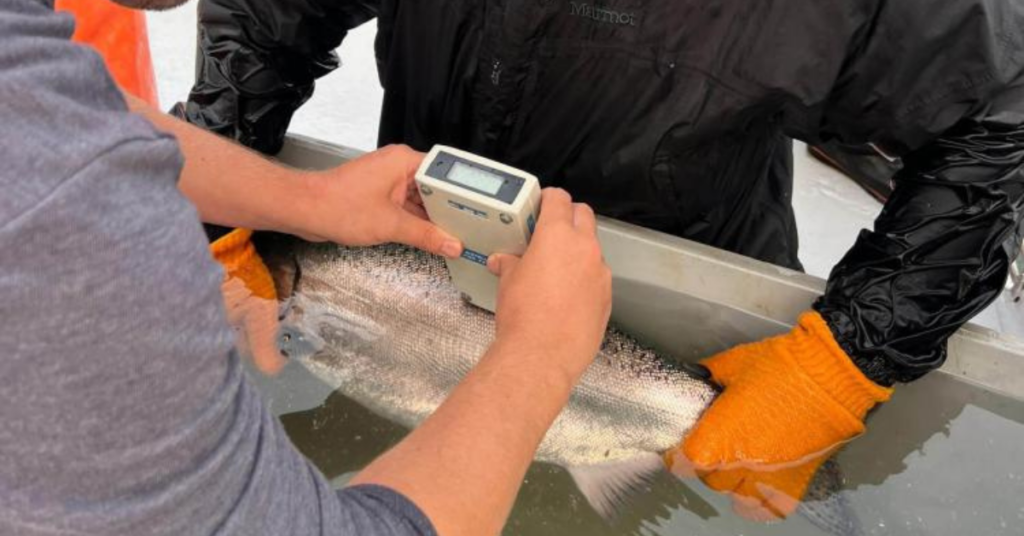
The project, led by NOAA Fisheries and UC Santa Cruz, tagged about 100 adult salmon to better understand how the fish navigate the Sacramento San Joaquin Delta and how many ultimately reach their spawning grounds more than 200 miles upriver. The tags pinged monitoring stations as the salmon moved, giving researchers a clearer picture of migration timing, survival, and the challenges the fish face.
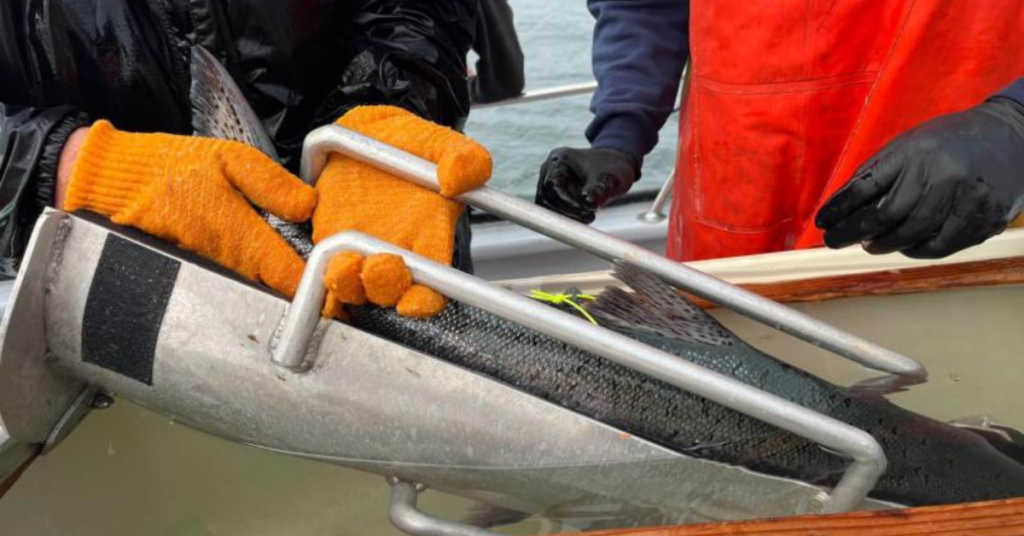 Photo courtesy Miles Daniels/NOAA Fisheries/UCSC
“Are the salmon burning too much energy, and what factors affect this?” asked project lead Miles Daniels of NOAA Fisheries. Since adult salmon stop eating once they begin their upriver migration, warm water or delays can drain the energy they need to spawn successfully.
The research is funded by California’s State Water Board, which wants to better understand how water temperatures affect salmon while still supplying irrigation water to Central Valley farms. Salmon returns have been so low in recent years that California has closed most recreational fishing and all commercial fishing for three straight seasons.
To tag the fish, NOAA partnered with Sausalito charter captain Johnny Atkinson, whose anglers were given a rare chance to catch salmon for science while the fishery remains closed. The research team recently switched to faster, less stressful external tags that allow the fish to be released within minutes.
 Screenshot from CalFishTrack
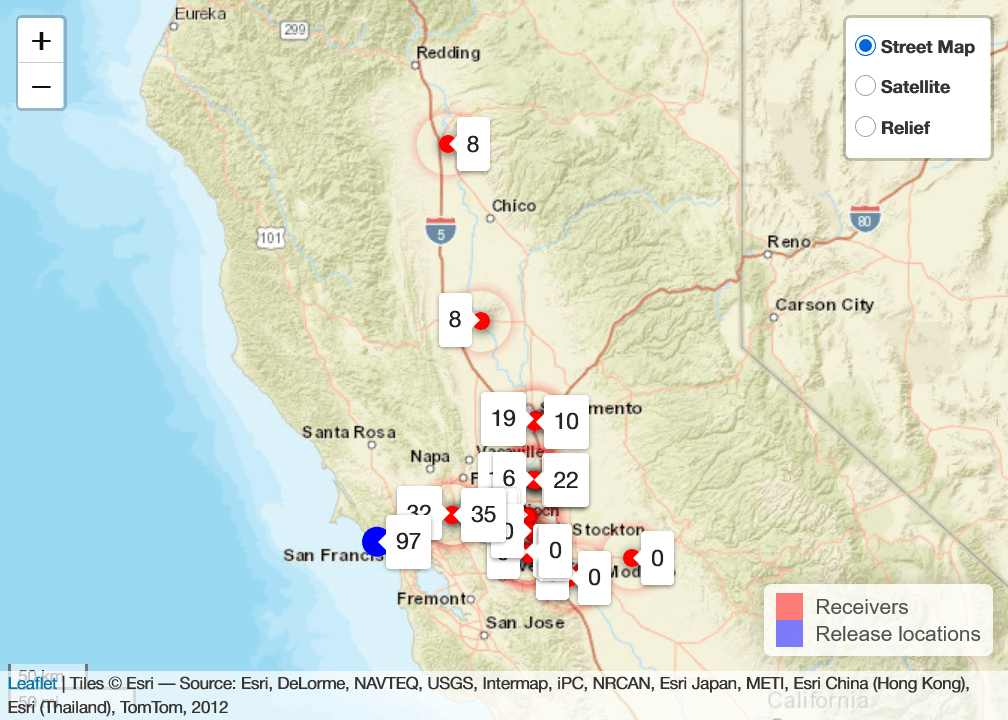
So far, more than 50 tagged salmon have been detected moving through the Delta, one of the most challenging corridors due to warm water, predators, and powerful water export pumps. A few fish have already reached spawning grounds in the upper regions Sacramento River near Red Bluff.
Scientists say early data suggests salmon with higher fat reserves may survive the journey more successfully. With thiamine deficiency also impacting California salmon, researchers hope the project will highlight where conditions can be improved.
“Nothing brings people out more than salmon,” Atkinson said. “If we can help give these fish a better chance to survive, everyone wins.”