
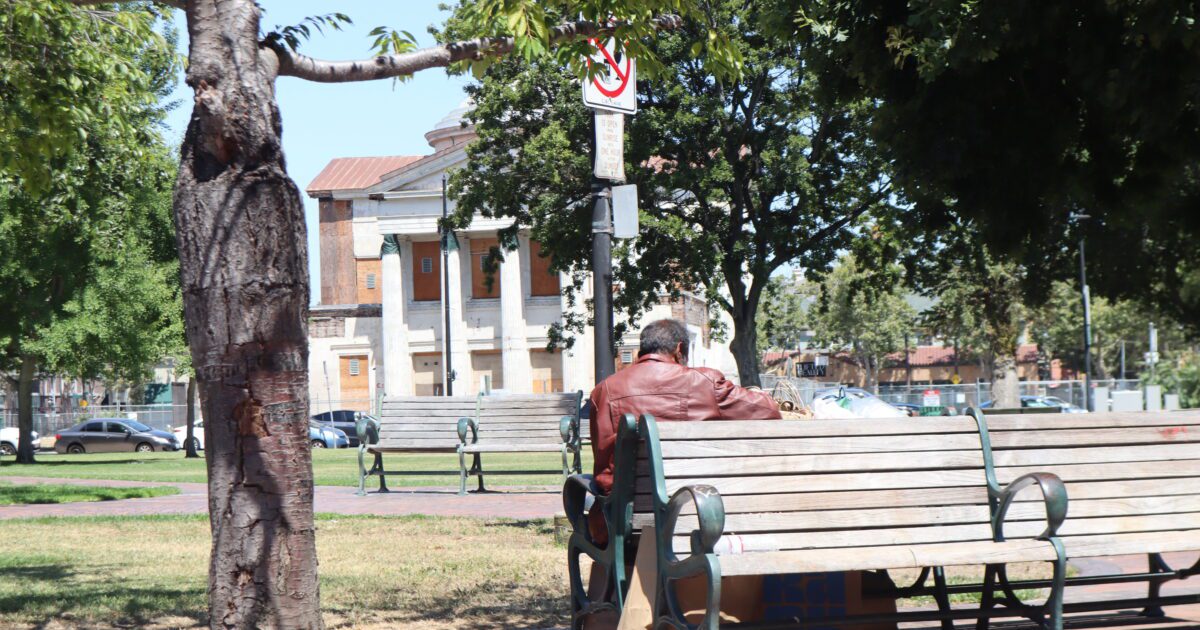
San Jose officials have amended the city’s historic preservation policy in order to advance a long-delayed project that would bring millions of dollars of new amenities, including a music pavilion, to St. James Park.
The measure — which does not specifically name the park project — sparked widespread pushback from local preservationists who warn it will undermine historic preservation protections. Nevertheless, the City Council on Tuesday approved the change in a 9-2 vote. Councilmembers Rosemary Kamei and George Casey cast the two no votes. Kamei echoed preservationists’ concerns that the amendment grants councilmembers too much latitude to circumvent San Jose’s rules limiting demolitions and major alterations for historic buildings.
The code change is a response to a 2024 ruling from the state Court of Appeals that found San Jose had stepped outside the bounds of its own historic preservation code in approving the St. James Park project. The amendment seeks to provide a technical fix by explicitly laying out the conditions under which the city may approve a construction project that harms historic resources.
Supporters expressed hope that Tuesday’s vote has cleared away one of the last remaining hurdles for the more-than-decade-old plan to bring an outdoor music venue to St. James Park. The 7.5-acre downtown park is registered as a national historic landmark, but for years has suffered from blight and underuse.
“We’re just so excited to get past this final step,” Suzanne St. John-Crane, director of strategy for Friends of Levitt Pavilion San Jose, told San José Spotlight.
 A rendering of the proposed outdoor music venue at St. James Park in downtown San Jose. Image courtesy of CMG Landscape Architecture.
In August, the local nonprofit joined with San Jose as well as the national Levitt Foundation in an operating agreement that obligates each party to raise millions of dollars for the planned concert venue.
Meanwhile, historic preservationists have been rallying against the amendment with a letter-writing campaign that flooded the inbox of the city clerk with dozens of messages before the council meeting. They warn it will have sweeping consequences for the city’s historic buildings beyond the Levitt Pavilion project.
“We’re putting things in jeopardy by reducing the protections of the historic ordinance and allowing this first one to happen,” Shawn Atkinson, executive director of the Sainte Claire Historic Preservation Foundation, said during the meeting. “Where are we going with this?”
The group, which represents a historic men’s club that owns a building next to St. James Park, is behind the 2020 lawsuit that led to last year’s appellate court ruling against San Jose. That finding overturned a 2022 ruling in the city’s favor. The lawsuit argued city leaders should have denied the project under its historic preservation policy.
Tuesday’s amendment seeks to address last year’s courtroom setback by creating a framework for approving construction projects that affect officially designated local landmarks. The city council may now approve such projects when it determines the benefits — whether they be social, economic, legal or technical — outweigh preservation harms.
By the city’s own analysis, the St. James Park revitalization effort could undermine the park’s historic character by leading to the alteration or removal of historic features such as walking paths, statues and monuments.
Opponents of the amendment argue its language is vague and grants councilmembers too much discretion over decisions that could lead to the demolition of cherished landmarks.
“There really is no other city in California that has such broad language in their local ordinance for overrides,” Ben Leech, executive director of the Preservation Action Council of San Jose, said at the meeting.
A survey of major California cities conducted by San Jose staff supports that claim, though it found three cities — Sacramento, Pasadena and San Diego — that allow overrides under certain conditions.
San Jose has more than 200 designated city landmarks, including well-known sites such as Hayes Mansion and Winchester Mystery House.
Officials with the City Attorney’s Office have sought to quell preservationists’ concerns. They say the amendment simply codifies authority over historic preservation decisions councilmembers already possess.
Kamei, who represents District 1, introduced a separate proposal intended to reign in use of the amendment by adding a requirement that such overrides may only be done to serve a “compelling public interest.” However, her proposal did not gain support.
Mayor Matt Mahan said Kamei’s proposal would raise further questions about what qualifies as a compelling interest and could ultimately open the city up to more legal challenges. He also made the case that the city council is best suited to weigh the potential historic costs and economic benefits of proposed construction projects.
“I would trust us being elected and accountable to the people — and of future councils — to make a better decision to weigh those decisions more effectively than any administrator, lawyer or judge because we know our neighbors best,” he said at the meeting. Councilmembers also approved changes to the city’s agreement with Conger Moss Guillard Landscape Architecture, the firm tasked with planning the park redesign project.
The changes increase the budget for the firm’s work by $800,000 to more than $6.7 million and extends the deadline for completion to June 2027, according to a city memo. The document cites “unexpected requirements, edit requests and permit coordination” for the additional project delay.
Friends of Levitt Pavilion San Jose has been hosting pop-up concerts at the park on a temporary stage for the past several years, and plans to continue doing so until construction on the pavilion is completed, St. John-Crane said. The group expects to begin its first full concert season as soon as 2028.
Contact Keith Menconi at [email protected] or @KeithMenconi on X.