
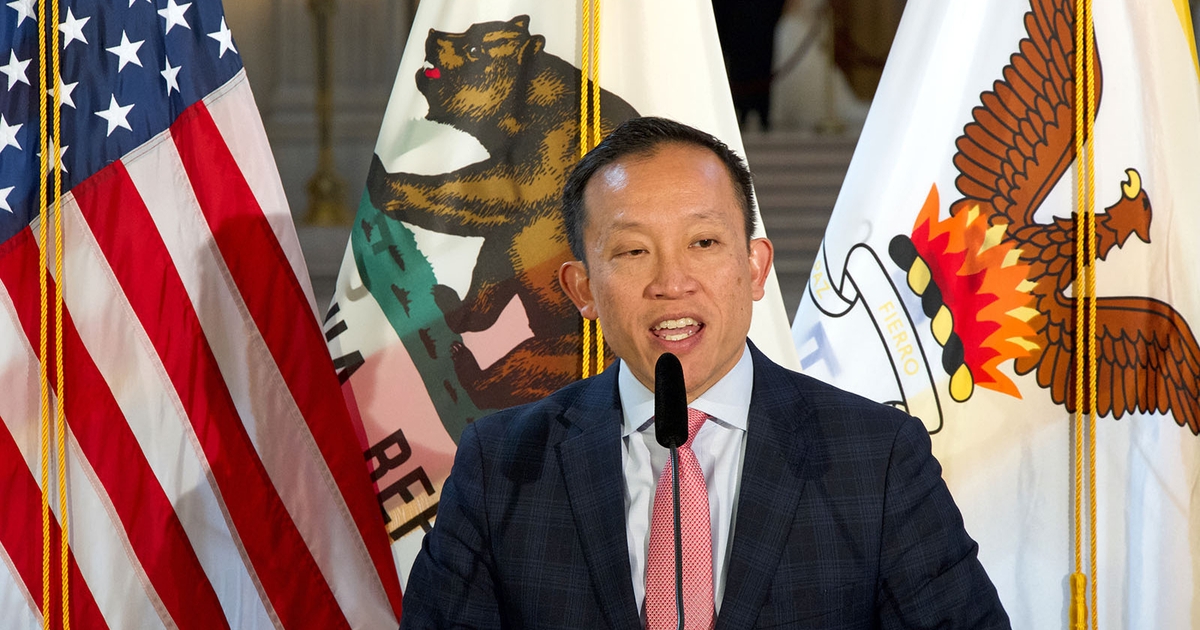
San Francisco City Attorney David Chiu is suing some of the country’s biggest ultraprocessed foods manufacturers in what he’s calling a “first-of-its-kind lawsuit.”
Ultraprocessed foods “are making us sick, plain and simple,” Chiu said at a press conference Tuesday announcing the lawsuit. “These products in our diets are deeply linked to serious health conditions imposing enormous costs on millions of Americans and cities and states across our country. Our case is about companies who design food to be harmful and addictive and marketed their products to maximize profits.
“Like the tobacco industry, they knew their products made people very sick but hid the truth from the public, profited from untold billions, and left Americans to deal with the consequences,” he continued.
Chiu said that over the years, the San Francisco city attorney’s office has “successfully held accountable industries that profited enormously from products that they knew harmed the health of millions. Tobacco, lead paint, opioids. This is our next fight. So what are ultraprocessed foods? We’re talking about food that is not food. That is not found in nature, created by combining artificial chemicals with industrialized processes.”
San Francisco filed the lawsuit Tuesday in San Francisco Superior Court against Kraft Heinz Co., Mondelez International, Post Holdings, The Coca-Cola Co., PepsiCo, General Mills, Nestle USA, Kellogg, Mars Inc. and ConAgra Brands.
“Ultraprocessed foods have created an enormous public health crisis with skyrocketing healthcare costs,” Chiu said. “As the consumption of these products has risen, so has chronic disease. Many recent studies and massive data sets have confirmed the very clear link between ultraprocessed foods and chronic diseases. Type 2 diabetes, fatty liver disease, heart disease, kidney disease, colorectal cancer, Crohn’s disease, depression. And the impact on children has been particularly alarming.”
In a press release, Chiu said these companies “took food and made it unrecognizable and harmful to the human body. We must be clear that this is not about consumers making better choices. Recent surveys show Americans want to avoid ultraprocessed foods, but we are inundated by them. These companies engineered a public health crisis, they profited handsomely, and now they need to take responsibility for the harm they have caused.”
San Francisco Mayor Daniel Lurie said in the release, “San Francisco families deserve to know what’s in their food. We’re not going to let our residents be misled about the products in our grocery stores. We are going to stand up for public health and give parents the information they need to keep themselves and their kids safe and healthy.”
The lawsuit, filed on behalf of the people of the State of California in San Francisco Superior Court, “alleges Defendant’s unfair and deceptive acts in connection with the sale and marketing of ultraprocessed foods violate California’s Unfair Competition Law and public nuisance statute,” according to the press release. “The People seek an order, among other things, enjoining Defendants from deceptive marketing and requiring Defendants to take action to correct or lessen the effects of their behavior. The lawsuit also seeks restitution and civil penalties to remedy the public nuisance and help local governments offset astronomical health care costs associated with ultraprocessed food consumption.”
CSP contacted Coca-Cola, General Mills, Mondelez International and PepsiCo to comment on the lawsuit but did not immediately receive a response.
What are ultraprocessed foods?
Ultraprocessed foods are whole foods that have been broken down, chemically modified, combined with additives and then reassembled using industrial techniques such as molding, extrusion and pressurization, according to the press release. They may contain additives that are only used in the manufacturing of ultraprocessed foods, such as colors, flavor enhancers, emulsifiers, artificial sweeteners, thickeners and foaming, anti-foaming, bulking and gelling agents. Ultraprocessed foods are distinct from genetically modified foods.
Ultraprocessed foods include candies, chips, processed meats, sodas, energy drinks, boxed macaroni and cheese, breakfast cereals and “other products made using industrial methods that cannot typically be replicated in a home kitchen,” according to the press release. “These foods are a combination of chemicals designed to stimulate cravings and encourage overconsumption.”
“The health concerns around ultraprocessed foods are not solely about the amount of calories, fat, sugar, salt or carbohydrates consumed,” the release continued. “Ultraprocessed foods themselves cause unique health risks. The high levels of processing change the physical and chemical structure of the foods and change how humans digest them.”
The amount of ultraprocessed food increased dramatically in the 1980s and 1990s, and now about 70% of the U.S. food supply is ultraprocessed, the press release said. “While the seemingly infinite number of products that line grocery aisles today gives the illusion of consumer choice, Americans are largely ‘choosing’ between different configurations of chemicals that are making them sick. Most of these products are engineered by a handful of mega corporations.”
This story was originally featured on CSP Daily News, a sister publication of Supermarket News.