
This was not your usual Black Friday.
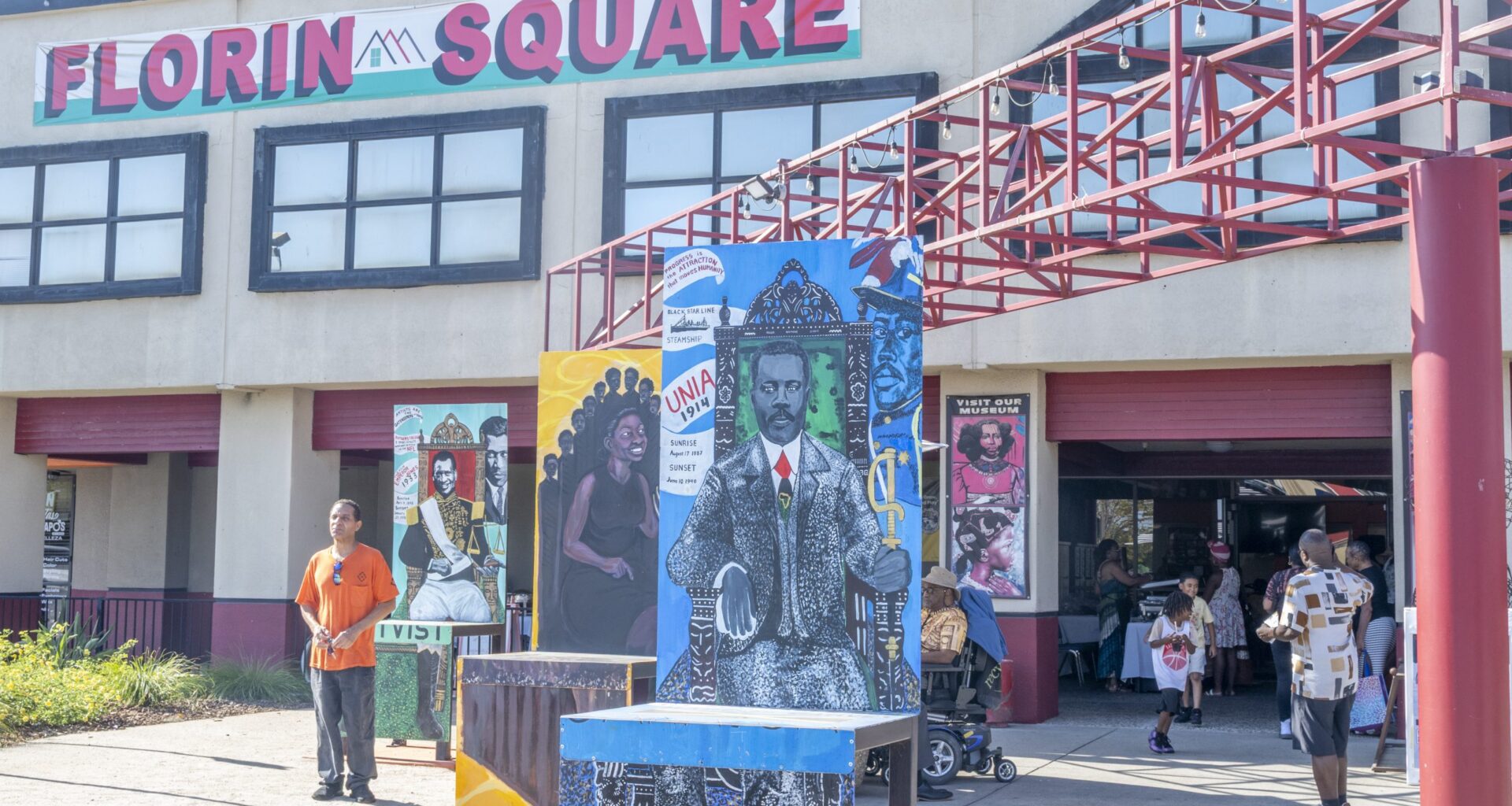
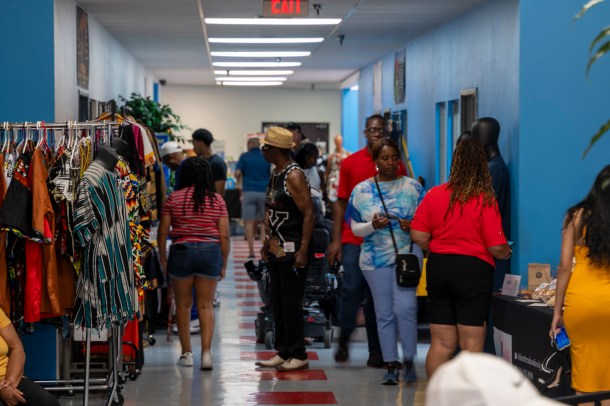
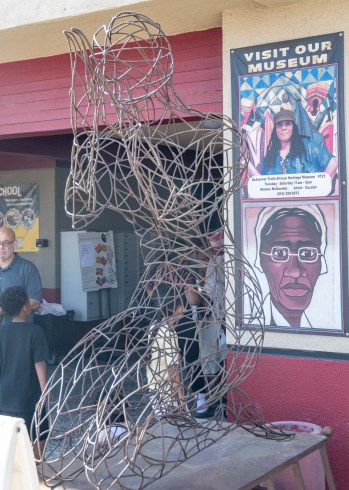
More than 50 Black-owned businesses filled Florin Square on Nov. 28 for the first Black Business Friday, featuring live performances, soul-food vendors, local creators, retail shops, and the Sojourner Truth African Heritage Museum anchoring the space. However, this year’s Black Friday happened under the shadow of the Black Friday Mass Blackout, a national call asking Black people and allies to not patronize corporations that have donated billions to support anti-Black and antidemocratic policies.
The movement encourages shoppers to avoid Amazon, Walmart, Target, and large fast-fashion and big-box chains, instead directing dollars toward Black-owned businesses, local shops, and companies committed to diversity, equity, and inclusion.
 Florin Square hosted Black Business Friday on Nov. 28. OBSERVER file photo
Sacramento resident Maddison Morian Brodeur, 22, said she was encouraging her friends and family to shop only at local businesses and to pay with cash.
“That means no Amazon, no Target, no Walmart, or national chains. Or fast food,” Brodeur said. “This also means no online shopping.
“It’s definitely a challenge since farmers’ markets and shopping locally can be really expensive, so national chains are the only option for low-income families,” she continued. “My hope is that everyone can come together, mutual-aid style, and share their Thanksgiving leftovers till next week.”
Mass Blackout was initiated by a group of grassroots organizations, including Blackout the System, The People’s Sick Day, and American Opposition. Another related boycott, “We Ain’t Buying It,” was organized by Black Voters Matter and Indivisible. This campaign specifically targeted companies such as Amazon, Target, and Home Depot for their alleged support of the federal administration’s policies.
 More than 50 Black-owned businesses filled Florin Square on Nov. 28 for the first Black Business Friday. Russell Stiger Jr., OBSERVER
The Mass Blackout taps into a long history of Black economic protest, most famously the 1955 Montgomery Bus Boycott, where coordinated spending power and community discipline forced a national reckoning on segregation.
Sparked by the arrest of Rosa Parks, Black residents of Montgomery, Alabama, refused to ride city buses for 381 days, walking miles to work, organizing carpools, and building a disciplined system of mutual support that held firm even as officials tried to break them with arrests, harassment, and violence. It was the first major boycott led by Dr. Martin Luther King Jr.
The protest was ultimately successful. The U.S. Supreme Court ruled in November 1956 that segregation on public buses was unconstitutional, a decision that marked one of the first major victories of the modern Civil Rights Movement and helped launch Dr. King, then a 26-year-old pastor, into national prominence.
Many Sacramento residents say that spirit is rising again.
“Historically, boycotts worked. Dr. King led a successful boycott that changed history and everything,” said Faye Wilson Kennedy, organizer with the Sacramento Poor People’s campaign. “So, we know for sure that boycotts work.”
For Keisha “Agent Kee” Mathews, broker/owner of Mathews and Co. Realty Group and Founder of Sac Club 100, the blackout works only with a strategy behind it. She supports the movement’s goals but believes the most powerful impact comes from redirecting dollars, not simply withholding them.
“You can’t just tell people ‘Don’t shop here’ without showing them where to go,” said Mathews, who is also a radio host on KDEE 97.5. “If we emphasize shopping locally, we keep our neighborhoods strong. We reinvest in our own communities. That’s how we support the small business owners who are struggling right now.”
Kennedy added that boycotts work only when people truly understand their importance. She hasn’t shopped at Walmart in years because of the company’s treatment of Black workers in the South. After learning Target was pulling away from DEI commitments, she has gradually phased it out, too.
“I try to support Black businesses however I can,” she said. “People have to be committed. You can’t do it because someone told you to. You have to understand the bigger picture.”
Cassandra Jennings, president and CEO of St. HOPE, sees the current boycott as an important reminder of the economic influence Black communities hold — and often forget to use.
“I think it’s important that we not only use our vote and our voice, but also our pocketbooks to make sure that people understand what’s important to us,” Jennings said. “This is an opportunity for us to really support Black businesses, support local businesses, and be intentional and use our economic power as our new voice to say we need to support DEI.”
Some shoppers agreed with the movement’s goals but said there’s a leadership gap compared to earlier eras.
For a long time, Sacramento resident Lauren Moore avoided major stores on Black Friday mostly because she wanted to “stay out of the chaos,” but she recognizes the potential impact if boycotts were organized more clearly.
“Boycotting can stop big businesses, if we do it the right way,” she said. “Boycotts work. Back in the Martin Luther King era, there was one voice guiding people. We haven’t found that leader yet.”
For business owners such as Teesha Spagner, who runs Artisan Jewelry by Teesha, the stakes are real.
“Hopefully, Black people will continue with the practice of spending their money with their own people, like the other races do,” Spagner said. “If we don’t have what you need, then go outside for your products and services.”
She stressed that she welcomes everyone, not just Black shoppers, but said support from her own community is especially critical.
“And just to be clear, I’m not saying I or any of us only want support from our own people,” Spagner said. “Everyone is welcome to shop with us.”
Related