
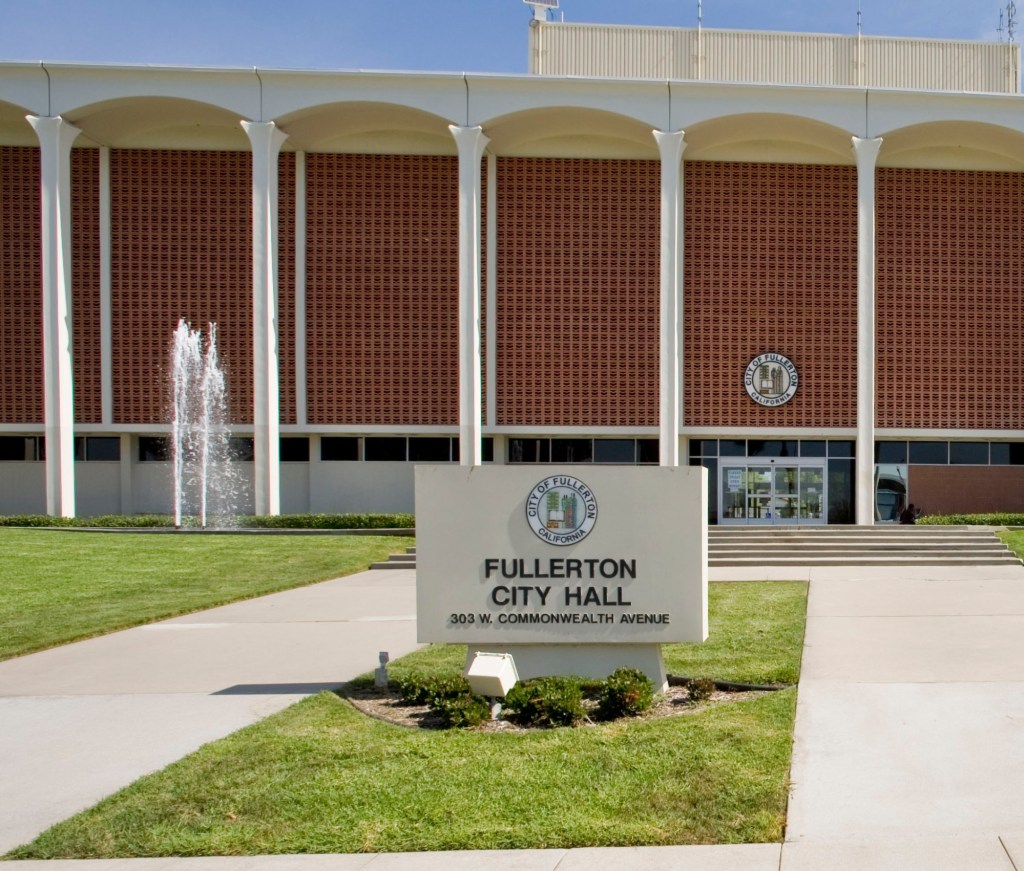
As if the increased cost of living already weren’t enough, Fullerton residents soon could be paying two new sales-tax increases, the first a half-cent to fix roads and other infrastructure, the second a half-cent for public safety. At least Fullertonians will get to decide because the City Council must put any increases before voters.
On Nov. 18, the council voted to reconvene the Fiscal Sustainability Ad Hoc Committee, originally formed in 2024. The committee is made up of five residents, each appointed by one council member. It will consider wording on the potential tax increase measures.
Committee member Tony Bushala, a local businessman, told us he reluctantly supports the tax increases because, “Fullerton roads are the absolute worst in the county, and everyone knows it. Our job was to figure out what to recommend to the City Council to fix this problem.” On public safety, he said, police and fire vehicles are old, and salaries need to be maintained at a level similar to that of neighboring cities to attract quality candidates.
This will be Fullerton’s latest and more refined approach to tax increases. In 2020, voters overwhelmingly rejected Measure S, a sales-tax increase proposal of 1.25% Measure S was a general tax measure, meaning the city council could spend the revenues on anything, and required only a majority vote to pass. Instead, it was rejected by 57% of voters.
The two new levies contemplated by Fullerton this time will be special taxes, meaning the money must be spent on specific, defined purposes. Each would need to receive two-thirds of the vote to pass. Getting to two-thirds support requires overwhelming buy-in from broad constituencies in the city.
The city does have fiscal problems. Former state Sen. John Moorlach’s fiscal rankings last May of 34 Orange County cities put Fullerton in 27th place, with a $154 million unrestricted net deficit. However, tax increases are not a guarantee of fiscal solvency as if they don’t solve the underlying problem of out-of-control spending.
Since public funds are fungible, would higher sales tax revenues be used wisely by City Hall or would they merely perpetuate unsustainable spending? Can the city convince ordinary residents it’s in their interest to tax themselves more?
That remains to be seen.