
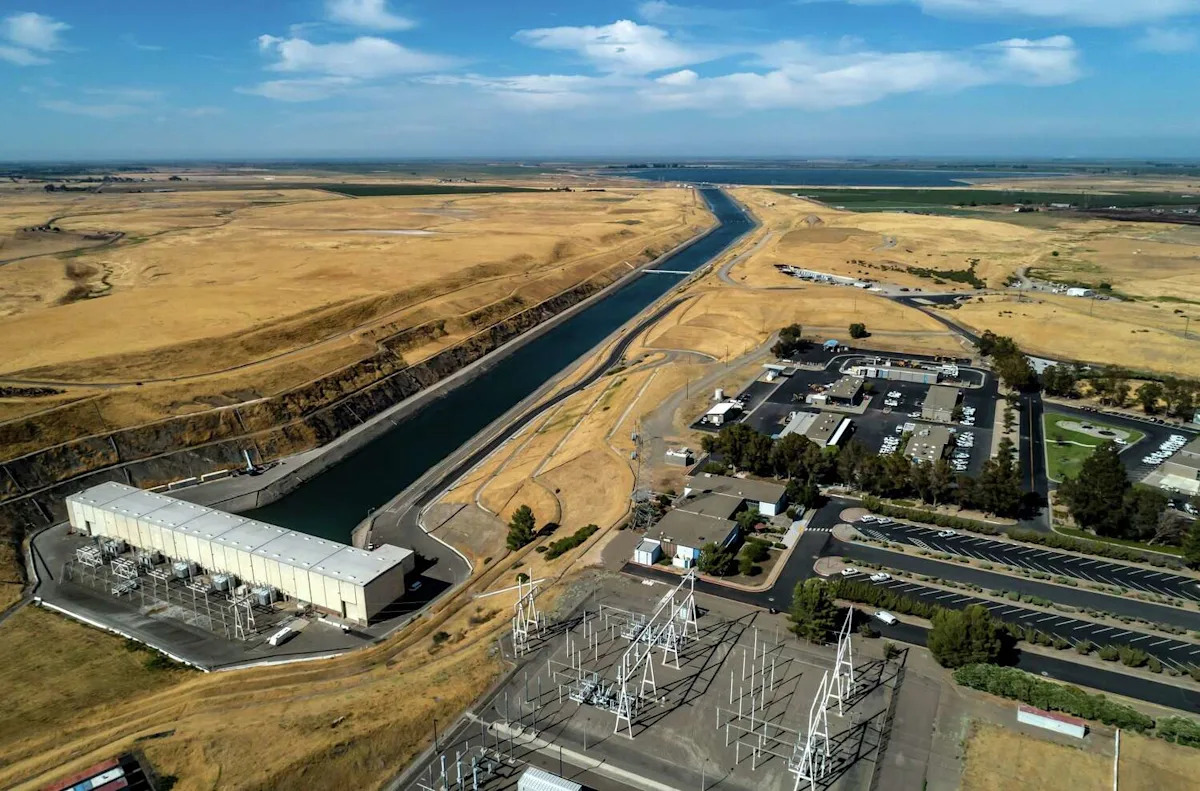
The Trump administration is pressing forward with its pledge to send more Northern California water south to farms, even as state officials warn that the move could cut vital supplies for cities and fish.
The U.S. Bureau of Reclamation announced its plan Thursday in an update to operations at the Central Valley Project, calling for increased pumping from the Sacramento-San Joaquin River Delta to points south.
The delta, where California’s biggest rivers converge, is the crux of the state’s water supply and a lifeline for fish and wildlife. How it’s managed is a perennial source of tension, and the Bureau of Reclamation’s change in operations is already stoking a fresh round of fighting between the federal government and California.
In a statement Thursday, Interior Secretary Doug Burgum said the federal government’s move would ship much needed water to farms and communities in the San Joaquin Valley with little downside: “This updated operations plan reflects our commitment to using the best available science to increase water deliveries while safeguarding the environment.”
California leaders, however, including the governor’s office, were quick to challenge the move, saying there would be inevitable harm to endangered fish, including salmon, as well as reduced water supplies for other parts of the state.
“The Trump administration is putting politics over people – catering to big donors instead of doing what’s right for Californians,” said Tara Gallegos, spokeswoman for Gov. Gavin Newsom, in an email. “As per usual, the emperor is left with no clothes, pushing for an outcome that disregards science and undermines our ability to protect the water supply for people, farms and the environment.”
Karla Nemeth, director of the California Department of Water Resources, said in a statement that the federal government’s plan could “compromise the state’s ability to deliver water to 27 million Californians.”
The strife between the state and federal government is rooted in their interdependence in the delta. Alongside the Bureau of Reclamation’s Central Valley Project, which primarily sends water to agriculture, is California’s State Water Project, which sends water to cities in the Bay Area and Southern California that comprise two thirds of California’s population. State officials have said if the federal project pumps more delta water, the state project would have to pump less.
This is because the state is adhering to what had been the prevailing interpretation of the endangered species laws at play in the delta. The Bureau of Reclamation’s new operations plan offers a different read on the laws, allowing greater flexibility for the federal government to pump more water. Should it do so, California, by sticking with the old rules that it supports, would have to offset federal pumping by reducing its pumping to maintain healthy conditions for fish and wildlife.
“DWR and Reclamation…have worked together for almost 40 years to carry out water deliveries to Californians,” wrote Department of Water Resource Director John Yarbrough, in a recent letter to the Bureau of Reclamation. The agency’s latest action, he wrote, jeopardized the collaborative relationship.
The federal government’s move, dubbed Action 5, was welcomed by many in the San Joaquin Valley, where much of the country’s fruits, nuts and vegetables are grown.
“These changes will help ensure that our growers have the water they need to support local communities and the nation’s food supply, while also protecting California’s wildlife,” said Allison Febbo, general manager of the Westlands Water District in Fresno County, which relies on delta water to serve its many agricultural customers.
The district said it was “grateful” for the Trump administration’s attentiveness to their needs.
The agricultural industry had been waiting for federal action since President Donald Trump, in his first few days in office, issued an executive order directing increased pumping in the delta. For years, farmers have protested that too much water was being kept from them, diminishing their harvest.
Environmental groups, which felt existing protections in the delta were already too lenient, were disappointed by the further loosening of regulation. But they weren’t surprised.
“It’s no secret that the Trump administration prioritizes handing out California’s water to powerful water districts that support the administration,” said Jon Rosenfield, senior scientist at San Francisco Baykeeper, who has tracked ecological problems in the delta. “This is part of the Trump administration’s war on California and the Trump administration’s war on California’s environment.”
Chinook salmon, steelhead trout, delta smelt, sturgeon and other fish have seen precipitous declines as delta flows have waned and water conditions have deteriorated in recent decades. Heavy pumping also can pull fish off course and even chew them up in the pump machinery.
“The measures in Action 5 run counter to the state’s efforts to bolster commercial and recreational fishing by supporting healthy populations of Chinook salmon,” said Chuck Bonham, director of the California Department of Fish and Wildlife, in an email. “Many of the measures outlined in Action 5 are vague, unclear, impossible to implement, or not based in best available science.”
The Bureau of Reclamation maintains that its action will not have “significant” impact on the environment or fish.
“Action 5 represents a forward-looking approach to water management that balances the needs of California’s communities, agriculture, and ecosystems,” said Andrea Travnicek, the Interior Department’s assistant secretary for water and science, in a statement.
During the first Trump administration, federal water officials similarly modified the operations plan for the Central Valley Project, sparking a successful legal challenge from environmental groups. The Biden administration ultimately rewrote the rules, which took effect last year. The new plan replaces those rules.
Another lawsuit is likely.
This article originally published at California water wars reignite as Trump administration plans to send more water to farms.