
Southern California is still working through the aftermath of this year’s wildfires. The largest group of urban wildfires that State Farm has responded to in its history, took 31 lives, forced more than 200,000 people from their homes, and destroyed thousands of structures. Many families are engaged in the process of rebuilding and recovering from the devastation. We also know that many families continue to navigate through parts of the claims process with State Farm trying to address the needs of their unique circumstances. Through all of this, our teams have stayed close to the communities we serve, supporting people as they take the next steps in recovery.
Standing With Impacted Communities
When evacuation orders were lifted and people were finally able to return, State Farm Claims teams met residents in their communities to help, providing guidance on coverage and, where applicable, helping access funds for immediate living expenses. The early days were filled with questions about coverage, paperwork, and what to expect next. Nearby agents with employees from across the country came in to help however they could. Some assisted with documentation, others guided customers through the claims process, and many simply sat with families who needed a calm, kind voice during a chaotic time.
Recovery, following a catastrophe, doesn’t move in a straight line. Every family handles the aftermath differently and recovery rarely feels predictable for anyone. Still, our teams have continued providing support where it’s needed.
Helping Local Organizations Meet Daily Needs
Rebuilding homes is only one part of a recovery this large. Every day, companies like State Farm and local organizations across the region help families with food, temporary shelter, and the simple items that make life bearable when things feel upside down.
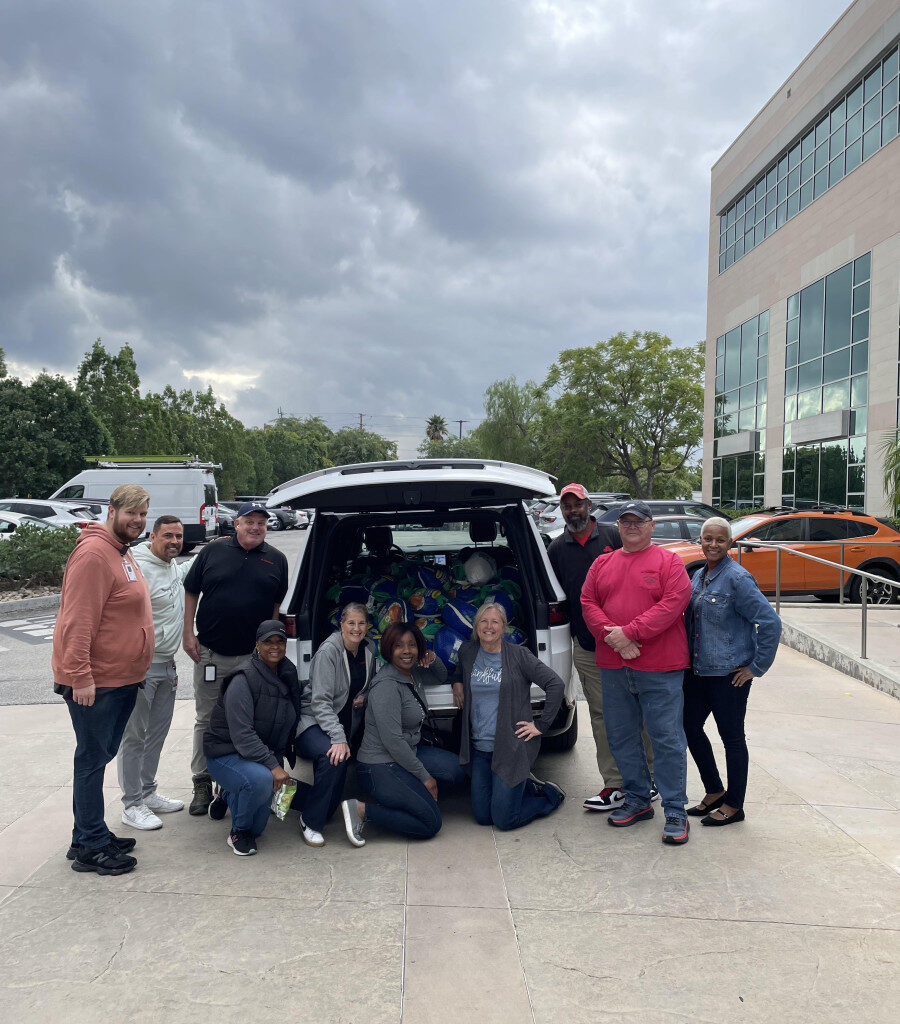
State Farm employees and agents have been part of that work throughout the year. In Los Angeles, Claims Specialist William joined community efforts aimed at easing food shortages. Team managers Diane and Trent organized a holiday drive that collected hundreds of donated items and raised more than $8,500, a portion of which was matched by State Farm, to help families with essentials and small comforts that matter during a tough season.
“Not only do we get to provide personalized service on the claims side, but we are also able to provide other tangible assistance to the community, even for those who don’t have State Farm,” said Trent. “I’ve been doing this for 12 years now and I continue to see the pride that our department has in helping others.”
State Farm also provided funding to several nonprofit partners involved in food distribution, emergency relief, and community recovery. In Burbank, employees organized a blood drive with the American Red Cross, and local agents delivered school supplies and basic household items to families staying in temporary housing.
Disaster Relief Funding and Continued Support
To date, State Farm has paid $5 billion to impacted customers, helping customers recover from losses covered under their individual policies. Additionally, throughout 2025, nonprofit groups across California received $2 million in disaster relief and recovery support from State Farm. These funds helped organizations provide food, emergency response services, and ongoing assistance to families trying to regain some stability. Employees and agents around the country also volunteered time and donated resources to support organizations caring for those displaced by the fires.
A Commitment That Continues
Recovery after an event of this scale is different for every family, and as we stay to help our customers, we will also continue working with community partners, nonprofits, and local leaders throughout California as rebuilding continues.
More information about our work in the state can be found on State Farm in California: Understanding the Issues.
‘;