
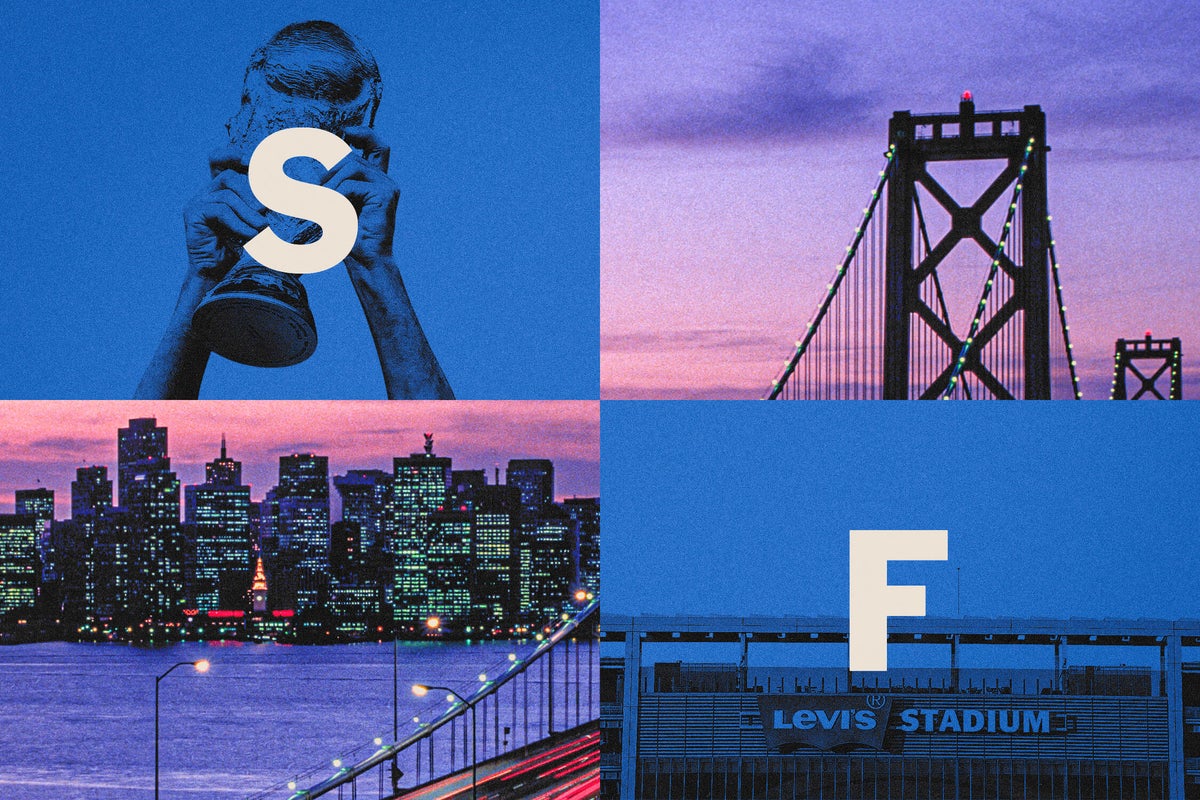
The Athletic has live coverage of the FIFA Men’s 2026 World Cup draw.
San Francisco may be known as the crown jewel of the Bay Area, but anyone who is privileged to call this vast Northern California region home knows that to indulge in its riches, one must possess an abundance mindset and an omnivorous palate. There is something for everyone in the Bay — and the primary dialect is sports.
That is what happens when a place collectively houses: Seven World Series (between the San Francisco Giants and the then-Oakland Athletics), five NBA championships, seven Super Bowls (between the San Francisco 49ers and the Oakland Raiders), two MLS Cups, and a Women’s Professional Soccer (WPS) title. And that is to say nothing of the scores of NCAA championships and Olympians who have hailed from the Bay Area. Pride and devotion flow through this cluster of cities, from the rolling vineyards of Napa down through the waters that separate the East Bay from San Francisco and the peninsula, and up and over the hills of the South Bay and the mountains protruding along the central coast.
Soccer has not featured as prominently as the big four sports in terms of notoriety, as is the case with every other U.S. host city. But the love for and spirit of the sport hang heavily like the thick sheets of fog that hunch over the tops of buildings on crisp Bay Area mornings. It is the sport that draws communities from Cameroon, El Salvador and Afghanistan to neighborhood parks in Pittsburg, Fremont, and Oakland — first for pickup, then to break bread with the opponents who, at the end of the day, are family.
Different worlds mix here: college students and the vest-wearing managers they hope will eventually hire them; security guards and elder alumni of one of the Bay Area’s premier youth clubs gather across the Bay to share the game. And they fill the pubs and sports bars just as easily, whether cheering on Bay FC in the NWSL, the San Jose Earthquakes in MLS (both of whom play at PayPal Park), the U.S. women’s or men’s national teams, or any of the other countries to which they have ties.
There has been a striking contrast recently between the support shown to the USMNT and other nations when they visit the Bay. Take the Concacaf Gold Cup group-stage match against Trinidad and Tobago at PayPal Park on June 5, 2025, in San Jose. Six years had passed since the U.S. men’s last game in the Bay Area, and the Caribbean island nation was the side that knocked them out of the 2018 World Cup in Russia. The U.S. wound up battering them 5-0 in their Gold Cup meeting, but a reported 12,610 showed up to the 18,000-capacity stadium.
Two weeks later, on July 2, the Gold Cup semifinal between Mexico and Honduras took place at Levi’s Stadium in Santa Clara, home of the Niners and the stadium that will host 2026 World Cup games. The two venues are separated by less than six miles, but the game atmospheres were worlds apart. The semifinal drew a reported 70,975 people for a match that ultimately went to Mexico, who beat the U.S. four days later to claim their 10th Gold Cup title.
This has been the way across California where men’s international soccer is concerned: U.S. fans trickle into their seats, while immigrant communities commit wholeheartedly to support the teams representing their countries. They haul grills into parking lots and load them with meat that has been marinated through the night in spices that sizzle with the aromas of home. They power up Bluetooth speakers and blast their unofficial anthems — which sometimes includes the hyphy music for which the Bay Area is best known.
The best kind of Bay Area itinerary is one that reflects and honors this land of multiplicities. Take advantage of its proximity to the Pacific Ocean and hike the coast as close as Santa Cruz (less than 40 miles from Levi’s Stadium), or as far as Big Sur (about 100 miles from the stadium). Or head north to Oakland or Berkeley, where dispensaries are sandwiched between independent bookstores and taquerias, hand-pulled noodle joints, and upscale cocktail bars. Cross the famous Golden Gate or the 5.5-mile-long Richmond bridge into the serene Napa or Sonoma counties, where you will have no choice but to soak up the world-renowned wine from your tastings with fresh, vibrant Californian cuisine that shines with locally grown and raised ingredients.
And that is before considering the crown jewel itself, resplendent in its picturesque viewpoints available from nearly every neighborhood. Some of San Francisco’s vistas require 45-degree pilgrimages up steep hills, but the payoffs are worth the effort. Move slowly so you don’t miss the squawking sea lions at Fisherman’s Wharf or the vibrant papel picado flags that line the streets of the Mission District. Duck into a jazz lounge that also serves Ethiopian food in the Fillmore. The key here is maximalism — refusing to contain yourself to the idea of a “home team”, even in the U.S., nor the idea that the Bay Area can or should be experienced one way.
The stadium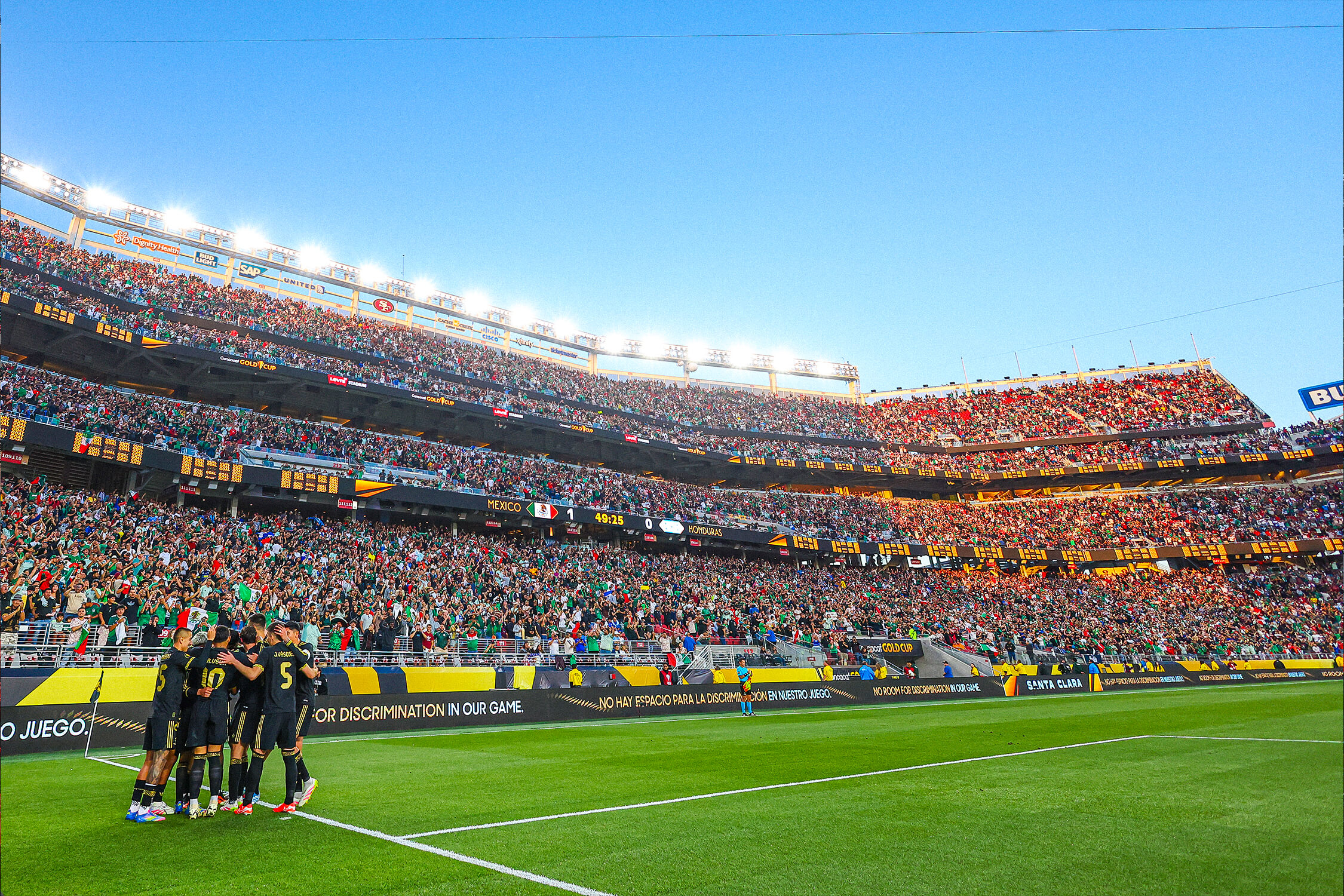
Levi’s Stadium (Robbie Jay Barratt via Getty Images)
Levi’s Stadium in Santa Clara broke ground in April 2012 and was completed in July 2014. It’s the official home of the San Francisco 49ers in the NFL, but the first event hosted there was an MLS match between the San Jose Earthquakes and the Seattle Sounders on August 2, 2014. The beautiful game is embedded in its soil.
Standard capacity at Levi’s Stadium is 65,800, but it can expand to accommodate up to 77,000 spectators for events such as the World Cup. Santa Clara is roughly 40 miles south of both San Francisco and Oakland, hovering above San Jose by about 12 miles. There’s an Amtrak train station right across the street that services the aforementioned cities, as well as a more locally running Caltrain with shorter stops along the peninsula.
By the time the World Cup rolls around, Super Bowl LX will have taken place at Levi’s Stadium, where Bad Bunny will have performed at halftime. The combination of sporting and artistic excellence is the ideal setting to usher in Levi’s Stadium’s first World Cup competitions.
Where to go for breakfast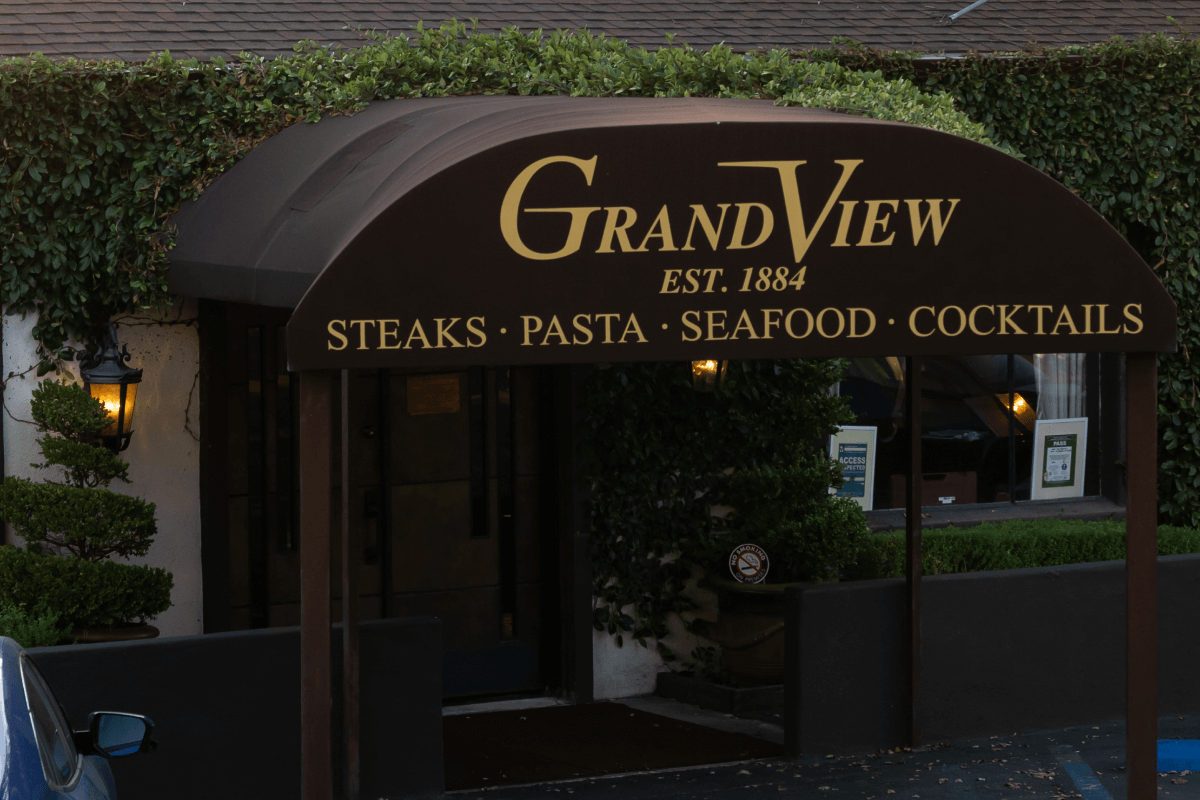
The GrandView (Image supplied by venue)
Where to go for lunchWhere to go for dinnerWhere to grab a drink during the day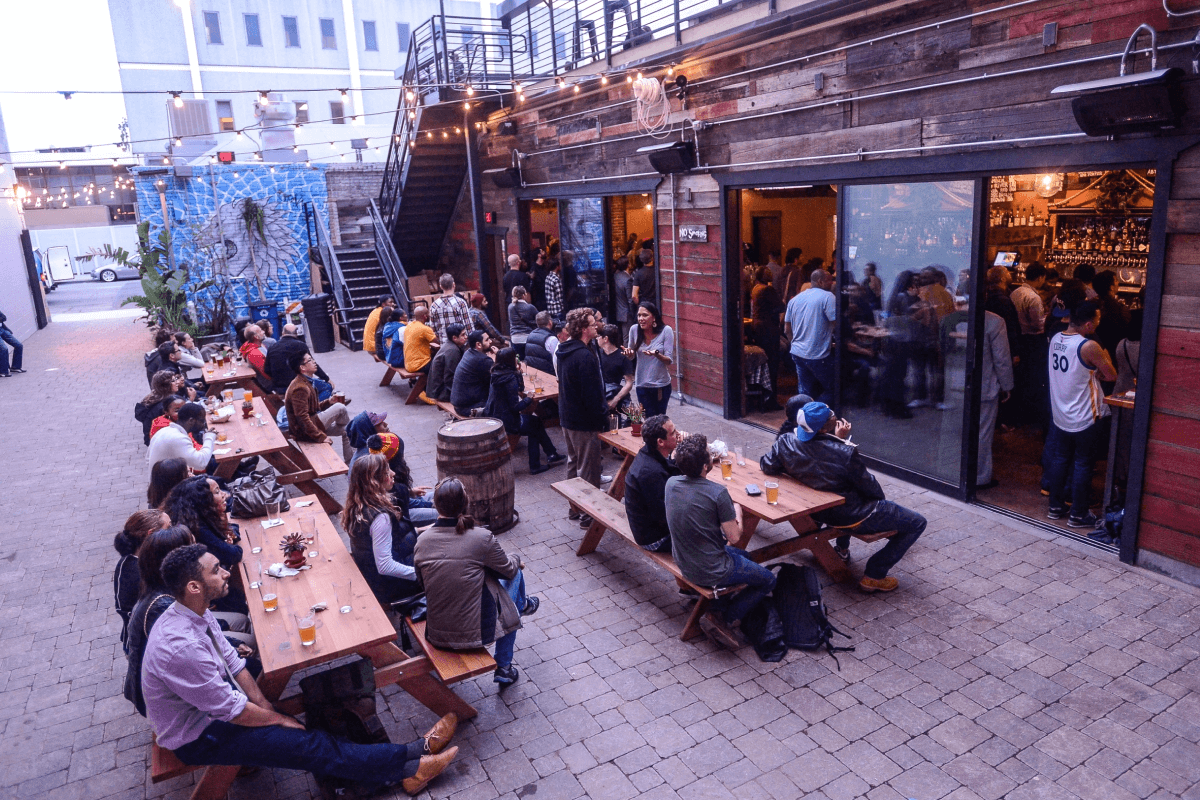
Mad Oak Bar N’ Yard (Image supplied by venue)
Where to grab a drink in the eveningWhere to stay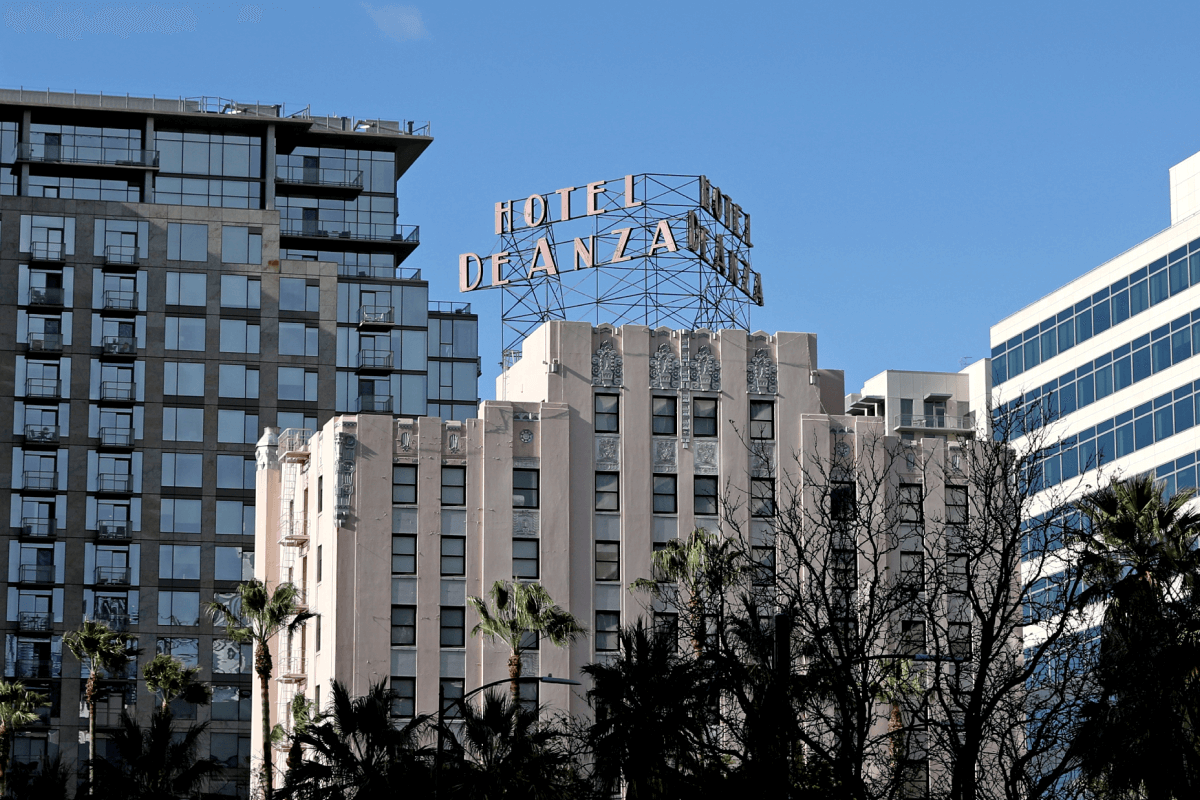
Hotel De Anza (Gary Coronado via Getty Images)
What to do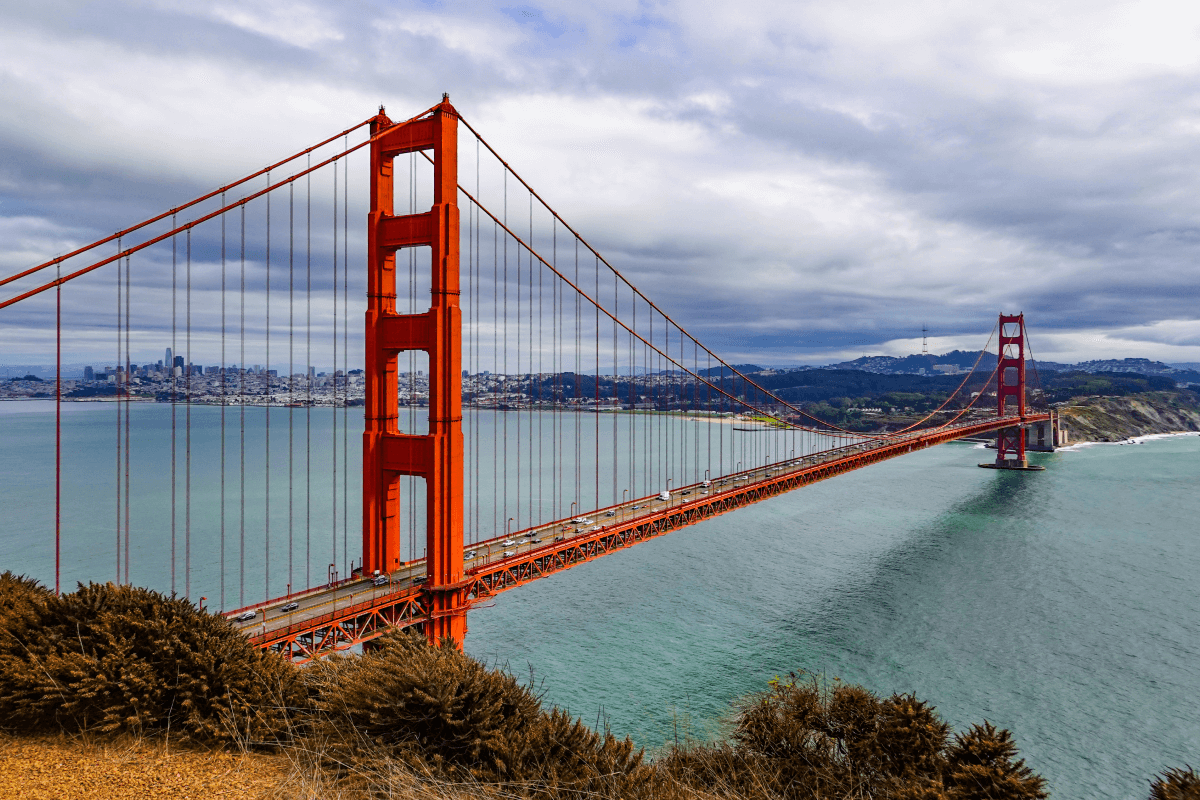
Golden Gate Bridge (Patrick Pleul via Getty Images)
Where to watch other World Cup games
San Pedro Square Market in downtown San Jose is an easy choice for World Cup games not taking place at Levi’s Stadium. The airy food hall is California cuisine at its core: richly diverse with an inclination to mix and blend: dosas, gelato, momos, pizza, matcha, tacos, and pho are all housed under this roof, with ample dining space within as well as outside in the San Pedro Plaza, where a big screen will show games.
Outside of San Jose, check out Kezar Pub in San Francisco’s Upper Haight neighborhood. It is a known Liverpool outpost for Northern California supporters, but during the World Cup will center the tournament and welcome all who cross its threshold (they also offer an English breakfast).
Game-day hack
For those who choose to stay in San Francisco and travel to Santa Clara for games, turn the commute into a pleasurable one by taking the 25-minute ferry to Jack London Square in Oakland for just under $5. The Amtrak station is a short walk from there, and for another $15, you can go straight to the Santa Clara-Great America stop right across the street from Levi’s Stadium. It takes a bit longer than a car, but the ferry offers stunning views of the Bay Bridge (as well as the Golden Gate on a clear day), and Amtrak sells beer, wine, and canned cocktails to safely begin pre-match festivities.
The best way to get around
Consider renting a car if you plan to bounce around the Bay Area frequently (and be prepared to pay for bridge tolls if you do); it’s the easiest way to access hikes, vineyards, and best-kept-secret haunts without having to rely on rideshares, which can be pricy in Silicon Valley and other parts of the Bay.
The primary modes of public transportation are Caltrain, which stretches from the South Bay up the peninsula to San Francisco; Bay Area Rapid Transit (BART), which connects the East Bay to San Francisco (and the San Francisco and Oakland airports) and the South Bay; the light rail in San Jose, which also has a stop outside Levi’s Stadium; and Amtrak, where the Capital Corridor line can take you from San Jose all the way to Sacramento for $40.
What will the conditions be like?
Average June/July temperature: 64F/68F (18C/20C)
Average June/July rainfall: 4mm/1mm
Altitude: 3m
You can read more here.
A sporting fact you might not know
In the lead-up to game three of the 1989 World Series between the San Francisco Giants and the Oakland A’s at Candlestick Park in San Francisco on October 17, a 6.9-magnitude earthquake struck. The pregame show aired on ABC, and broadcaster Al Michaels can be heard interrupting his script to yell, “I’ll tell you what: we’re having an earthquake!”
They are fairly commonplace in California, but the Loma Prieta earthquake, as it came to be known, proved to be the biggest and most deadly in state history; 63 people were killed, more than 3,700 were injured, and at least 12,000 were displaced in its aftermath.
The World Series game was postponed and rescheduled 10 days later. The A’s won and eventually swept the Giants to claim the championship.
You can read guides to all of the 2026 host cities here.