
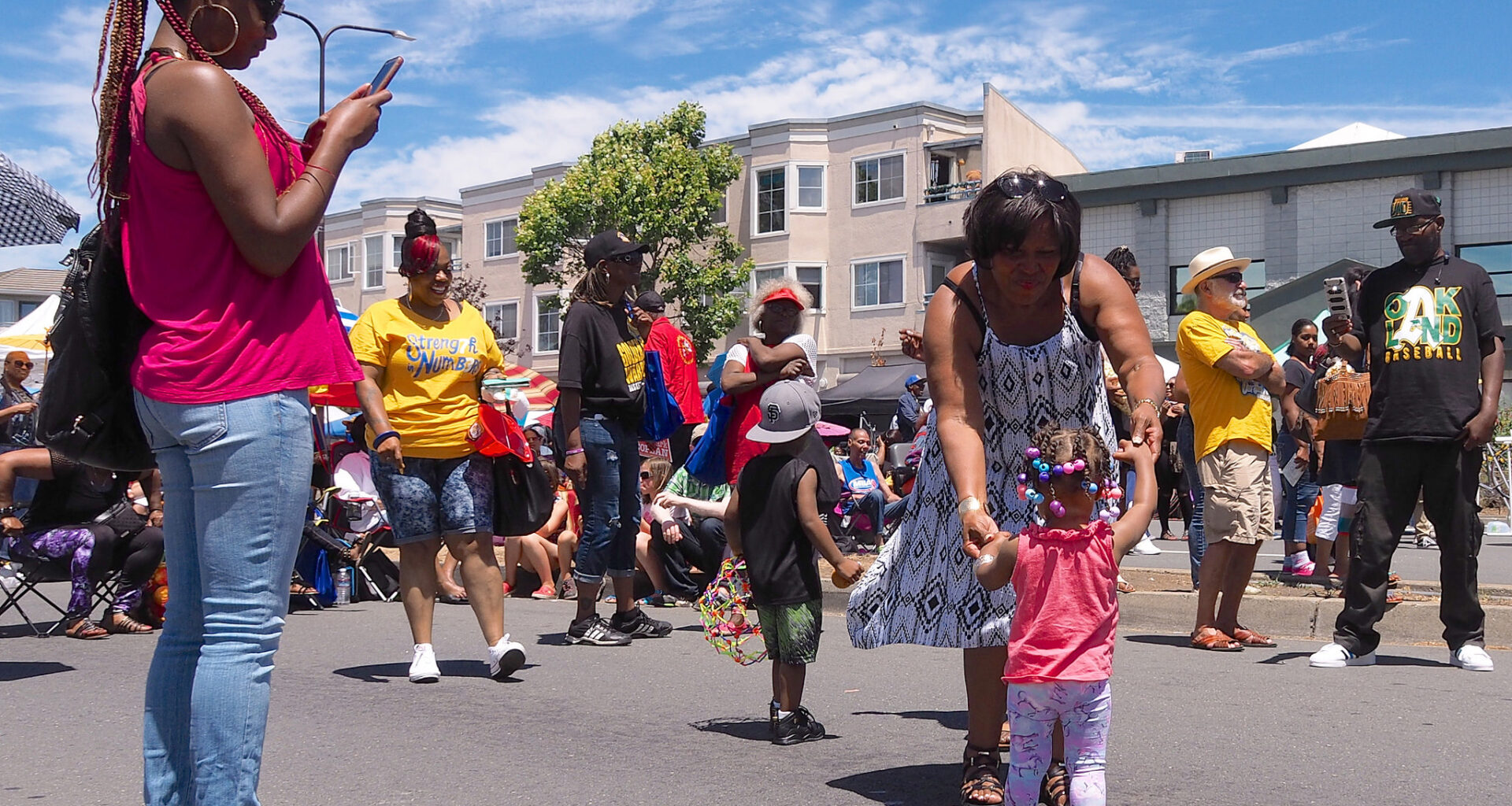
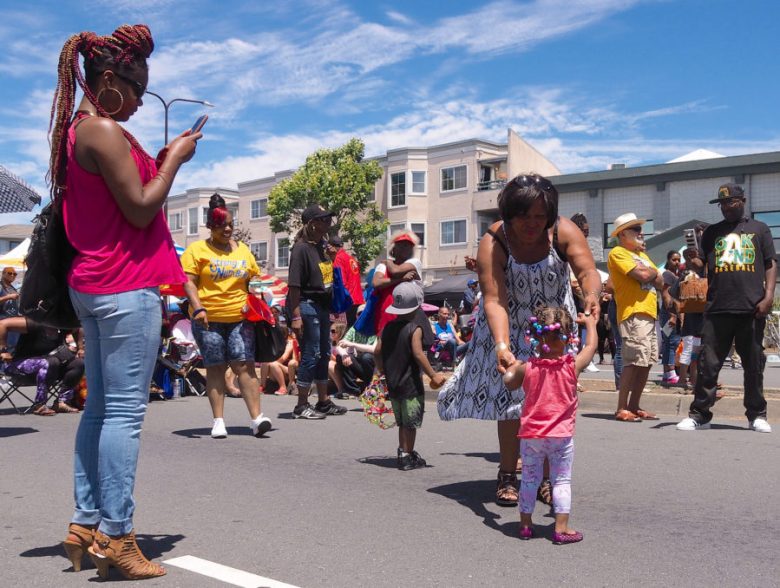
 People celebrate at Berkeley’s Juneteenth Festival in a 2016 file photo. Credit: Nancy Rubin
South Berkeley’s Juneteenth Festival will be allowed to stay on the section of Adeline Street where it has been held for more than four decades, city and fire department officials said this week.
Members of the City Council now plan to take a closer look at the regulations in Berkeley’s fire code that could have required the festival and other popular street events to move, and will decide in the coming months whether they should be changed.
The code includes requirements to maintain a 26-foot-wide fire access lane on streets next to buildings of three or more stories, as well as a mandate that the Berkeley Fire Department sign off on traffic safety projects that redesign roadways. The access lane requirement is an optional element of the state fire code that Berkeley has adopted as part of its local code since 2008.
Fire officials have ramped up their enforcement of the regulation this year, citing it to compel organizers to redesign Berkeley’s farmer’s markets and prohibit events on certain streets. Organizers of the Juneteenth Festival and the Telegraph Holiday Fair said city staff initially told them they would have to move their events to new and less-desirable locations because of fire access requirements, only to reverse course weeks later.
Fire Chief David Sprague told the City Council this week that the Juneteenth Festival “can continue to move forward” next year in its longtime location — on Adeline Street between Harmon Street and Alcatraz Avenue — so long as it provides a 20-foot fire lane, which this year’s festival included. City officials last month granted the Telegraph Holiday Fair, which opens this weekend, a permit to return to its longtime home at the north end of Telegraph Avenue.
Orlando Williams, a member of the Juneteenth Festival’s board, said organizers are relieved the event won’t have to move to a setting a few blocks away that many viewed as less connected to South Berkeley’s residents and businesses. That isn’t the end of its challenges, though, since the city is still pursuing a plan to increase the fees it charges to festival organizers in an effort to better recoup the cost of planning for major events — which could translate to tens of thousands of dollars in new expenses.
“The process has been a bit unnerving,” Williams said. But, he added, “We’re here to stay.”
The move to more strictly enforce the access rules has led to mounting friction between the fire department and event organizers, business leaders and street safety advocates, who charge that BFD is enforcing the code in an arbitrary way that could derail traffic safety projects and popular local festivals. Tuesday’s City Council meeting put the debate on display, as critics spoke against what is typically a routine action to codify Berkeley’s fire code regulations.
“The 26-foot rule is going to kill most of the events in the downtown,” said Downtown Berkeley Association CEO John Caner, pointing to popular gatherings that fill local streets, such as the Bay Area Book Festival, which he said would be barred under the regulation. “We need some flexibility.”
Sprague defended the access regulations, saying they help ensure firefighters have enough space to properly respond to structure fires in larger buildings. He said the requirement to consult with the Fire Department has fostered a “collaborative” approach to street safety projects, citing examples such as the redesign of several streets in the Southside neighborhood and traffic-calming elements along Martin Luther King Jr. Boulevard in South Berkeley.
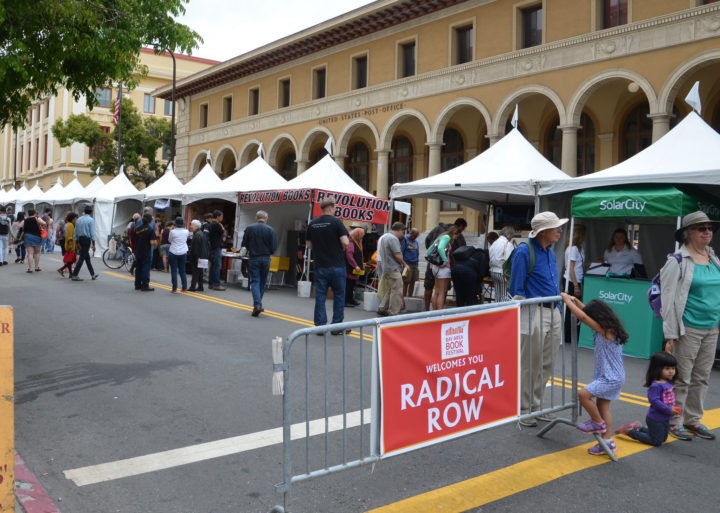 People attend the Bay Area Book Festival on Allston Way. Credit: William Newton
“The fire code is compatible with these multimodal, urban street designs and has not been a barrier to these safety improvements,” Sprague said.
The council ultimately voted to adopt the code without changes, with members saying the city needed to reauthorize the rules before the new year and didn’t have enough time to consider more substantive amendments. But some council members said they share concerns about how the regulations are being applied.
“I’m still not sure why we adopted optional provisions of the state code, which our neighboring cities did not adopt, then proceeded not to vigorously enforce them for what appears to be years and years — only to suddenly start enforcing them this past year,” Councilmember Mark Humbert said. “This has created a lot of confusion and frustration for those who organize our street fairs, for the public and our street safety advocates.”
While the code will stay in place for now, the council voted to ask members of its Facilities, Infrastructure, Transportation, Environment and Sustainability Committee — made up of Humbert and councilmembers Cecilia Lunaparra and Terry Taplin — to examine the fire lane and project review regulations, and make recommendations for changes to the full council by April. The committee could be open to suggesting amendments: although Taplin backed fire officials’ stance that the current code balances the department’s needs with street safety in comments Tuesday night, Lunaparra wrote an item raising concerns about its enforcement, which Humbert co-sponsored.
“*” indicates required fields