
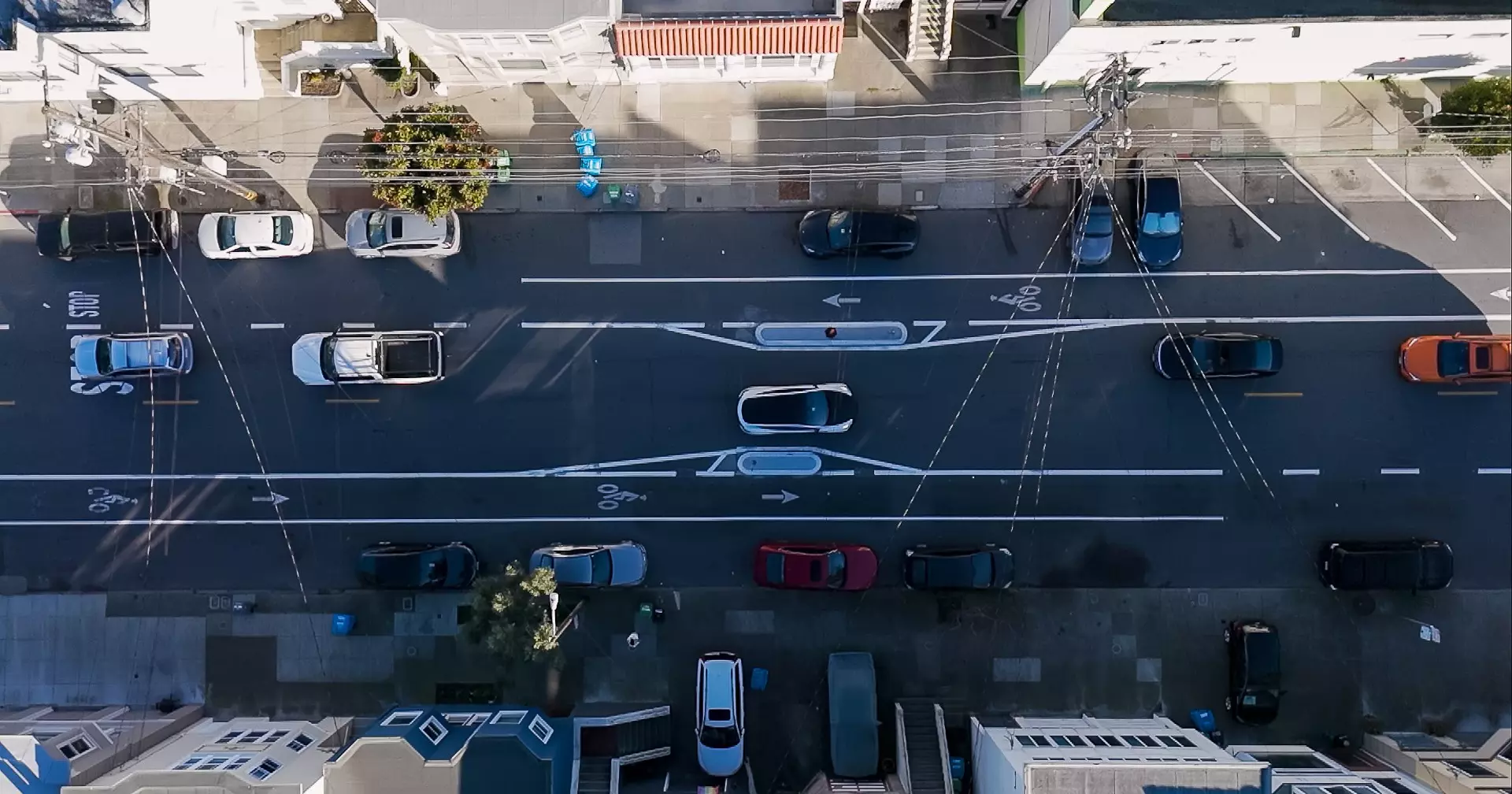
For more than a year, drivers encountered a head-scratching setup on a block in the Sunset intended to reduce speeds. Cars moving in opposite directions on Kirkham Street between Ninth and 10th avenues were forced to share a single lane. Called a “neckdown” by traffic nerds, the intentionally narrow passage forced vehicles traveling east to yield to those traveling west.
Although transportation officials touted it as a safety improvement, the redesign was immediately panned upon its implementation last October. Drivers loathed the feeling of playing chicken with other motorists and complained about the disorienting layout.
Better late than never, the SFMTA is finally heeding the feedback and says it plans to remove the neckdown. It did not provide a timeline.
The results speak for themselves: Thirteen months after the bottleneck was installed, traffic on the block slowed by 1 mile per hour on average, while adjacent blocks on Kirkham actually saw speeds increase by 3 miles per hour, according to a December report (opens in new tab) from the SFMTA.
 The neckdown at Kirkham Street requires oncoming traffic to share the same lane. | Source: Amanda Andrade-Rhoades/The Standard
The SFMTA didn’t provide a rationale for the speed gains, but it stands to reason that annoyed drivers were accelerating out of an awkward situation.
The city says it is looking into less disruptive plans to slow traffic on the street. Director of Transportation Julie Kirschbaum described the neckdown Thursday in an online public forum as an experiment that didn’t pan out.
“We have to be comfortable that not every experiment works as we expected,” she said. “The Kirkham neckdown had a disproportionate amount of negative feedback relative to the changes we saw delivering in terms of driver behavior.”
In other words, it didn’t do much except piss off a bunch of people.
The latest proposal, shared during a public hearing Friday, is to replace the neckdown with “speed cushions,” old-fashioned speed bumps with divots that allow emergency vehicles and cyclists to easily pass, along with a new concrete buffer at the 10th Avenue intersection. This would cost $15,000 to implement and doesn’t require the SFMTA board’s approval.
Listen toThe Standard Podcasts
Pacific Standard TimeWednesday, Nov. 26

“I don’t think of that as a failure,” Kirschbaum said. “I think it’s actually a really successful example of trying something and then trying something different next.”
This comes after residents reported seeing traffic jams at the choke point and drivers being apparently baffled by it. During a visit in January, The Standard saw a driver swerve into the bike lane to avoid the neckdown. Neighbors say they still see confused drivers navigating the obstacle.
The Kirkham experiment is the only neckdown approved by city officials. While similar chokepoints exist in the Presidio, those streets are technically outside the city’s jurisdiction.
 While the neckdown at Kirkham Street slowed drivers down, residents said it also confused them. | Source: Amanda Andrade-Rhoades/The Standard
The neckdown wasn’t the city’s first stab at slowing cars on Kirkham. During the Covid pandemic, officials crowned it a “Slow Street,” with plastic bollards and signs. Neighbors mostly loved it, but it drew backlash from outsiders, according to Supervisor Myrna Melgar.
“It was the most hated Slow Street in the whole city,” she said.
The city scrapped it in 2022. Since Kirkham is a key route for emergency vehicles, the neckdown was tested as a traffic-calming measure that would retain emergency access.
The SFMTA said in an email that the Kirkham neckdown “met its safety goals” of lowering traffic speeds and reducing accidents.
But the only data the agency offered to support its claim was a tally of 15 crashes on Kirkham Street between August 2020 and July 2025 near the neckdown. It didn’t say how many of those crashes happened after the neckdown was installed — only that no one has been injured in a car accident there since.
At Friday’s hearing, Damon Curtis, an SFMTA project manager, said the agency never polled Kirkham residents about the one-lane setup.
“The short answer is no,” he said.
Members of the public bashed the city’s guinea-pig approach during the Friday hearing.
“To be instituted without public comment, wow,” said Brent Johnson, a taxi driver.
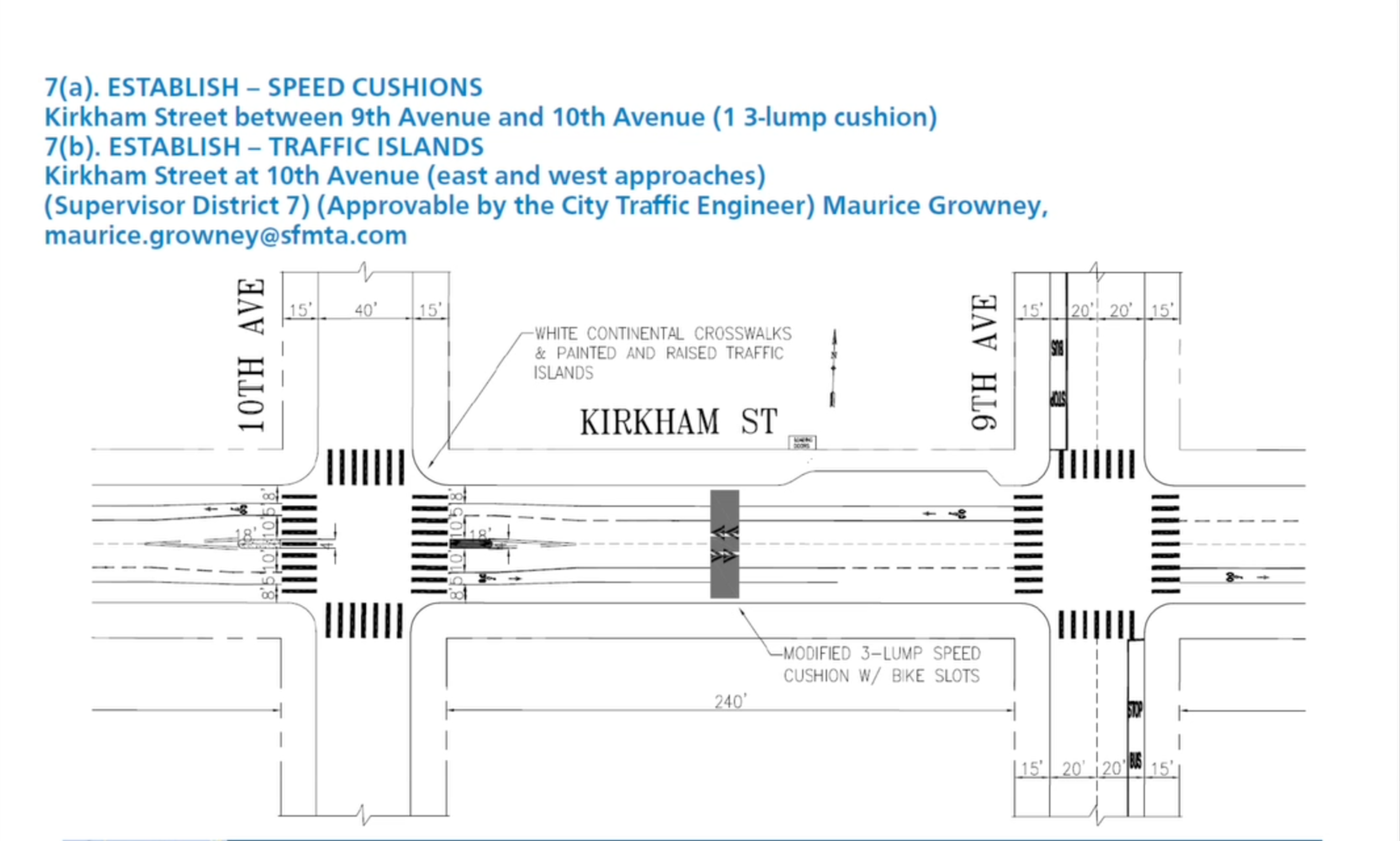 The SFMTA is planning to replace the neckdown with “speed cushions,” or speed bumps with divots allowing easy emergency vehicle access. | Source: SFMTA
Jaime Kelly, who lives at Kirkham near Funston Street, called the neckdown an “absolute nightmare” in January, and his opinion hasn’t changed.
“Every day, people enter it and don’t really know what to do,” he said. That confusion can make walking and cycling along Kirkham dangerous, as drivers behave unpredictably when they are suddenly forced to share a single lane with oncoming traffic.
Still, not all Kirkham Street residents are happy to see the neckdown go.
Transit advocate Cyrus Hall, who lives on Kirkham, said he’s “disappointed” by the city’s decision to remove it. As a cyclist, he has sensed a slowdown in car traffic and a decrease in drivers swerving into the bike lane.
“I disagree with the agency on this,” he said. “I think the neckdown is great for a bike lane.”
Unfortunately for Hall, the SFMTA has called off its neckdown experiment. The agency said there are no plans to install additional versions on city streets.