
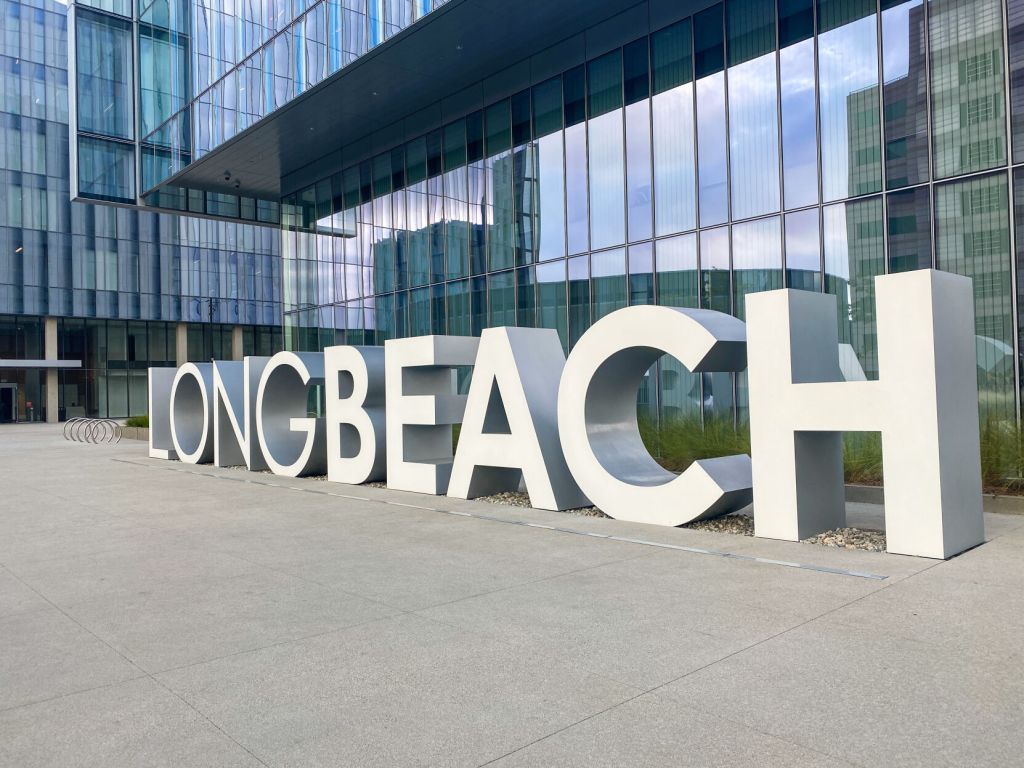
Long Beach will explore different strategies to support local businesses affected by crime and quality of life issues – such as vandalism and break-ins.
As the business community across the city continues voicing public safety concerns, which owners say affect economic vitality and attracting patrons, the City Council wants to look at more ways to provide support.
The City Council has asked city staffers from several departments to report back within 90 days with recommendations on what new or current strategies can be applied to meet the needs of businesses and residents.
The report will include an update on mental health response efforts and CARE Court program coordiantion; a plan to establish metrics and public dashboards on enforcement activity and safety improvement at identified business corridors; an update on city actions following the Grants Pass v. Johnson ruling and future potential actions; a feasibility study on increasing the presence of the Long Beach Police Department and quality-of-life officers; and a timeline to address some of these issues businesses are facing.
Long Beach has already been working on providing more support to its businesses through a range of support programs. The Visual Improvement Program Grant, for example, provides direct relief for businesses impacted by crime or vandalism, and Level Up LB offers business makeovers, mentorship and small business grants.
In the fiscal year 2026 budget, councilmembers also approved an $8.7 million initiative focused on recruiting and retaining businesses in Long Beach and revitalizing the city’s neighborhoods.
Business associations, improvement districts and community organizations citywide, meanwhile, continue collaborating with municipal departments to promote safety, enhance communication and provide on-the-ground support for commercial corridors, according to a staff report.
Despite these efforts, business owners continue to report recurring issues such as drug activity, vandalism, loitering, break-ins, encampments, and aggressive behavior toward employees and customers.
While the Long Beach Police Department’s crime reduction update and summer review noted significant year-to-date decreases in shootings, homicides and property crimes citywide, many businesses continue experiencing conditions that do not reflect these broader trends.
“A lot of people just stopped reporting for a lot of reasons – they’re frustrated, long response times, and it’s happened so often,” Councilmember Cindy Allen, who authored the item, said during the Tuesday, Dec. 2, meeting. “These problems are not just isolated to downtown, we see these issues happening all over the city.”
Reports from business improvement districts illustrate what other commercial and entertainment corridors are also facing, such as visible impacts of vandalism, theft and quality of life issues, Allen said. These experiences show that while citywide enforcement and prevention efforts are producing measurable results, additional localized strategies are needed to ensure that improvements in public safety are fully realized across all business districts.
“I can tell you one thing (about) these businesses, they want to keep their patrons safe,” Allen said. “They want to retain customers, and then they also want to make sure that they can bring new customers in, and I know this continues to be a challenge.”
During the public comment period of the council meeting, several business owners, property owners and even residents – the majority from the downtown area – shared several of these public safety concerns and told stories about the issues they face on a daily basis.
“What I’m about to say is not just me experiencing this, other businesses have experienced as well, but since I’ve been here for three years in downtown, I’ve been assaulted more than seven times,” said Chris Sweeney, owner of Right Mealz. “I have a scar on my hand to prove it. I’ve disarmed people, I’ve had staff assaulted, I’ve had staff quit on me because they’ve been assaulted. It’s very hard to run a business when I’m dealing with these issues on a daily basis.
“We’re fed up with it,” Sweeney added. “We need change; we need action today.”
Mayor Rex Richardson and the council thanked all of the people who spoke up about their issues. Several councilmembers emphasised that these support efforts are needed not just in downtown, but also across the entire city.
Councilmember Suely Saro, for example, suggested that the city also work with nonprofits and faith-based groups to see how these quality-of-life issues can be addressed differently with police and other partners.
Councilmembers also said they want an update on the Health and Human Services Department and CARE Court coordination that provides an overview of mental health response efforts and service referrals, and how CARE Court petitions are integrated into enforcement efforts for chronically ill individuals who are homeless and refusing services.
“This item is not an item that criminalizes our neighbors experiencing homelessness, that’s not what it is, but we also have to be realistic,” said Councilmember Mary Zendejas, “to know that this is about being compassionate to those that refuse services, that are experiencing homelessness, that cannot acknowledge what it is that they are refusing, whether because they are not mentally stable or because they’re on drugs. Whatever it may be, we need to help them because if not, this is going to continue.”
Richardson and City Manager Tom Modica, meanwhile, also highlighted different efforts the city is trying to do to address homelessness, such as getting Proposition 1 funds to be able to have a dedicated treatment facility for drug overdoses at the Multi-Serive Center and provide more beds for people with mental health needs.
City leaders said they want to establish metrics and regularly publish progress reports detailing enforcement activity and safety improvements in each identified corridor to improve public accountability. City staffers will also provide an update on actions taken following the Grants Pass v. Johnson decision, which centers around local laws against camping on public property.
Staffers will also provide a feasibility study on allocating additional funds to increase the number of quality of life officers, expanding the deployment of bike and patrol units, and enhancing after-hours police presence in areas identified by businesses to help stabilize conditions for local businesses and reinforce public confidence.
Strengthening coordination between the Police Department, business associations and other organizations, the staff report said, would allow the city to better identify and respond to recurring hot spots, improve accountability, and sustain progress toward creating a safer and more welcoming environment across Long Beach’s business and entertainment corridors.
“Long Beach is an amazing city and a great place to live,” Allen said, “and we owe it to all of you to do everything in our power to restore your confidence in these local (business) corridors.”