
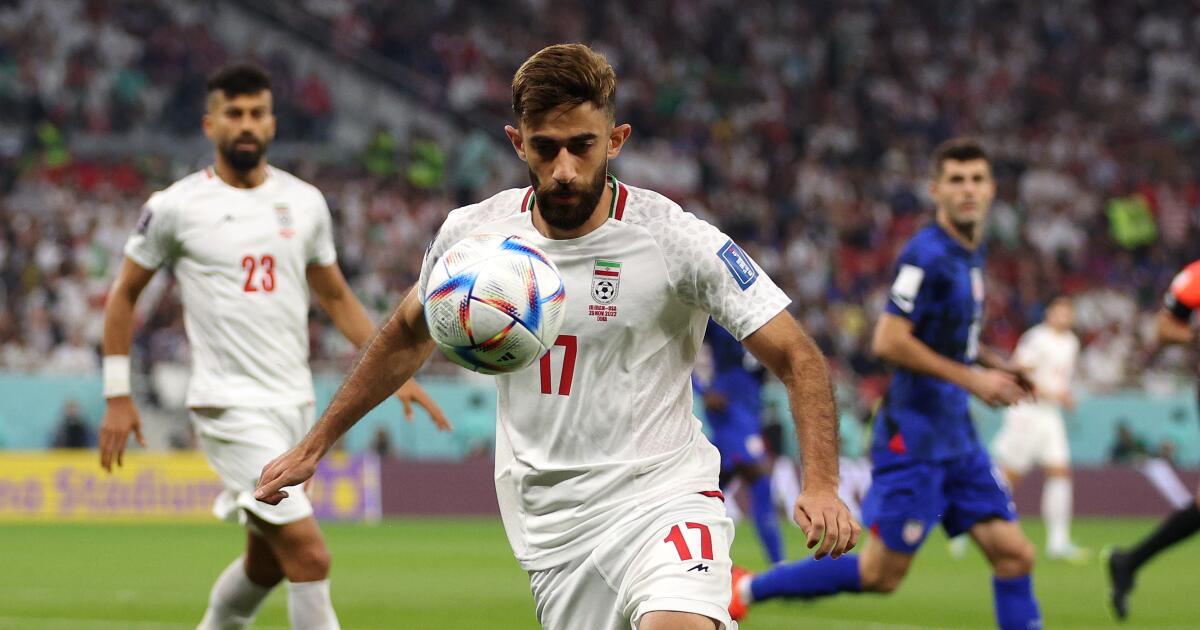
WASHINGTON — In soccer terms, the schedule for the 2026 World Cup is probably something of a draw for the Los Angeles host committee. The U.S. will play two of its three group-play games at SoFi Stadium in Inglewood, which is good. But Brazil, Germany, France and England and defending champion Argentina will travel no farther west than Dallas during the first round, which is bad.
Instead, Iran and New Zealand, the lowest-ranked team in the tournament, will play in two of the other five first-round games in Southern California. Not exactly the teams organizers hoped for.
But if that’s the black cloud, there is a silver lining in L.A.’s geography.
“It’d be great to have some of those premier matchups,” said Adam Burke, president and chief executive of the L.A. tourism and convention board. “But the numbers from FIFA are remarkable in terms of the number of people who are going to come here and are going to spend five to 10 days in L.A., almost irrespective of who plays, because we’re the primary Western gateway.
“So a lot of fans are going to start their World Cup experience here.”
“Anchored by the U.S. is wonderful. And you’ve got a huge Persian population here, so it’s exciting,” added LAFC co-president Larry Freedman, the co-chair of the World Cup host committee. “Just the fact that we now know who’s coming, who the U.S. is playing, who else is coming here, it’s pretty exciting.
“So I’m not going to get hung up on would’ve, should’ve, could’ve if France was coming here. It’s going to be great.”
Next summer’s World Cup, the largest and most complex ever, will kick off June 11 in Mexico City with Mexico playing South Africa and conclude with the July 19 final in East Rutherford, N.J. In between there will be 102 games at 16 venues in three countries.
SoFi Stadium will play host to eight matches, beginning with the U.S. opener against Paraguay on June 12. The Americans will finish group play in Inglewood on June 25, playing the winner of a March playoff involving Slovakia, Kosovo, Turkey and Romania. Two Group G matches — Iran vs. New Zealand on June 15 and Iran-Belgium on June 21 — also will be played in SoFi, sandwiched around a Group B match between Switzerland and the winner of another European playoff, this one featuring Wales, Bosnia and Herzegovina, Italy and Northern Ireland.
The teams for the three knockout-stage games to be played at SoFi — round-of-32 games on June 28 and July 2 and a quarterfinal on July 10 — haven’t been determined but the possibilities include Mexico, South Korea, Canada, Spain, Austria and Algeria.
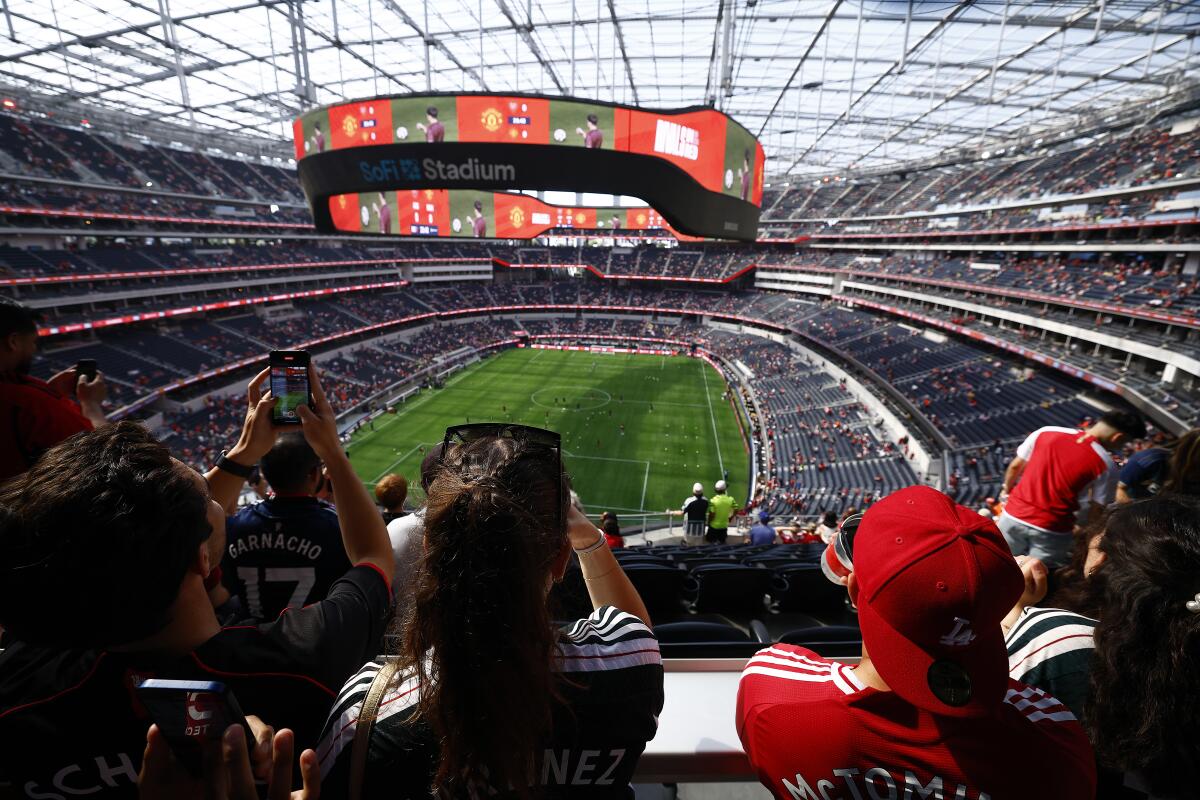
Fans watch a friendly match between English soccer clubs Manchester United and Arsenal at SoFi Stadium in July 2024.
(Ronald Martinez / Getty Images)
That’s why Burke thinks an economic-impact report that estimated the World Cup will be worth $594 million to Los Angeles County is too conservative.
“It is a 39-day opportunity. The match days are huge [but] the tag we’ve been using is ‘start your World Cup journey in Los Angeles,’” he said. “Because we’ve got so much direct air service and so much accessibility as a hub, it actually works really well.”
Plus Iran’s visit to L.A. also could wind up being a big boost. Although the country is not among the tournament favorites, its two first-round matches will be big draws in Los Angeles, home to the largest concentration of Iranians outside Iran. And Burke is hopeful some fans from the Middle East will be able to come as well.
Iran is one of 19 countries whose citizens are banned from entering the U.S. or restricted by the Trump administration. Exceptions to that ban include players, coaches, media and technical officials coming for the World Cup, and that window could be widened to include World Cup spectators.
“There have been active discussions about whether they would be able to make a similar exception for ticketed fans,” Burke said. “Our hope is that that might be something that still occurs.”
Five of the eight matches at SoFi will kick off at noon, three on weekdays That could be punishing for both commuters and the players because while the stadium has a roof, it is not enclosed nor climate controlled. Last summer’s Club World Cup was plagued by high heat and humidity, which hampered play at venues across the country. And a recent report compiled by Football for the Future, Common Goal and Jupiter Intelligence determined that could happen again next summer since 10 of the 16 stadiums to be used in the World Cup are at “very high risk or experiencing extreme heat-stress conditions.”
Despite the warning, more than half the 104 World Cup games are scheduled to start no later than 6 p.m. local time.
“It’s hot in the summer in the United States,” said Alexi Lalas, a defender on the U.S. team that played in the 1994 World Cup, the last one played in North America. “It was hot in the summer of 1994 and, news flash, it will be hot in the summer of 2026.”
Not for everyone. Four of the 16 World Cup stadiums are enclosed with air conditioning and nine teams — Argentina, Spain, Portugal, the Netherlands, New Zealand, Cape Verde, Uzbekistan, Canada and Japan — will play two of their three first-round games indoors.
“It’s definitely a competitive advantage,” Lalas said. “Especially for teams with older players like [Lionel] Messi and [Cristiano] Ronaldo.”