
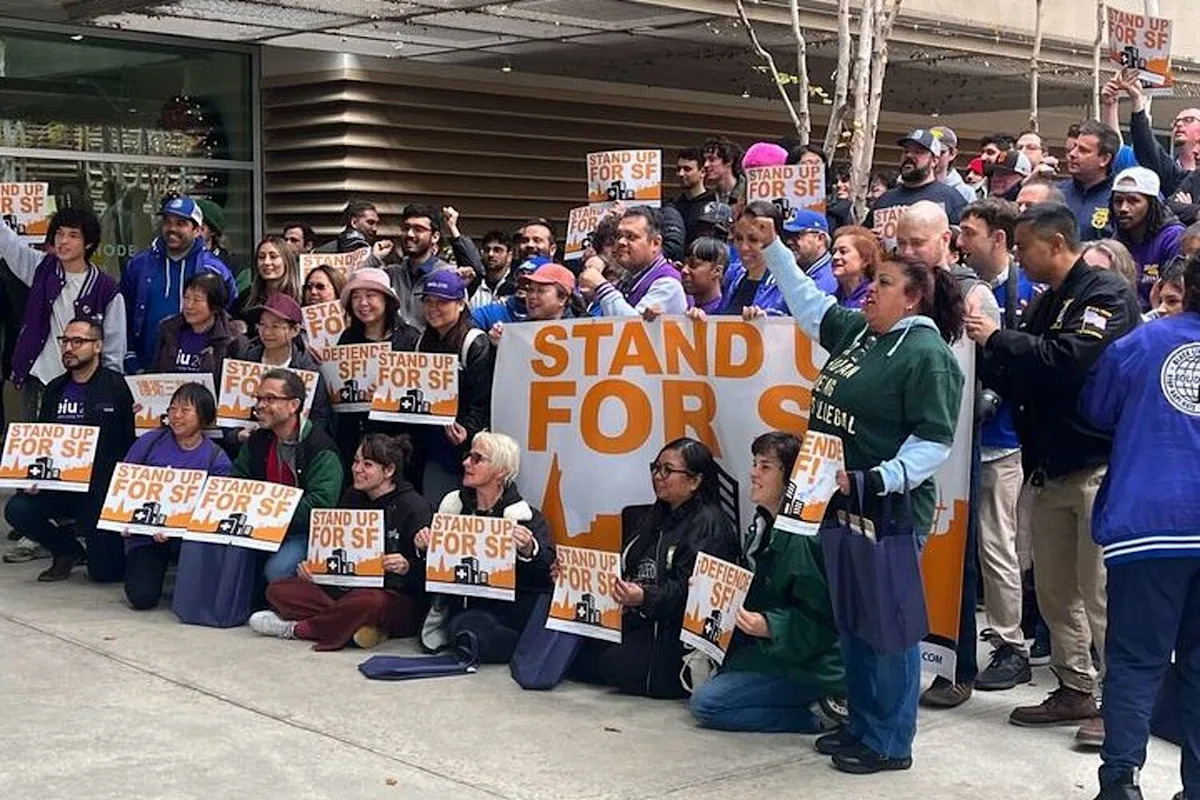
When Kristin Hardy thinks about San Francisco’s looming budget gap, the medical records clerk thinks about services the city will be forced to cut – and the likely impacts on institutions such as S.F. General and Laguna Honda hospitals, which receive significant government funding.
“It would have a drastic, drastic effect,” she said. “It’s scary.”
Hardy and more than 100 other people gathered Saturday morning at SEIU 1021’s Union Hall on Rhode Island Street for the kickoff of a petition drive to place a measure on the June 2026 ballot that would tax large corporations with highly paid CEOs.
The Overpaid CEO Act is being put forth by Stand Up for SF, a coalition of labor unions and progressive organizations, in response to looming budget shortfalls they attribute to the passage of President Donald Trump’s One Big Beautiful Bill Act, which is expected to cut $400 million from San Francisco’s budget.
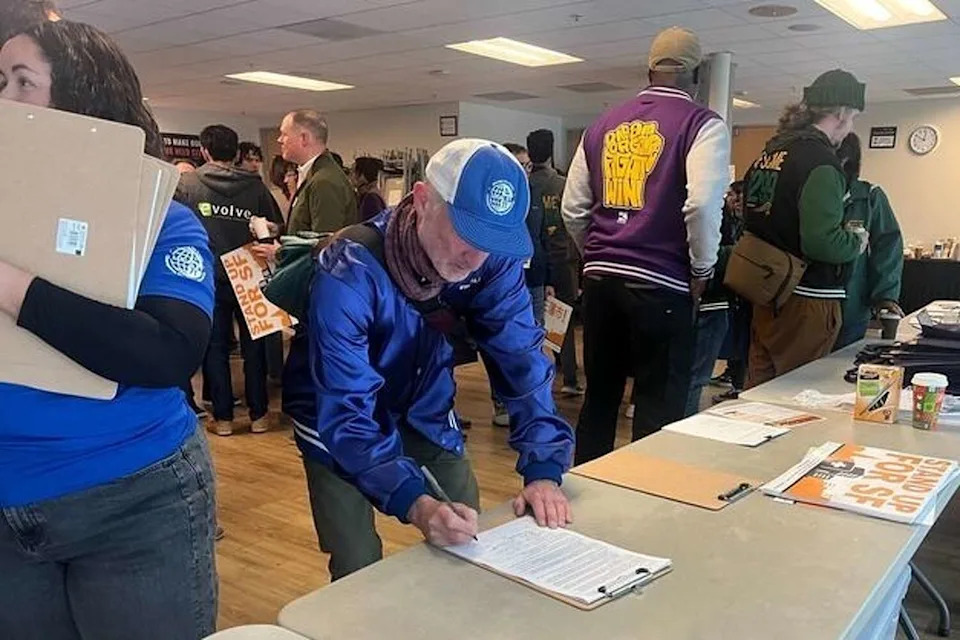
Signatures are collected Saturday to put the Overpaid CEO Act on the San Francisco ballot. (St. John Barned-Smith/S.F. Chronicle)
Supporters of the proposed tax argue that a decrease in federal funds will hurt the city’s public health system. More than half of patients in the system rely on Medicaid-funded programs, according to the unions.
On Saturday morning, Hardy and others flooded into SEIU’s union hall for a pep rally and training to hear speeches from SEIU 1021 President Theresa Rutherford, Assembly Member Matt Haney, Supervisor Chyanne Chen and numerous local union leaders.
Rutherford told the crowd that the impact of Trump’s budget law will go well beyond impacting local hospitals and emergency rooms.
“This will affect how people live, whether someone is able to pay rent, whether someone is able to buy food in the grocery stores,” Rutherford said. “This budget is meant to destroy us, but guess what? We are standing up. We are fighting back.”
The Overpaid CEO Act would levy a tax on large corporations whose top executives earn more than 100 times the median salary of their workers, and apply to companies with more than 1,000 employees and $1 billion in annual revenue. Organizers say it would generate more than $200 million a year for the city’s general fund to support mental health programs, public hospitals and emergency response services.
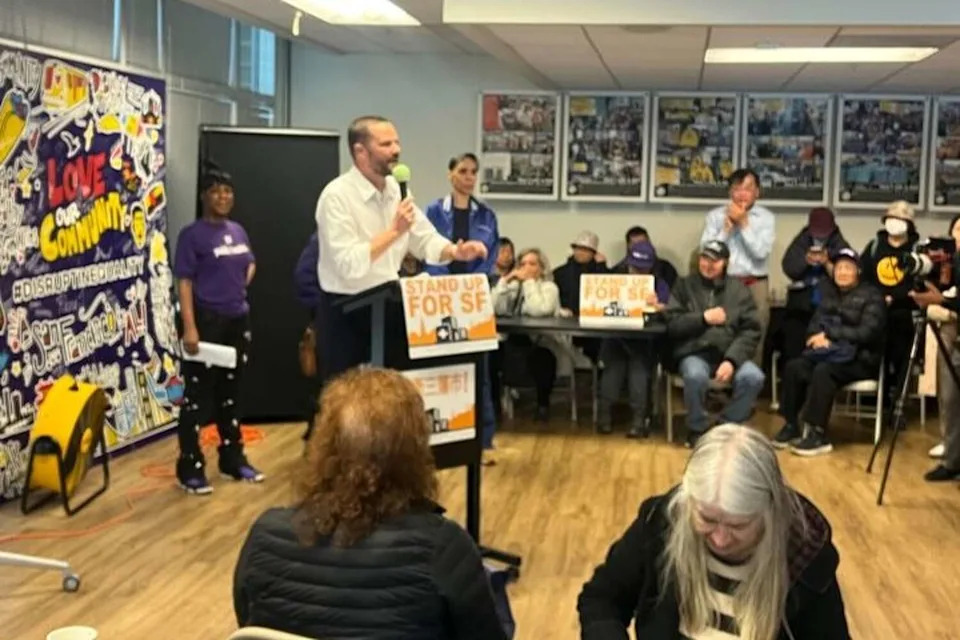
Assembly Member Matt Haney, D-San Francisco, rallies Saturday for the Overpaid CEO Act. (St. John Barned-Smith/S.F. Chronicle)
“Trump’s proposed cuts to Medicaid and other federal programs threaten to devastate our local budget and place enormous pressure on San Francisco’s public hospitals and clinics,” said Haney, D-San Francisco. “San Franciscans will not sit back while Donald Trump attacks our most vulnerable neighbors.”
Currently, the gross receipts of a CEO who makes 600 times more than the firm’s lowest-paid employee are taxed at a rate of about 0.129%. The unions’ measure would bump it to 1.121%.
Some of the city’s progressive supervisors had briefly considered a similar measure to raise taxes on some big businesses, with a lower tax rate of about 0.643%.
The counterproposal was sponsored by Supervisors Connie Chan, Shamann Walton, Jackie Fielder and Chen, but ultimately they pulled their plan and threw their weight behind Stand Up for SF’s proposal.
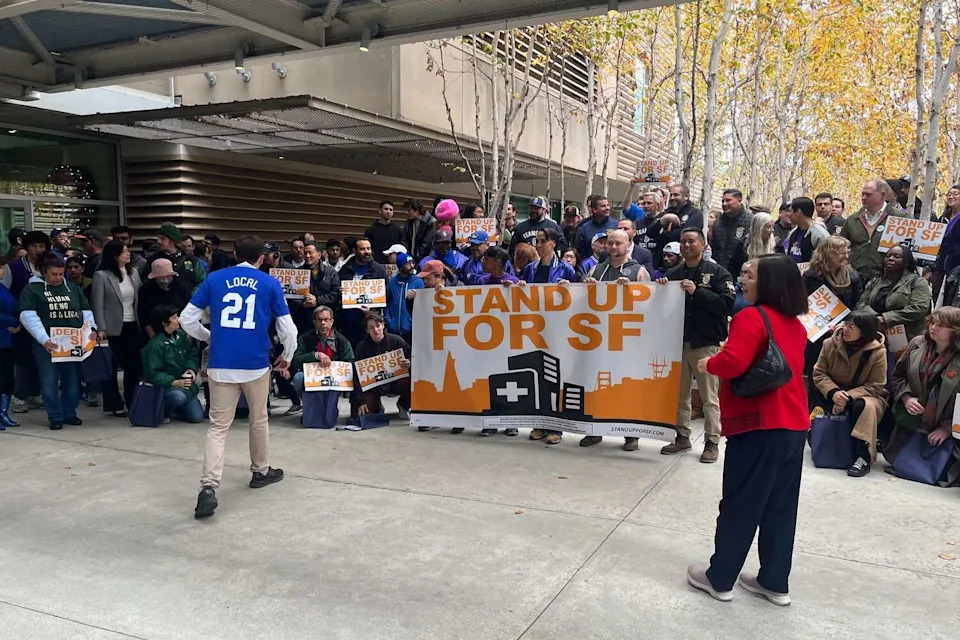
Stand Up for SF launches a petition drive Saturday to put the Overpaid CEO Act on the ballot. (St. John Barned-Smith/S.F. Chronicle)
The group has until February to submit its measure, and it needs approximately 10,500 signatures to qualify, according to the San Francisco Department of Elections.
Teamsters union California co-chair Peter Finn, one of several speakers Saturday, said the proposed tax raised a more important question: Who is San Francisco for, and what kind of city does it want to be?
“What kind of San Francisco do we want?” he asked as cheers erupted from the crowd. “Is it a San Francisco that prioritizes big corporations and they’re billionaires, owners? Or is it a San Francisco where everyday people can live, can work, and raise their families?”
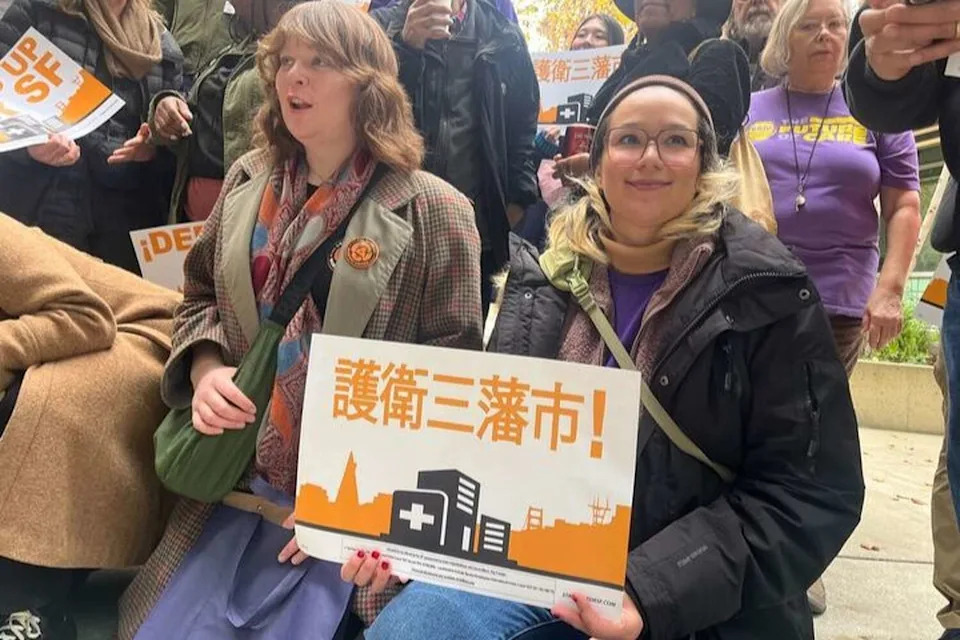
Lauren Kush, right, who made headlines in 2019 as a homeless Uber driver, attends a rally Saturday to put the Overpaid CEO Act on the San Francisco ballot. (St. John Barned-Smith/S.F. Chronicle)
For Lauren Kush, the affordability struggle is a familiar one. She made headlines as a homeless Uber driver in 2019 when she was living in Los Angeles.
Kush said she found a job in tech but lost it when her former company cut diversity, equity and inclusion programs. She now works at Larkin Street Youth Services.
“CEOs need to be held accountable for the wealth they’ve generated and for exploiting workers,” she said.
This article originally published at ‘Fighting back’: S.F. campaign launched to tax corporations with highest-paid CEOs.