
I always love it when news media and conservative politicians complain that progressives are not sufficiently polite and collegial—and it’s even more special when men who have been openly dismissive of their female colleagues complain that women are not nice enough.
After a year of relative collegiality and calm, the San Francisco Board of Supervisors has fallen into old patterns of tension and bickering over the past week as hot-button issues such as housing and the budget have sparked fights. … [Sup. Danny] Sauter said that “petty personal grievances” don’t contribute to the more cordial environment the mayor has tried to foster this year.
Umm … these aren’t just “hot button” issues. They’re policies that will impact the future of the city and everyone who lives here. These are fights over serious, serious stuff that pits the billionaire agenda against tenants, small businesses, and neighborhoods. A lot of us don’t want to see this as a genteel tea party, not when lives are at stake. The reason SF politics can be a “knife fight in a phone booth” is that very, very rich people have for years tried to control this city, forcing out the poor and working class, and communities have had to resist with every tool they have.
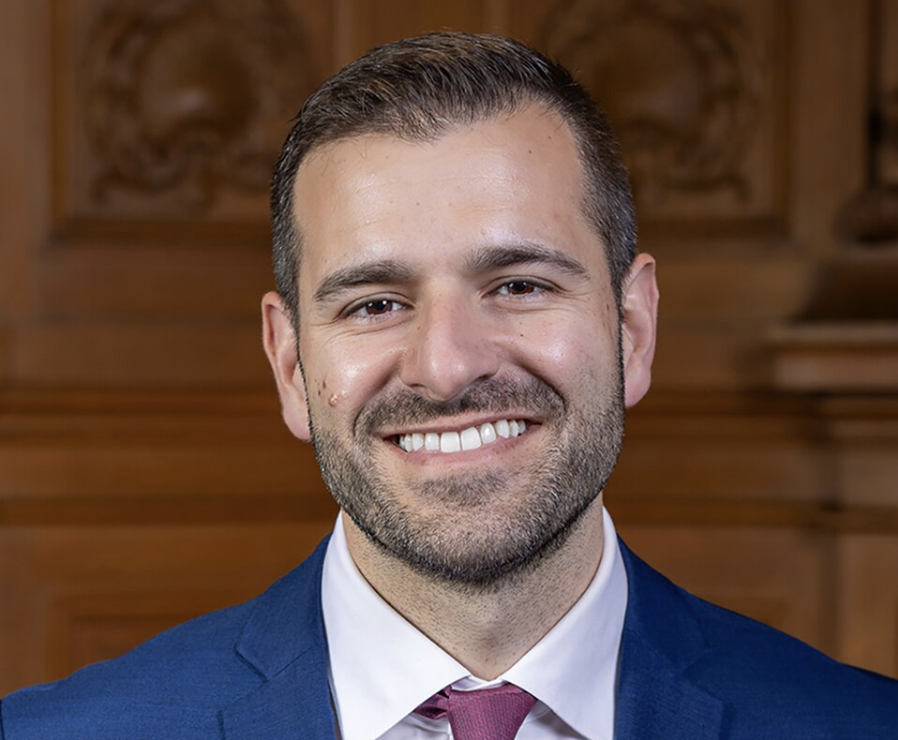 Sup. Danny Sauter can’t handle being called an asshole. City Hall photo.
The guys on the board have been treating proposals by Sup. Connie Chan to protect tenants as meaningless (despite the fact that almost every progressive, tenant, and neighborhood group agrees with her):
Just after Chan proposed an unsuccessful amendment to exempt all rent-controlled housing from the plan, Sauter said he thought that “any attempts to make amendments at this point are more political rather than serious in nature.” Later in the meeting, Mahmood said statements that the rezoning threatened about 20,000 rent-controlled homes with demolition — a view espoused by Chan — amounted to “fear mongering.”
“It is factually not true, and it’s exploiting genuine concerns of residents across the city to score political points,” Mahmood said. “That’s not leadership. It’s emotional exploitation.”
Oh: So the women fighting for tenants are “emotional” and not “serious.”
I am not the only one who found this pretty offensive. Talk to women at City Hall and you will hear a lot of concerns about the way the conservative men are treating the progressive women.
And now Chan is being scolded for calling two of those guys “assholes.” How horrifying; I suspect they will never recover, the poor things.
(Oh, and when London Breed, a conservative, was mayor, she could berate her opponents all she wanted, and the Chron never called her out. I guess only progressive women are supposed to be polite and quiet.)
Sponsored link

I guess it’s grand that the World Cup is the coming to the Bay Area; like the Super Bowl, this generates a lot of economic activity. (The Super Bowl also leads to a lot of displacement of the unhoused, as the city clears everyone out of downtown to make things nice and shiny for the wealthy visitors.)
So I got this from the Business Times:
Airbnb expects to host about 12,000 guests representing 92,000 room nights across the Bay Area when Levi’s Stadium hosts a half dozen matches next summer, according to a report from Deloitte commissioned by the San Francisco company. The report estimates direct spend from guests of about $47 million, but projections of indirect and induced spending push the total impact on the local economy to $144 million.
Just for the record, those are 12,000 people who will not be staying in union hotels, 92,000 room nights taken away from Local 2 workers. Many of those 12,000 housing units have been taken off the rental market, some of them through evictions. The Yimbys talk about the need for more housing, but they weren’t part of the coalition that fought to regulate Airbnb. And now we just consider this normal, maybe even something to celebrate.
The last time an obscure bill came up that could undermine the city’s limits on formula retail and undermine labor, I thought opposition had shut it down. After former Sups. Aaron Peskin and Matt Gonzalez contacted the author, Sup. Myrna Melgar, she pulled if from committee.
And now it’s back. The same bill, as far as I can tell, will come before the Land Use and Transportation Committee Monday/8, and Melgar intends to send it to the full board the next day.
This measure could, among other things, allow formula retail (Starbuck’s, McDonald’s, etc.) in neighborhood commercial districts, as long as it’s an “adaptive re-use” of a historic building. It could undermine project-labor agreements.
I don’t see why it even exists, but here we go again.
Everyone agrees that Muni is in serious trouble. Ridership is coming closer to pre-pandemic levels, but fare box revenue has never paid for more than about 25 precent of the cost of transit service, and as the city faces a massive budget crisis, dramatic cuts that could destroy the city’s transit-first policy are looming.
Mayor Daniel Lurie is looking at a parcel tax—a type of property tax that isn’t based on the value of a piece of property (under Prop. 13 raising regular property taxes is impossible). Parcel taxes are essentially flat taxes per “parcel,” or piece of property that has a single owner. A small house in a working-class neighborhood is a “parcel,” and so is the Bank of America Building. Lurie’s plan would tax commercial and larger residential parcels more than smaller ones, but makes no distinction between single-family homes and apartment buildings.
The Muni Now Muni Forever Campaign has an alternative that would raise even more money needed to fund Muni—in a much more progressive way. Single-family houses would be taxed at a lower rate; landlords with large buildings would pay more. Small businesses would pay less; large commercial owners would pay more.
There’s a handy calculator here that allows property owners to see what they would pay under the two versions.
The group will hold a rally Monday/8 at City Hall at noon to urge the mayor and the supes to adopt this version of the tax. If that doesn’t happen, competing proposals could wind up on the ballot.
Full disclosure: My daughter works on the Chan for Congress campaign