
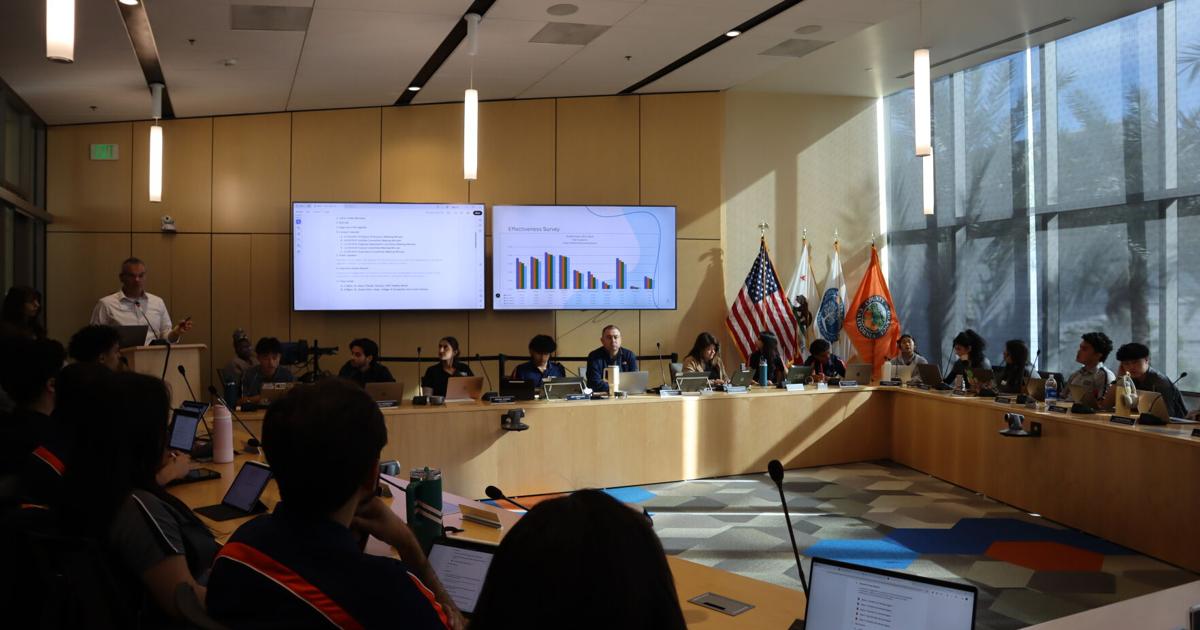
Cal State Fullerton’s Counseling and Psychological Services shared mental health findings from wellness surveys administered throughout campus on Tuesday with the Associated Students’ Board of Directors.
Healthy Minds Study is a national mental health assessment that has been rolled out to 675 colleges across the nation. Over 2,900 CSUF students have filled it out so far. This survey provides data to help universities understand and support their students’ well-being while comparing the data with other schools, according to Chelsea Rock, the assessment analyst of CAPS.
“Our students are more depressed than the national average. 35% of our students are experiencing some form of depression, and Fullerton’s anxiety rates were on par with the national average at 29% of our students,” Rock said. “The next thing we found is, unfortunately, our students are experiencing a higher rate around eating concerns, and that’s higher than the national average at 26%, so our students are really feeling it.”
They also conducted a shorter survey called the flourishing scale. This survey focuses on the needs, relationships, purpose and self-esteem of students rather than symptoms or problems relating to mental health concerns.
According to Rock, 37% of students feel like they’re flourishing, 58% feel a lack of companionship, 65% feel left out and 76% of students report feeling isolated from others.
“These numbers highlight that loneliness is not just like an occasional feeling, but a significant resistant challenge for the majority of our student population,” Rock said.
The board also reviewed and passed all of their resolutions, including the 2026-27 Titan Student Union User Fees. Shay Quock, ASI board treasurer, explained the slight changes to the board prior to their vote, including cost recovery rates for Titan Theater and the Stearn’s Meeting Room.
“We’re also removing the fees for foosball and shuffle board, since its usage is low and the transaction costs have been outweighing the revenue. These updates keep the TSU aligned with any operational needs as well as remaining affordable for students,” Quock said.
Mahak Ahmad, vice chair of the board of directors and chair of the Instructionally Related Activities Committee, also clued in the board on some issues her committee has been handling behind the scenes.
“Over the past few months, the committee and I have been reviewing concerns related to IRA funded programs, specifically an issue arose with a program receiving funding and moving forward without going through the application process or undergoing the committee review process,” Ahmad said.
Ahmad shared that Alexander Porter, former vice president of Administration and Finance, attended their IRA Committee meeting on Oct. 24, where they reviewed their spending and looked for clarification on the matter.
“The conversation left the committee feeling confused and without clear answers regarding the decisions,” Ahmad said. “During this review, we found that the total amount requested – approximately $23,000 – exceeded the remaining funds from the 2024-2025 Global and Community Health Development Program. Additionally, the initial proposal included allocating a portion of the funds for faculty stipends, which is prohibited under IRA guidelines.”
President Ronald Rochon announced that same day, in an email, that Porter was removed from his role.
“It is important to note that the funds were ultimately used to support students participating in the study abroad experience,” Ahmad said. “The focus here is also on the importance of shared governance and ensuring that situations like this do not happen again in the future.”