
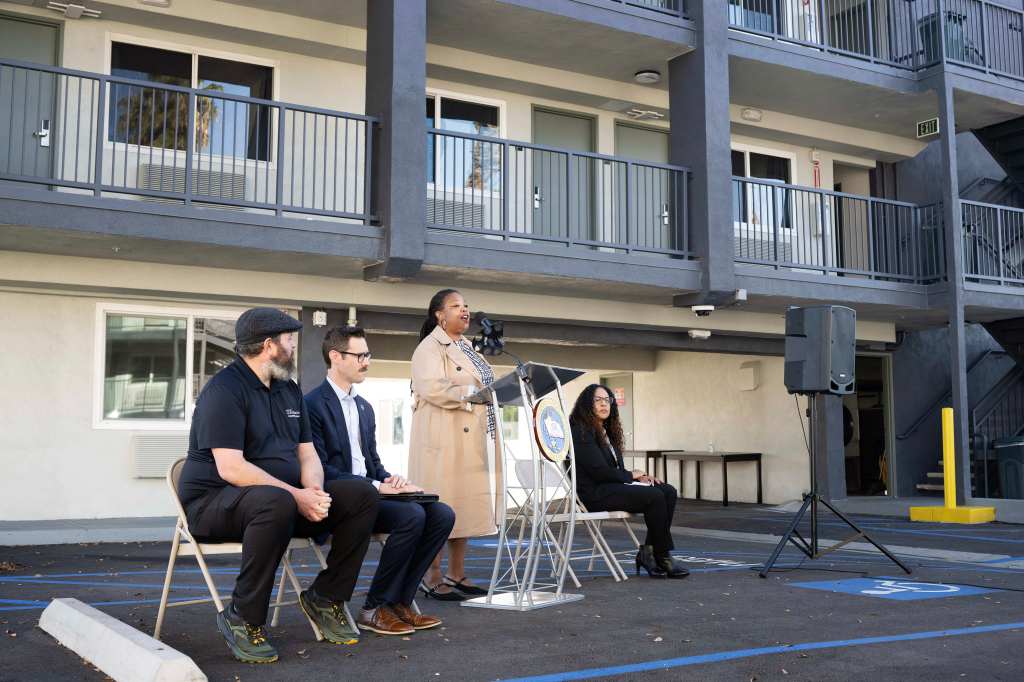
One of Long Beach’s longest-standing encampments along the Los Angeles River was removed last week, officials said, though the city and a state task force collaborated to find temporary housing for those in the encampment and to clean up debris in the area.
This encampment operation was part of Gov. Gavin Newsom’s statewide strategy to address homelessness by deploying the State Action for Facilitation on Encampments Task Force to address the persistent encampment located alongside the 91 and 710 freeway interchange.
The task force helped connect 25 people and eight pets with housing at a nearby Project Homekey shelter with supportive services, officials said during a Monday, Dec. 8, press conference.
Among the people connected to housing was Steve, who lived in the riverbed encampment for about a year and a half – though he has been homeless for nearly five years. He said that moving into the shelter last week has made him feel “happy, relieved and scared.”
“It takes a special person to be on the streets in the first place,” said Steve, who spoke after the press conference but did not divulge his surname. “There’s a lot of things you got to watch out for, but it really takes an incredible person to live in and survive on the riverbed, because down there, you don’t have a lot of help.”
Steve said that he has been able to start receiving support and resources for his mental health and physical health at the Project Homekey site, which opened in October, in time for this operation and to provide temporary housing for people at the encampment, officials said.
“I want to express my acknowledgement and great appreciation for the city of Long Beach for all their hard work – the partnership and commitment to keeping the community safe, clean and supported is invaluable,” California Transportation Agency Undersecretary James Hacker said during the press conference, held at the Project Homekey site. “We’re not going out to address the problem as single departments or agencies, but as one state team working together to resolve encampments, safely and humanely restore our highways, strengthen local partnerships, and provide real support to people experiencing homelessness.”

Homeless Services Bureau Manager Paul Duncan speaks during a press conference announcing the results of a recent encampment operation in Long Beach on Monday, December 8, 2025. (Photo by Drew A. Kelley, Press-Telegram/SCNG)
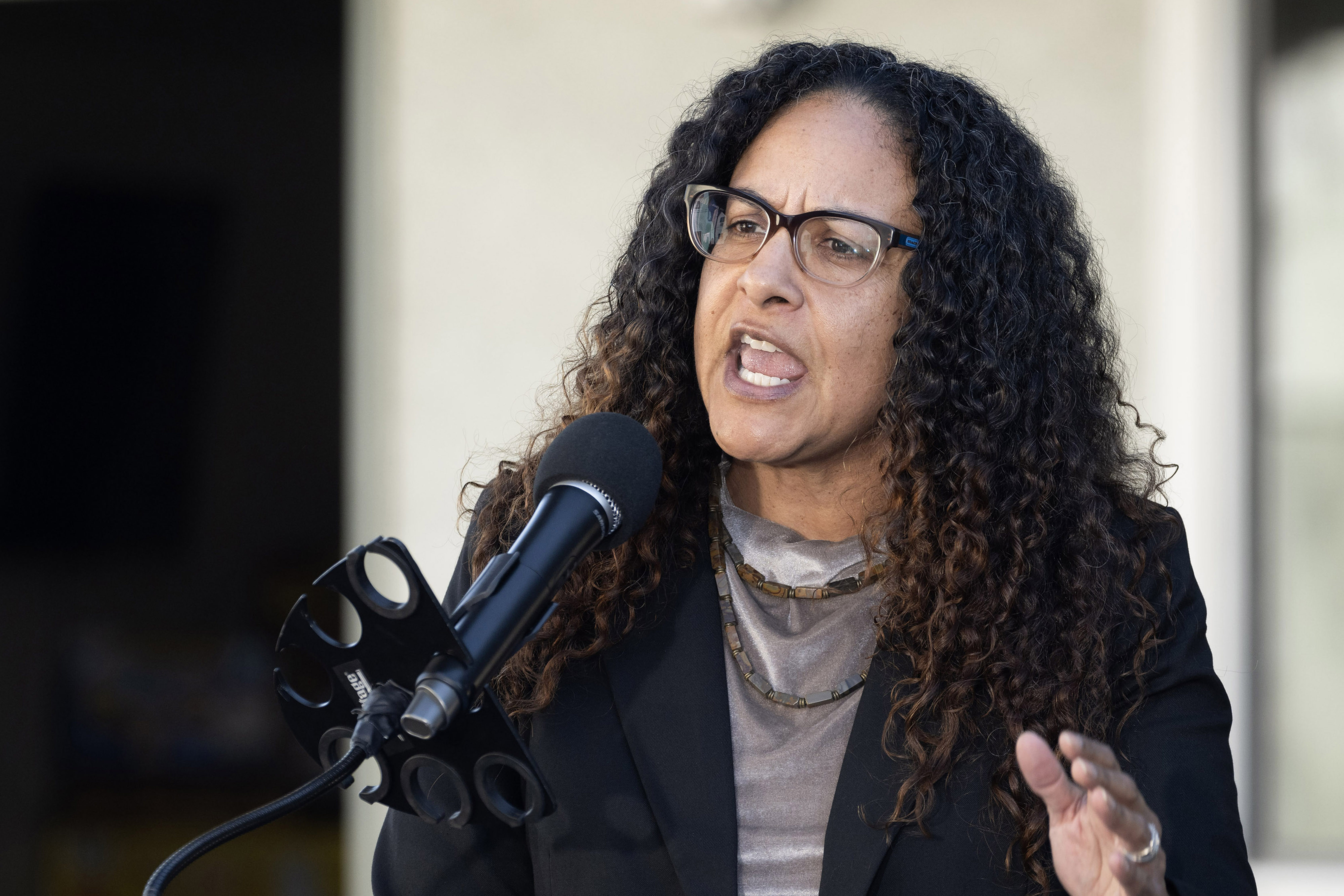
Secretary of the California Health & Human Services Agency Kim Johnson speaks during a press conference announcing the results of a recent encampment operation in Long Beach on Monday, December 8, 2025. (Photo by Drew A. Kelley, Press-Telegram/SCNG)
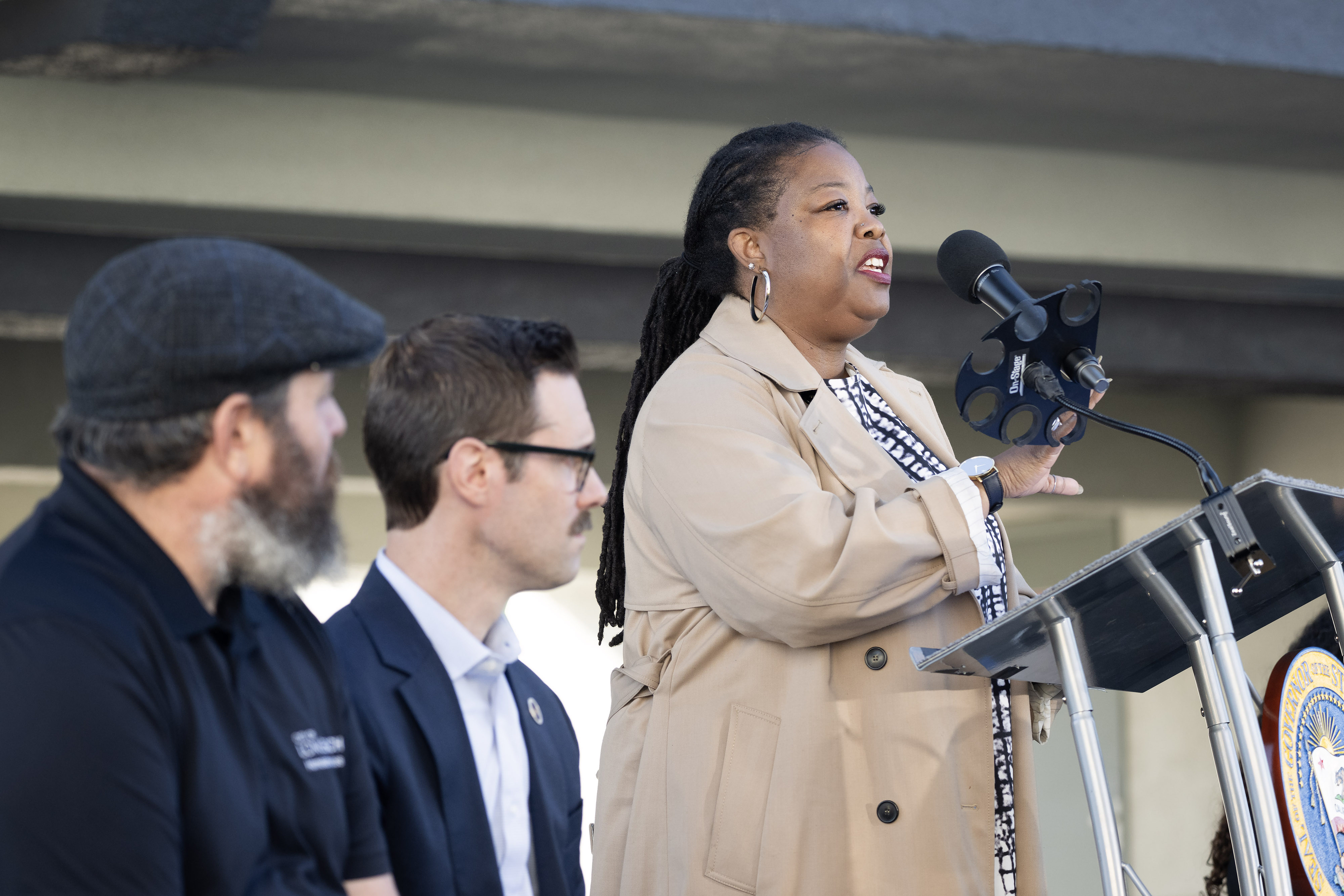
Secretary of the Business, Consumer Services and Housing Agency Tomiquia Moss speaks during a press conference announcing the results of a recent encampment operation in Long Beach on Monday, December 8, 2025. (Photo by Drew A. Kelley, Press-Telegram/SCNG)
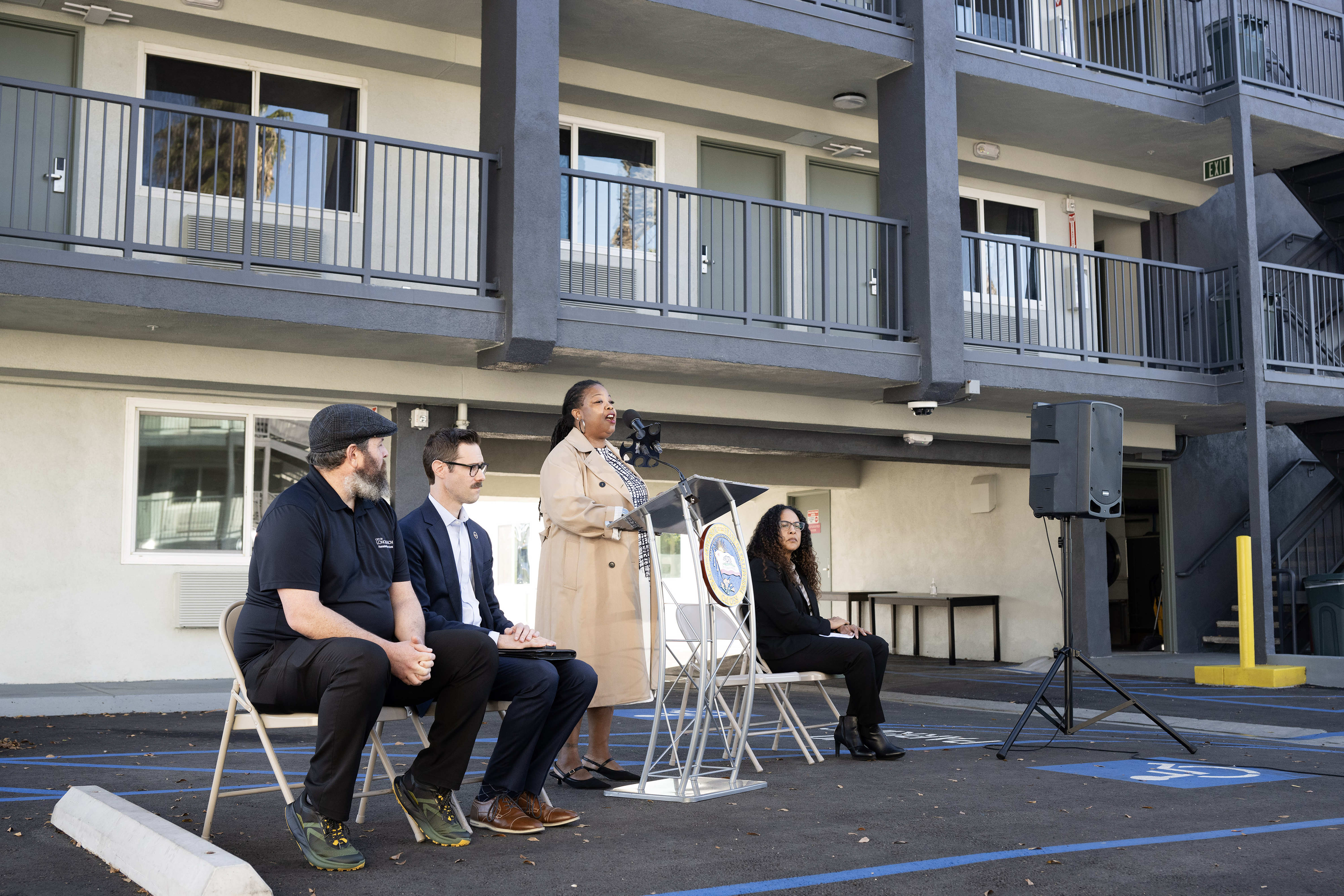
Secretary of the Business, Consumer Services and Housing Agency Tomiquia Moss speaks during a press conference announcing the results of a recent encampment operation in Long Beach on Monday, December 8, 2025. (Photo by Drew A. Kelley, Press-Telegram/SCNG)
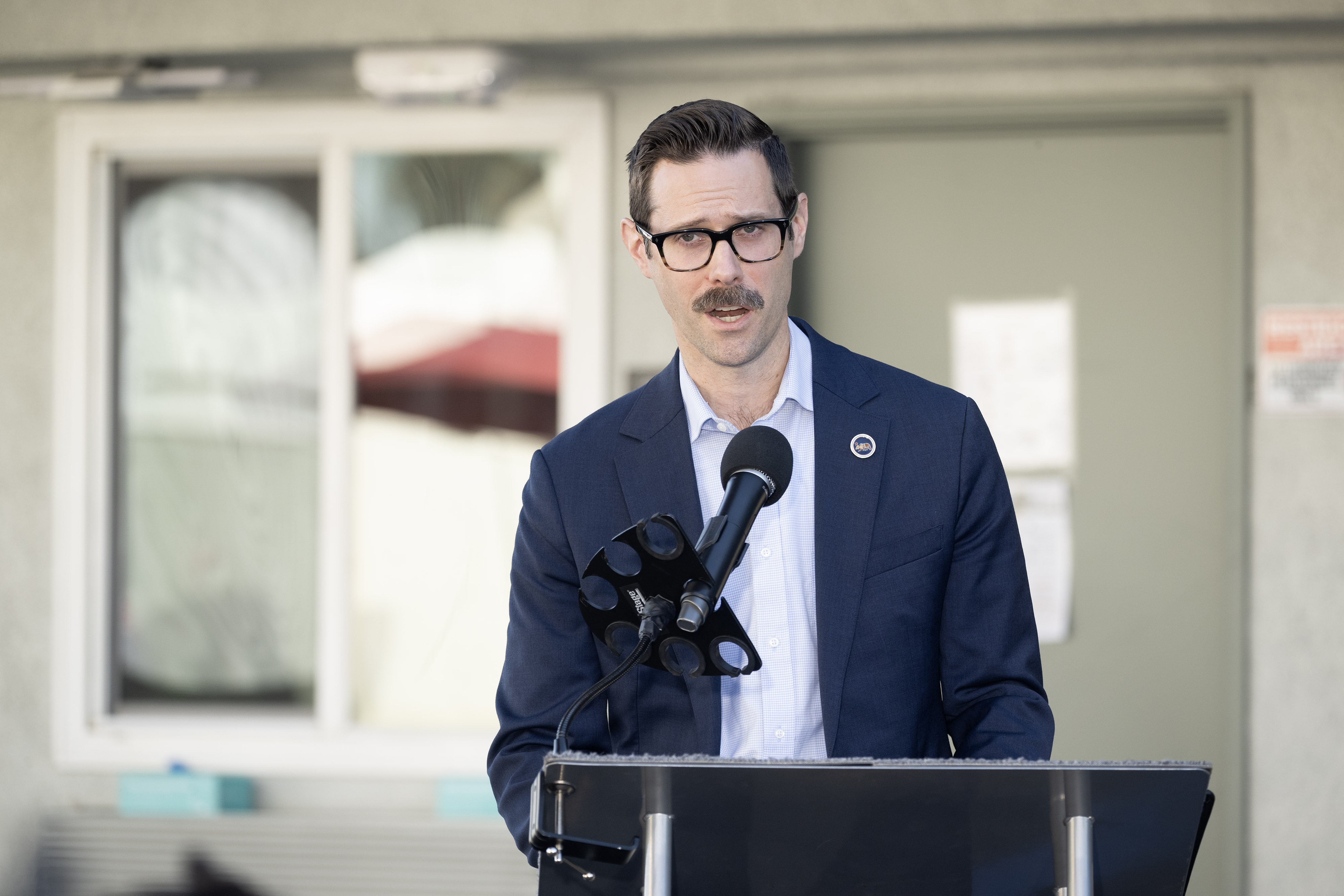
Undersecretary of the California State Transportation Agency James Hacker speaks during a press conference announcing the results of a recent encampment operation in Long Beach on Monday, December 8, 2025. (Photo by Drew A. Kelley, Press-Telegram/SCNG)

Secretary of the California Health & Human Services Agency Kim Johnson speaks during a press conference announcing the results of a recent encampment operation in Long Beach on Monday, December 8, 2025. (Photo by Drew A. Kelley, Press-Telegram/SCNG)
Show Caption
1 of 6
Homeless Services Bureau Manager Paul Duncan speaks during a press conference announcing the results of a recent encampment operation in Long Beach on Monday, December 8, 2025. (Photo by Drew A. Kelley, Press-Telegram/SCNG)
The SAFE Task Force brings together expertise and programs from across state agencies and works with local partners to address encampments on state rights-of-way in California’s 10 largest cities – including Los Angeles and Long Beach, among others. The task force clears encampments with help from Caltrans, but also provides emergency management, social services, health care, drug treatment and public safety, according to a press release.
In Los Angeles County, the task force has removed more than 3,200 encampments since 2023, including 36 in Long Beach, Hacker said.
“There’s nothing humane about letting people languish outdoors without shelter or support,” Newsom said in a statement. “We’ve been leaning in with unprecedented state help – real resources for our cities and counties – to turn this national homelessness crisis around and to get people the care they need. We’re standing with our local partners like Long Beach to move people out of encampments and into a safe, stable place.”
The Long Beach encampment along the 91 and 710 freeway interchange endangered not only the people in the encampment, but also motorists and the public, officials said. To facilitate the clean up, the task force worked with local service providers for weeks to provide outreach to people at the encampment, offering shelter and supportive services. After moving people into shelter, Caltrans teams picked up debris and hazardous materials, clearing about 150 tons of debris over three days, officials said.
This effort builds on work that has been underway since 2021, officials said, with Caltrans having removed more than 19,000 encampments statewide and having collected about 354,000 cubic yards of litter and debris.
“We are connecting people to services, we are moving people into safe housing and we are making real progress,” California Business, Consumer Services and Housing Secretary Tomiquia Moss said during the press conference. “I know it feels like we are not moving fast enough, but we disrupt the cycle of homelessness for people every single day, and this site is a reflection of that incredible work.”
The Project Homekey site, 5950 Long Beach Blvd., welcomed the 25 people from the encampment last week, including Steve on Tuesday, Dec. 2. Over the next month, Long Beach will move additional people into the interim housing site, said Paul Duncan, Long Beach’s Homeless Services Bureau manager.
“I’m really excited to see everything come together as a city,” Duncan said. “We truly believe that our best efforts in resolving encampments are leading with resources, allowing a place for people to go with resources that meet their needs and their desires.”
Over the next couple of months, Duncan added, Long Beach will continue to make progress on the LA riverbed – with help from an $11 million grant from the state’s Encampment Resolution Funding.
This year, the city surveyed 164 people living along the riverbed to better understand who they are, what challenges they face and how the city can best support them during the 2025 Point in Time Count in January.
The results showed most people are younger – 60% under the age of 44 – and the majority are men: 71% identifies as male, 25% as female, 3.5% as transgender and 3.57% as gender nonconforming.
Challenges that people along the riverbed face are early childhood trauma and financial struggles. Other reasons include family disruption, eviction, physical disabilities, mental health struggles and substance use, according to the point-in-time count.
Long Beach has a total of nearly 3,600 people who are homeless in the city, according to the 2025 Point in Time Count. The city has continued addressing homelessness through programs at the city, county and state levels, Long Beach officials said.
“Every person in Long Beach deserves safety, stability and a real path forward,” Mayor Rex Richardson said in a statement. “For too long, our neighbors living along the riverbed have faced dangerous conditions that have been difficult to address because they span multiple jurisdictions.
“By strengthening our partnership with Governor Newsom’s SAFE Task Force and Caltrans,” Richardson added, “we’re finally able to take a coordinated, compassionate approach that connects people with housing, services, and long-term support.”
Although the transition from living in the riverbed to an indoor shelter has been difficult, Steve said, he is looking forward to using resources to help with his mental health and seizures, which will also help him get back to his wife and child.
“I’m happy and I’m grateful for it,” Steve said. “I wish that wasn’t the case, and yes, it’s something that needs to be addressed. I’d have been happier if there were available resources in the beginning, maybe.”