
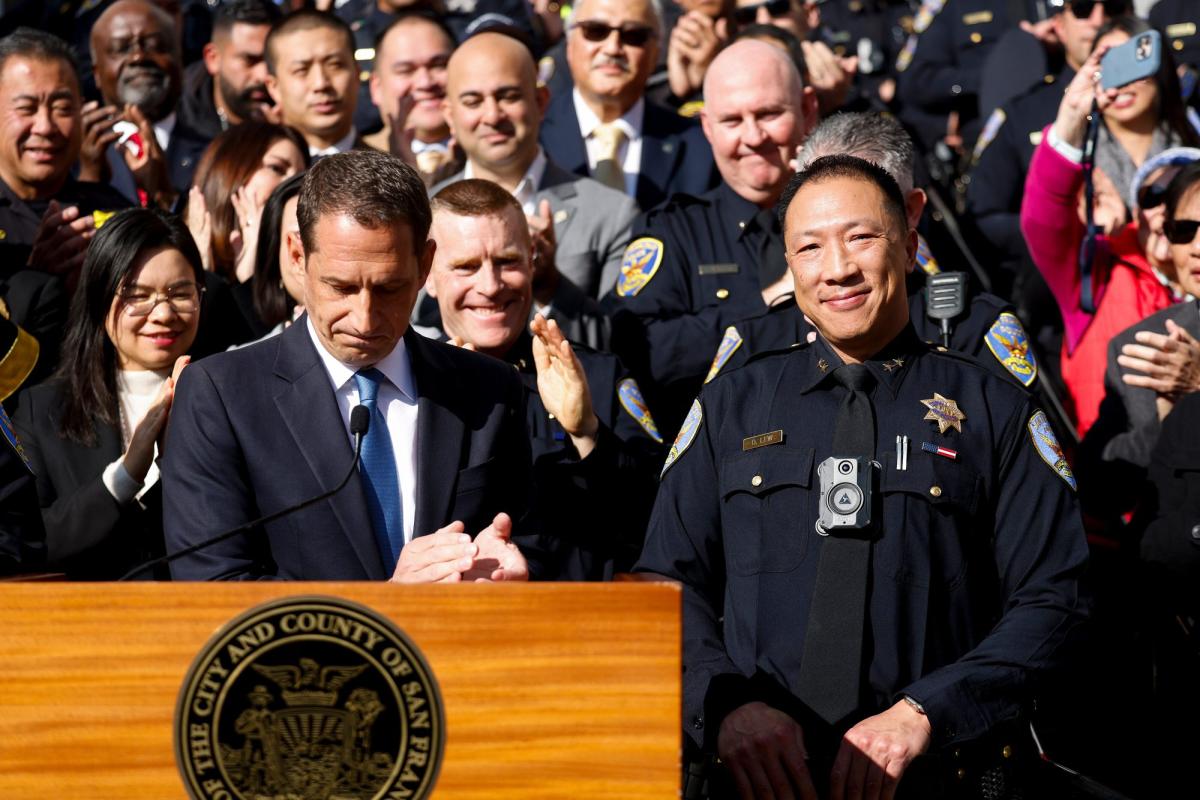
San Francisco Mayor Daniel Lurie has been basking in a glow of positive media coverage after a year on the job.
His approval rating is 73% in one poll.
That’s extraordinary, as reality on the streets paints a different, patchwork picture.
Lurie defeated incumbent London Breed last year over rampant crime and a staggering exodus of retailers and downtown office tenants.
Since then, Lurie has taken to social media as an influencer, peddling positivity.
Cheering on mom-and-pop shops, swanky restaurants and frequenting cafes to feed his caffeine addiction, he posts his visits to every corner of the city — and many locals love it.
The Insta-mayor is affecting public sentiment, bringing back optimism after years of sustained doom-loop despair.
Over the summer, Lurie and his team appeared at every major public gathering in the city.
(He loves a party.)
They were at neighborhood night markets, block parties and music festivals in Golden Gate Park, repeatedly telling attendees that the city is seeing better times.
But in August, the San Francisco Standard revealed that Lurie, uber-wealthy and willing to spend, had paid $350,000 of his own money to a seasoned PR team.
Their mission: counter San Francisco’s negative image.
Lurie’s supporters saw that move as the mayor using his personal resources at a critical juncture, steering the city away from the brink.
Yet others, including long-time residents and shop owners, cried foul.
He’s peddling snake oil, it’s smoke and mirrors, he’s whitewashing, many claimed.
Since his January swearing-in, Lurie has been a constant presence on local and national TV, repeating his crafted mantra, “San Francisco is on the rise.”
But news of drugs, crime and other problems mere blocks from City Hall keeps breaking.
Citizen journalists, braving dark alleys, post social-media footage of slumped-over addicts in the “fenty fold” — the typical fentanyl posture.
Shootings and stabbings are again spiking on streets a stone’s throw from major hotels, theaters, skyscrapers and the empty shopping mall on the Market Street thoroughfare.
Drug dealing and addiction hurt San Francisco’s image — and its taxpayers.
City officials use a significant portion of the annual operating budget to fund groups and programs that deal with addiction, homelessness and mental illness — typically with poor to mixed results.
Lurie has declined to go after the drug dealers themselves, many of whom are illegal aliens from Honduras.
Locals are growing increasingly frustrated — and broke.
San Francisco has had Democrat mayors since the 1960s, and no conservative official has served on the 11-member Board of Supervisors (our local city council) for decades.
The fragile state of cooperation between moderate Lurie and the radicals on the board is almost certain to fall apart.
We’ve seen this before: Whether the issue is housing or criminal justice, education or homelessness, the left here dominates discourse and rallies the city’s radical voters.
Local boosters point to the AI expansion that’s driving new investment in the local tech sector.
But the AI bubble could just be another boom-bust economic roller-coaster.
Get opinions and commentary from our columnists
Subscribe to our daily Post Opinion newsletter!
Thanks for signing up!
Lurie and city hall officials unrealistically tout AI as a panacea, hoping its acceleration will bring its workers back to our neighborhoods and bolstering our nightlife.
Yet reports show retail sales tax collections are down in nearly every district in the city.
Techies aren’t spending much locally.
Rents are spiking again, and with it comes resentment from the natives.
And amid a current office-space-grabbing frenzy, an AI collapse could trigger another debacle in commercial real estate.
AI (and tech in general) is fickle, and sensitive to the winds of regulatory change.
City Hall officials are reluctant to embrace the tech industry — except when it comes to slapping punitive taxes on CEOs or high-value real estate transfers.
The result?
Many aspiring startups are skipping California in general, and San Francisco specifically, opting to set up shop in safer, more business-friendly locales.
Critics will grudgingly acknowledge that Lurie and his efforts have had positive effects for San Francisco’s image.
Yet despite his claims of victory over the city’s previous, darker days, lingering problems quash the excitement.
President Donald Trump and federal agents were set to descend on the city to help fight crime.
Lurie spoke to Trump on the phone, and was able to convince the president to press pause on that plan.
The mayor wants to clean up the streets his own way.
Now it’s a waiting game to see if the “sanctuary city” of San Francisco can solve its problems, or whether the federal government will have to intervene.
Ultimately, San Francisco has to arrest illegal migrant drug dealers — and allow the federal government to deport them — before any real “cleanup” can begin.
Like it or not, the mayor must accept this reality. Only then will we see real change.
San Francisco still has a long way to go.
Richie Greenberg is a longtime San Francisco activist and former Republican mayoral candidate.