
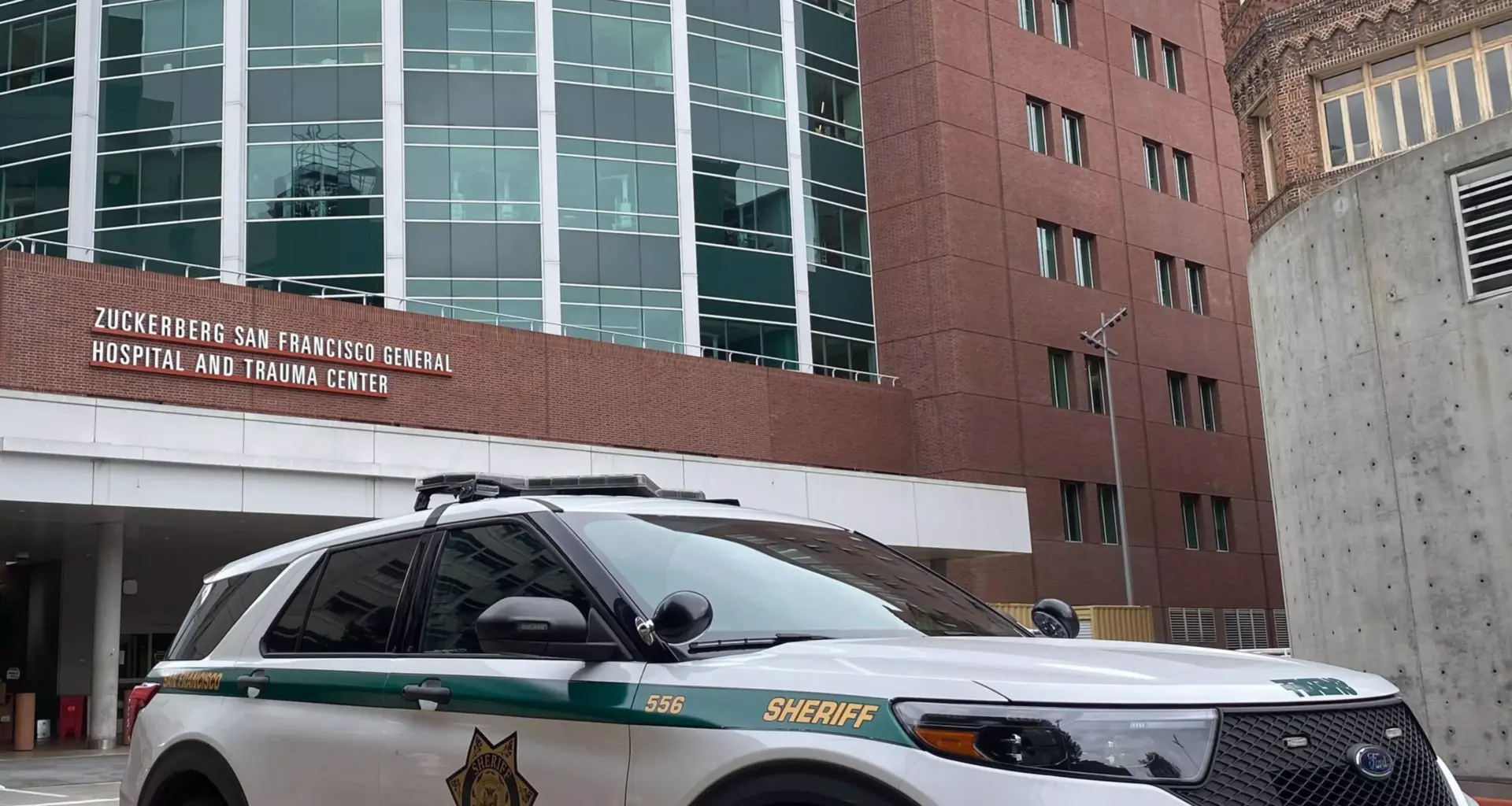
The suspect in the fatal stabbing of a social worker at San Francisco General Hospital is being held at the same location where the attack occurred.
Wilfredo Tortolero-Arriechi, 34, did not appear in court Tuesday, where he was expected to be arraigned on multiple charges, including murder, in connection with a grisly Dec. 4 attack that left 51-year-old social worker Alberto Rangel dead.
Tortolero-Arriechi was unable to attend the hearing, according to his attorney, public defender Sylvia Nguyen, because of his mental state. He is currently in the county jail facility at SF General, reserved for inmates in mental health crises.
“I want to give my condolences to the victim, his family, and friends,” said Nguyen outside of court.
Prosecutor Edward Mario says he plans to file a detention motion that will keep Tortolero-Arriechi in jail for the foreseeable future. His arraignment has been continued to Dec. 16.
“It’s a very serious homicide case,” said San Francisco Superior Court Judge Harry Dorfman.
Staffing and security
The killing of Rangel has kicked off an independent probe into the hospital’s security protocols and finger-pointing about who was ultimately at fault in the tragedy. The San Francisco Sheriff’s Department maintains a locked jail facility for people in need of psychological care requiring hospitalization. It is also supposed to patrol other parts of the campus.
The sheriff’s deputies’ union has defended its members in the wake of the attack, connecting security risks at the hospital to policy changes enacted by the city. In particular, it highlighted a staffing shift begun in 2021 that nearly halved the number of deputies posted at the hospital, largely replacing them with health care professionals and non-sworn sheriff personnel.
However, documents obtained by the Standard show the sheriff’s department had difficulty appropriately fulfilling even those lower staffing needs.
An internal Nov. 4 email, obtained by The Standard, said that the Psychiatric Emergency Services department, which is a locked ward for psychological emergencies, had seen its deputy presence decline by 50% since August.
The issue has continued as recently as last month, documents show. According to a report of deputy staffing at the unit, the department responsible for handling adult emergency mental health issues did not have a deputy on duty for 17 days in November.
Sheriff’s office spokesperson Tara Moriatry said in a statement that while the agency does not track granular staffing data, the data collected by The Standard is erroneous.
Psychiatric Emergency Services “is one of the last hospital posts from which we would pull deputies,” she said, adding that there are always deputies on the campus who can respond to security issues.
SF General said in the aftermath of the killing, the hospital is taking immediate measures to tighten security and protect patients and staff, including restricting access to the facility where the attack occurred, imposing more stringent security protocols, and posting additional sheriff’s deputies at the location.
The Department of Public Health has also enlisted an outside firm to conduct an independent assessment of the hospital’s security, as well as that of the larger agency.
‘A reckoning point’
Colleagues remembered the victim, Rangel, at a candlelight vigil on Sunday night where they described him as a generous and devoted friend with a fierce devotion to patient care. A GoFundMe in honor (opens in new tab) of Rangel has raised more than $100,000.
A licensed clinical social worker at UCSF said Monday that staff have raised safety concerns for years that went unaddressed before Rangel was killed last week in what she called a symptom of systemic failures at the health system.
Authorities said a sheriff’s deputy had been dispatched to protect a doctor at Ward 86 after Tortolero-Arriechi allegedly made threats earlier that day. The suspect encountered Rangel in the hallway instead. A 5-inch knife was recovered at the scene.
According to court documents referred to in a statement (opens in new tab) from the district attorney’s office, Tortolero-Arriechi allegedly went to Ward 86 to speak to a doctor and appeared calm. He engaged in a conversation with a social worker and was advised to leave.
Soon after he and the victim walked to the elevator together, he is alleged to have suddenly grabbed Rangel from behind and stabbed him numerous times in the neck and shoulder.
San Francisco District Attorney Brooke Jenkins said at a news conference that while hospital staff had expressed concerns about the suspect to the Sheriff’s Department prior to the attack, he was never arrested nor was any case presented to her office before the stabbing.
The DA cited an escalation of violence against health care workers, pointing to mental health issues and substance abuse among contributing factors.
”It’s heartbreaking to see,” Jenkins said. “We need to rally together now and understand what measures we can take to provide additional safety in our hospital settings.”
Juliette Suarez, who works at UCSF’s Trauma Recovery Center, providing psychotherapy to survivors of violent crime and persecution, said Rangel was “an absolutely amazing person, an amazing clinician” who “everybody is going to miss.”
Suarez said workers across multiple UCSF locations have long warned administrators about inadequate safety measures.
“Unfortunately, there’s been a culture of complacency, and it’s an issue that has been going on for way too long,” Suarez said. “This isn’t an isolated event just at this workplace, but really throughout many locations at UCSF.”
She said many workers returning to their jobs, as she did Monday, are concerned about the level of support available to them.
“Healthcare workers are the ones who face consequences when the rare but violent incident happens, and the safety measures that we all deserve are not in place,” she said. “We’re the ones that are right there, shoulder to shoulder, helping navigate how to survive every single day.”
Jenkins called for greater acceptance of law enforcement presence in health care settings, acknowledging past tensions over security measures.
“I think we’re at a reckoning point right now,” she said.