
Long Beach Transit has suspended a pilot program featuring digital advertisements on their buses after U.S. Customs and Immigration Enforcement recruitment ads ran on several of their vehicles over the weekend.
A photo of an ICE recruitment ad, which showed a federal agent and the slogan, “Defend the homeland, join ICE today,” was posted to social media on Saturday, Dec. 6, and quickly gained traction online.
Long Beach Transit, the same day, posted a statement on its Instagram apologizing and promising to revamp its advertising policies in response to the situation.
“This is not a reflection of our values,” LBT’s statement said, “and we will update our advertising policies to ensure this never happens again.”
Little information about how the ICE ad made it onto LBT’s buses, or how many ads ran in total, was initially available. But in a Thursday, Dec. 11 statement, the agency confirmed that the ICE recruitment ads were shown on seven buses on its 121, 131, and Passport routes before they were taken down.
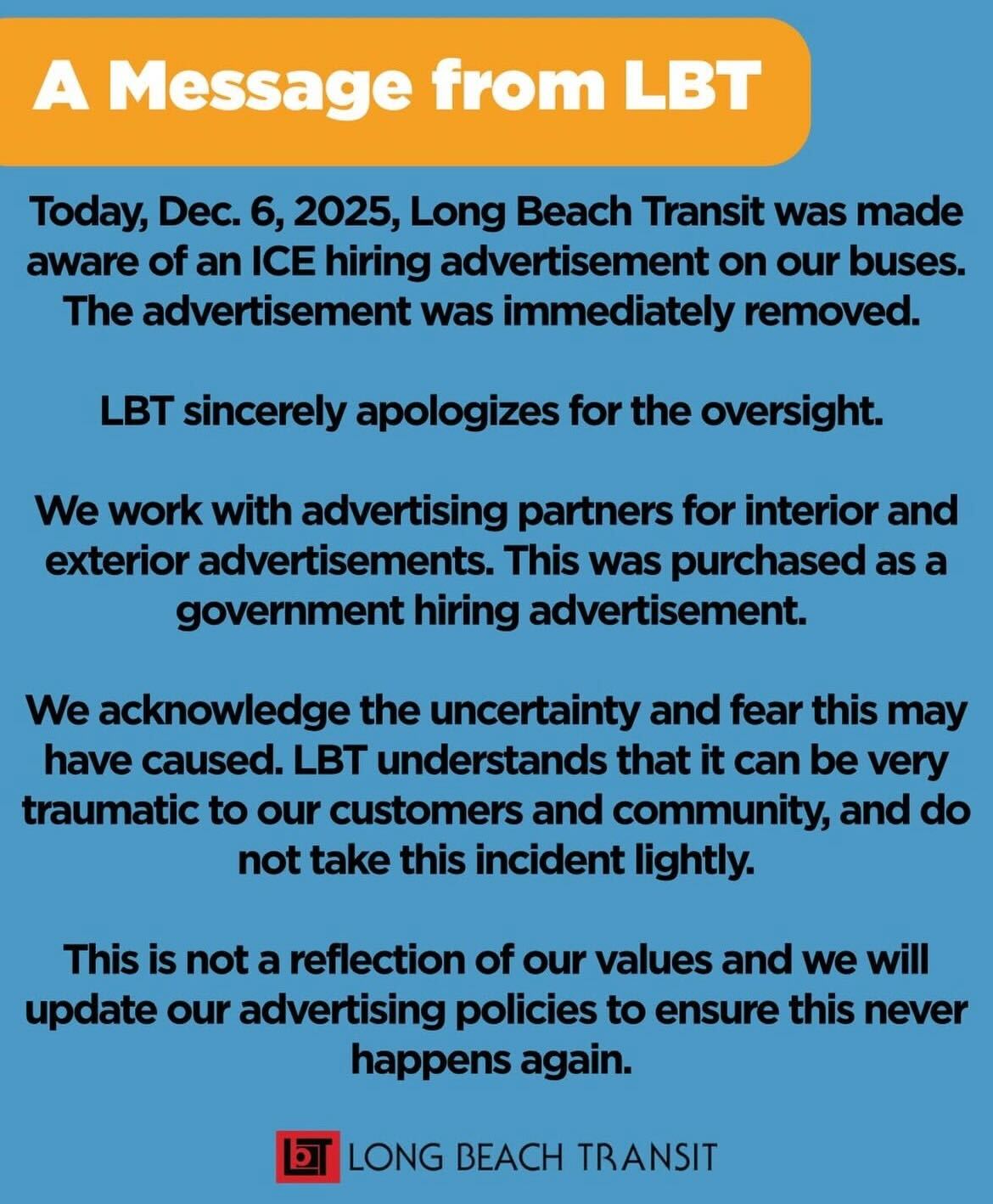
Long Beach Transit issued a statement addressing a U.S. Immigration and Customs Enforcement recruitment ad seen on one of their buses on Saturday, Dec. 6. (Photo courtesy LBT Instagram).
Show Caption
1 of 1
Long Beach Transit issued a statement addressing a U.S. Immigration and Customs Enforcement recruitment ad seen on one of their buses on Saturday, Dec. 6. (Photo courtesy LBT Instagram).
The advertisements were featured on digital screens, which were being used as part of a Long Beach Transit digital advertisement pilot program that the agency launched in January.
The pilot program, according to LBT spokesperson Arantxa Chavarria, offered bus riders free internet — which was paid for with revenue from the new digital ad screens. In total, the pilot program was implemented on 25 of the agency’s 255 buses.
“LBT has now suspended the pilot,” Chavarria said, “and is reviewing every element of the program to include a multilevel review process.”
The pilot program was launched in January with partners tech company Kajeet, Galli Media and MessagePoint Media, according to a news release from Kajeet. Just two months after the pilot launched, according to Kajeet, more than 2,000 LBT bus riders had used the new onboard internet option.
“For small businesses that can’t afford traditional TV, radio or print ads, this presents a cost-effective marketing opportunity with a captive audience — riders who spend 30+ minutes on the bus, engaging with the screen,” Kajeet said, also noting the pilot program provided similar marketing opportunities for national brands.
The ultimate goal of the pilot program, which was initially anticipated to run for a year, was to expand the digital advertising program to LBT’s entire fleet of buses.
The expansion, Kajeet said, would include analysis of how LBT riders engaged with the new free internet service, expand the program’s revenue through additional advertisements, and ultimately refine the program so it could be implemented by other transit agencies.
But now, LBT will reconsider the pilot program entirely, Chavarria said, including whether the agency wants to bring it back after its internal investigation into the ICE recruitment advertisement situation is complete.
Chavarria said that there isn’t a concrete timeline on how long LBT’s investigation into the situation will take, nor when a decision about the digital advertisement pilot program’s future will be made.