
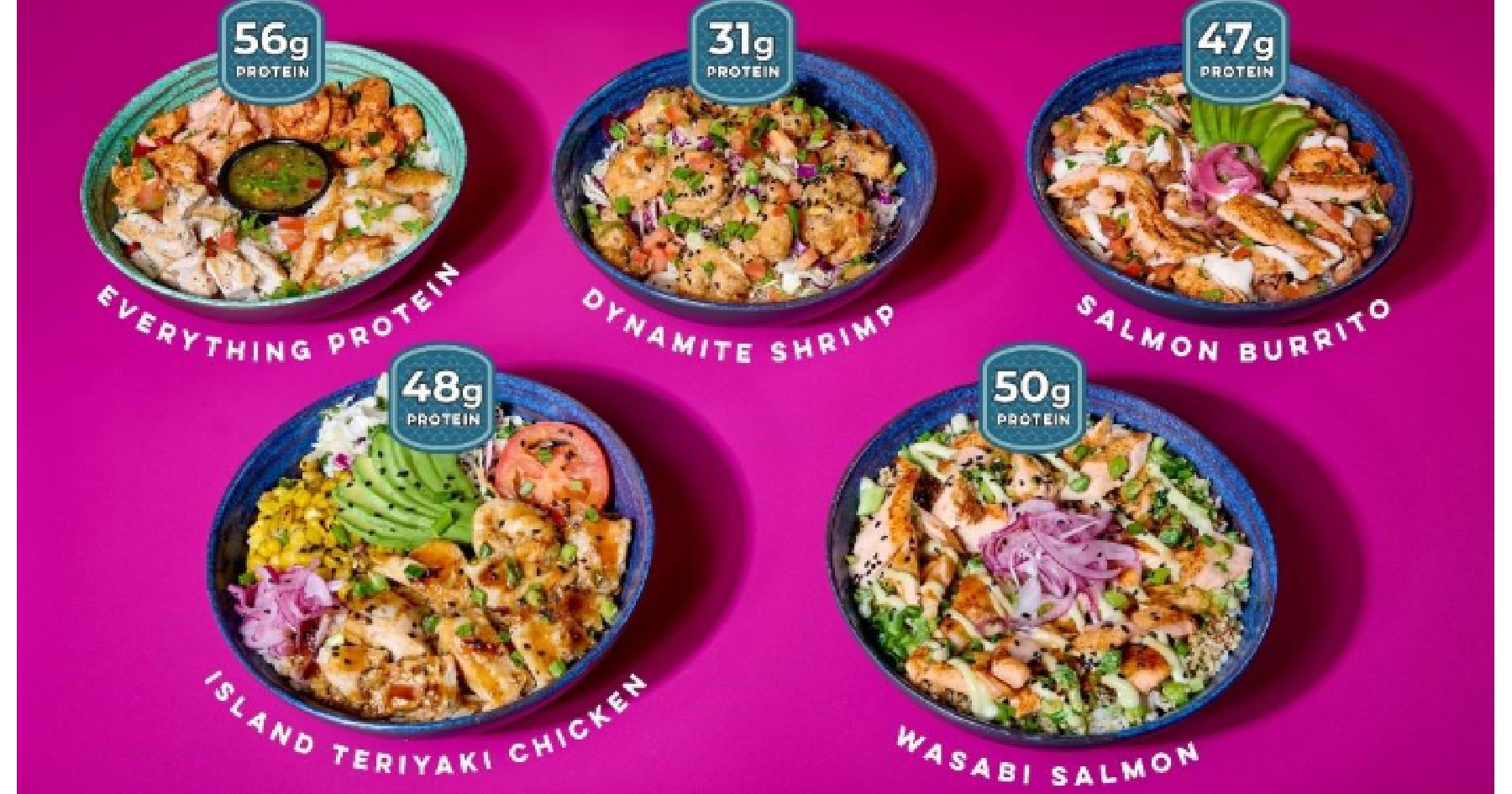
The five Sustainable Protein Bowls are all tagged with nutrient content. | Photos courtesy of California Fish Grill.

Guests at California Fish Grill always had an avenue to nutritional data, but with the recent push by consumers to pack in more protein, the fast casual is making it easier.
“We now added a tag right on the menu calling out the protein content of each item,” said Louie Francis Jocson, VP of food and beverage for the 63-unit chain.
The Newport Beach, California-based restaurant concept has a varied menu of tacos, sandwiches and grilled fish plates and salads, and when the team analyzed their nutritional content, the protein counts were impressive. But with the nutrient currently in such high demand, Jocson was ready to “re-energize the bowl category” with protein-rich Sustainable Protein Bowls.
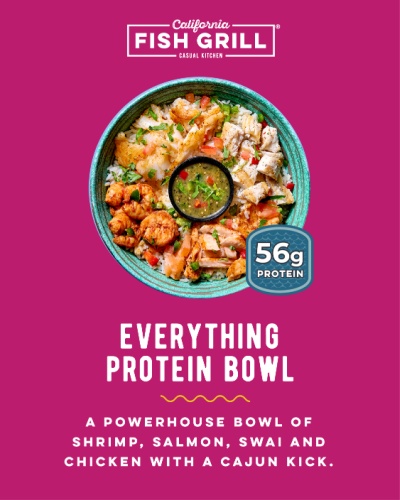
The Everything Protein Bowl leads in protein count with 56 grams.
Choosing the species
California Fish Grill prides itself on sourcing sustainable seafood—a goal since the chain’s founding in 1998. Chef Jocson travels around the world to identify sources and purchase seafood, with Vietnam, Japan, India, Norway, Peru, Ecuador and the Pacific Northwest key suppliers. “We source a balance of wild and farmed species to uphold our sustainability standards,” he said. Salmon, branzino, tilapia, shrimp, ahi tuna and rockfish—the last an addition that recently came off the endangered list—show up on the core menu and in LTOs.
Jocson’s travels also expose the chef to flavors and ingredients to incorporate into menu items. Those global influences came into play in the creation of the new bowls.
The Everything Protein Bowl leads the lineup. It features four protein sources—grilled salmon, Cajun-spiced shrimp, swai and grilled chicken—layered over rice and slow-cooked pinto beans and finished with diced tomatoes, a chili mix and fresh parsley. The Latin-accented bowl is served with Roasted Tomatillo Salsa and clocks in at 56 grams of protein.
Next in protein count is the Wasabi Salmon Bowl (50 grams per serving) featuring marinated, grilled salmon over rice and a quinoa-edamame mix, the latter of which jacks up the protein with plant sources. Crushed wasabi peas add crunch, while red and green onions, sesame oil and sesame seeds give it an Asian twist and dial up umami. A creamy wasabi aioli and teriyaki glaze amp it up.
“Wasabi can be polarizing, so we mellowed the flavor by turning it into a creamy sauce paired with a pineapple reduction,” said Jocson.
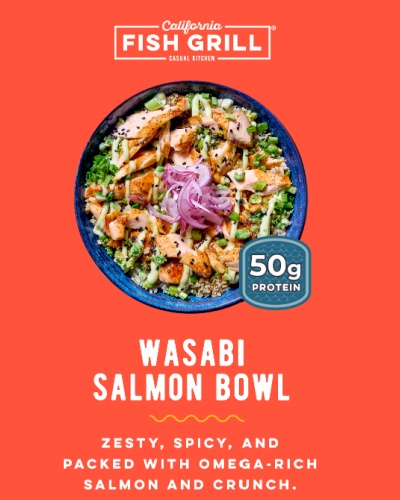
A creamy sauce mellows wasabi in this Japanese-inspired bowl.
House-made sauces carry the global flavors in each of the bowls. The fiery Dynamite Shrimp Bowl (31 grams protein) is composed of crispy shrimp tossed in a spicy dynamite sauce enlivened with Sriracha; a mix of red and green cabbage, cilantro, green onions, tomatoes and a sesame soy drizzle complete the build. The Salmon Burrito Bowl (47 grams protein) rounds out the seafood bowls. Rice and slow-cooked pinto beans—a combo of vegetables and grains that equals a complete protein—is topped with Cajun-marinated salmon, avocado slices, tomato-cilantro mix and pickled onions. A side of Roasted Tomatillo Salsa and drizzle of signature cream sauce tie it together.
For landlubbers, there’s an Island Teriyaki Chicken Bowl with 48 grams of protein. Grilled chicken is paired with kale slaw, roasted corn, tomatoes, avocado and green onions, then finished with teriyaki and dynamite sauces and sesame seeds.
“The portions are generous, with 4 to 6 ounces of seafood or chicken in each bowl,” said Jocson. Prices run $12.99-$13.99, which for a protein-packed fast-casual meal, seems like a deal.
“Over time, we were able to build affordability into our relationships with suppliers,” said Jocson, who has been with California Fish Grill for 10 years. That gives the brand the leeway to keep a lid on costs.
Thumbs up from the leadership team
During the R&D process, the leadership team constantly tastes and suggests tweaks. “They are all different palates, but we aim for a balance of sweet, salty, spice and creaminess, with sustainability always at the forefront,” said Jocson.
One bowl that didn’t make the cut combines salmon with hot Louisiana-style spices and dirty rice. “On paper, it sounded delicious, but none of us said we would order it again. That’s the ultimate test,” he said.
The five new bowls are on the core menu, but Jocson introduces three to four limited-time items a year, falling into either the bowl, sandwich or taco category. To highlight the return of rockfish to sustainable status, for example, he introduced an island teriyaki bowl, putting the species in the spotlight.
California Fish Grill communicates its sustainability message on marketing materials both in stores and online, describing the country of origin for each species and how it was caught. Customers can find out more information through a QR code.
A native of the Philippines with broad experience in the restaurant, retail food and hotel industries, chef Jocson has always enjoyed the way food brings people together—even in a fast-casual setting. “It’s a pathway for me to experience inspiration and spread joy,” he said.
Pat plans and executes menu, food and drink stories for Restaurant Business and hosts the weekly Menu Talk podcast. She provides in-depth coverage of chefs, trends and menu innovation.