
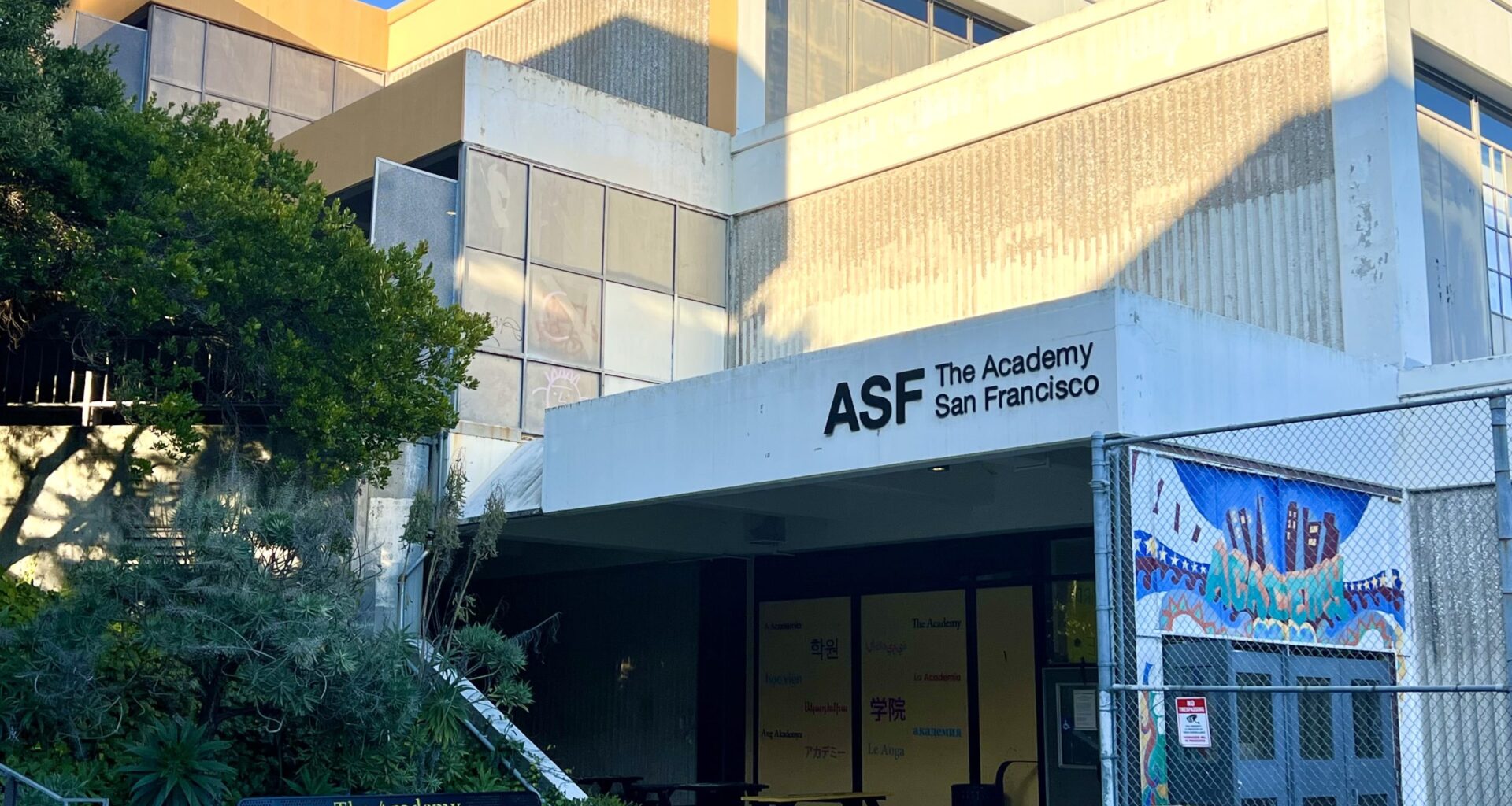
After shelving school closures last year and promising to hold off for the 2025-26 school year, the San Francisco Unified School District made a surprising announcement two months ago: The Academy, a high school with fewer than 100 students, will close next summer.
The Academy currently shares a building with Ruth Asawa San Francisco School of the Arts (SOTA). Its students have already taken tours of Raoul Wallenberg Traditional High, about three miles north, where they’ll move next fall. Those who don’t want to go to Wallenberg will get first choice at enrolling in SFUSD’s other high schools.
School officials say they will preserve what makes The Academy special, except its intimate size. But size is a big deal for Academy families, who say the move threatens the extra attention staff can give, especially to the school’s disabled students.
Parents also call the move a broken promise. Because it takes place at the start of the 2026-27 year, it’s not technically a closure in the 2025-26 school year, as school officials point out. But some teachers, parents, and students say The Academy was set up to fail. “We feel very betrayed by the district,” said sophomore Finnegan Kelly.
Academy families also say they’re bearing the burden as SFUSD tries to dig out of a deep financial hole. But a district spokesperson calls The Academy’s closure “a standalone decision made with the best interests of our students at heart.”
The fight over The Academy is important not just for families and teachers there, but also to understand why SFUSD might revive its push for school closures.
The previous attempt, in 2024, ended in the face of bitter opposition, forcing Superintendent Matt Wayne to step down. But Wayne’s successor, Maria Su, has a new two-year contract in hand. Even while cleaning up Wayne’s mess, Su never said closures were permanently off the table — only paused for the 2025-26 school year.
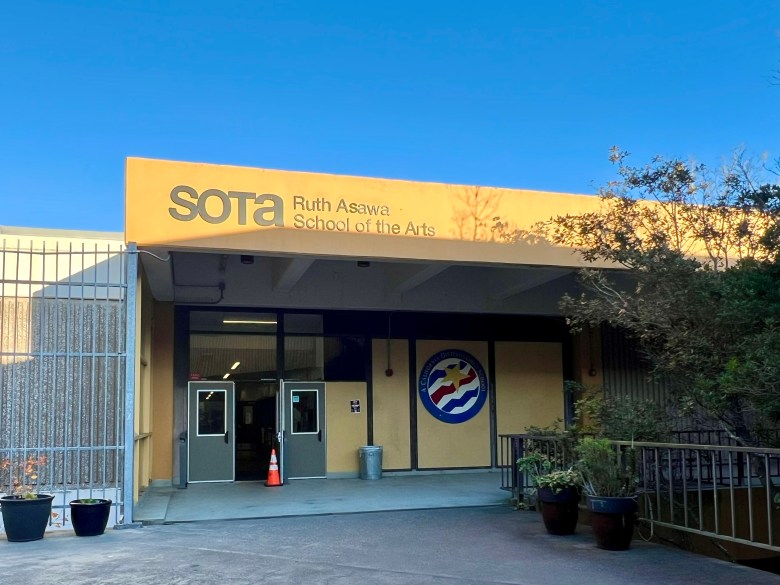 The Academy shares a building with Ruth Asawa School of the Arts (SOTA). Next year, Academy students have the choice to move to Raoul Wallenberg High or get first dibs on enrollment at other high schools. (Photo: Taylor Barton)
With a $51 million budget gap to close by July, the school board has delicately reintroduced the idea of “reorganization” (school site expansions, consolidations, mergers, and potential closures).
The Academy — slated to close with no public hearing or board discussion — has been the only move so far.
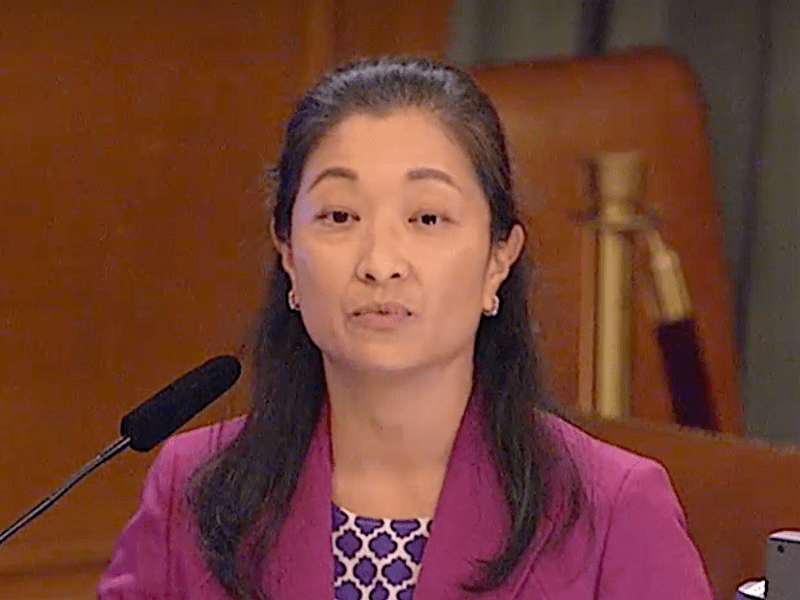
The superintendent and board haven’t agreed on a path forward for other schools yet, but they have to stabilize the budget to regain full local control from state oversight. The district recently improved its standing but is still on watch with a “qualified” certification. That means it “may or may not” be able to meet financial obligations in the next two years, the district announced last week, and noted that “the upcoming budget cycle will still require hard decisions and difficult conversations.”
The Academy difference
The Academy isn’t an average high school. It hosts one of two public high school programs for deaf and hard-of-hearing students in the city. All students at The Academy take American Sign Language. According to state data, it also has a higher percentage of Hispanic students, disabled students who require special-education plans, and homeless students than district averages.
“We have a lot of students that come from marginalized communities,” senior Toto Honniball told The Frisc.
Cynthia Kelly, sophomore Finnegan’s mom, said that the environment was much more welcoming to Finnegan, who is transgender, than the larger middle school he attended before The Academy: “Different kids thrive in different environments.”
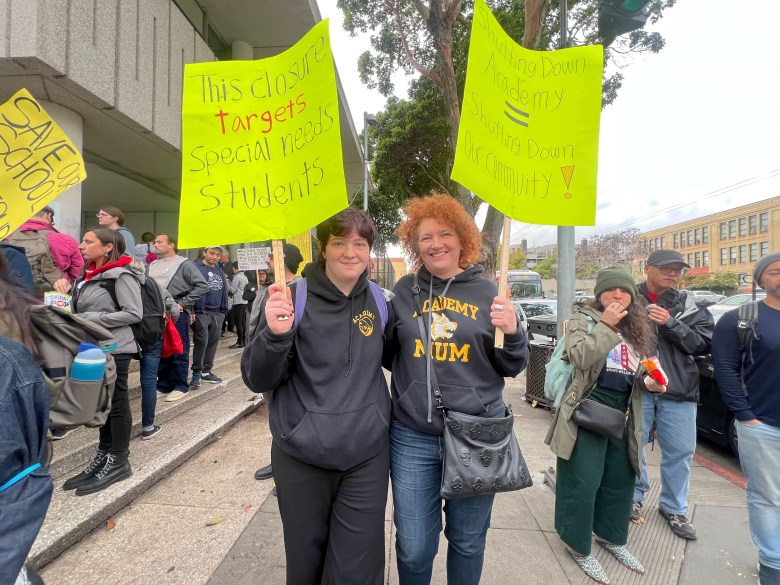 Students like Finnegan Kelly (left, with his mom Cynthia Kelly) say they appreciate the one-on-one support that The Academy’s small size allows.
As a school of choice, it also has an atypical learning environment. All students spend mornings in academic classes and afternoons on career-focused work. Freshmen work on the campus’s community farm, and the food is served in the cafeteria. “We’ve sort of built a miniature version of the food system on campus so students can see how all the parts interact together,” said SFUSD chef Josh Davidson, who leads the program. “It’s been a huge success.”
Last year, The Academy’s career focus expanded, making classes at City College of San Francisco mandatory and letting 10th, 11th, and 12th graders earn college credits. The dual enrollment “has given them real world, real life experience,” said Cynthia Kelly, “but still with that sense of belonging to the smaller community at The Academy.”
SFUSD spokesperson Laura Dudnick said dual enrollment is successful based on student surveys and grades, which she declined to release citing privacy concerns. Moving it to Wallenberg “allows SFUSD to expand access to these valuable opportunities for more students.”
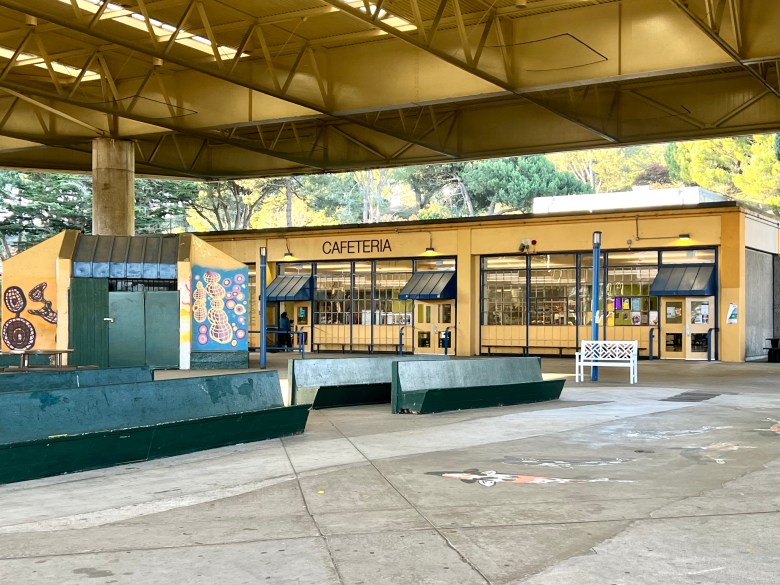 Food from the campus’s community farm is served in the school cafeteria as part of the career-focused curriculum at The Academy.
A steep decline
Despite these offerings, The Academy is under-enrolled. It is funded to serve 200 students, according to the district, but only has 99. “This leads to an unsustainable teacher-to-student ratio of one to nine compared to the district high school average of one to 33,” said Dudnick.
“We cannot afford to have all the necessary staff for such a small school,” assistant superintendent of high schools Davina Goldwasser said in response to student questions at an Oct. 8 town hall, according to attendees’ notes.
In the past 10 years, the school’s high mark was 362 students, in 2016-17. Numbers stayed relatively stable through the pandemic, then plummeted the past four years from 347 to the current 99. The reasons depend on who you ask.
Because of The Academy’s school of choice status, students have to request to attend; they can’t get there through the district lottery. Students are especially frustrated because “all of them specifically chose to go to Academy,” said senior Honniball. Other schools of choice in the district, like SOTA for example, have waitlists.
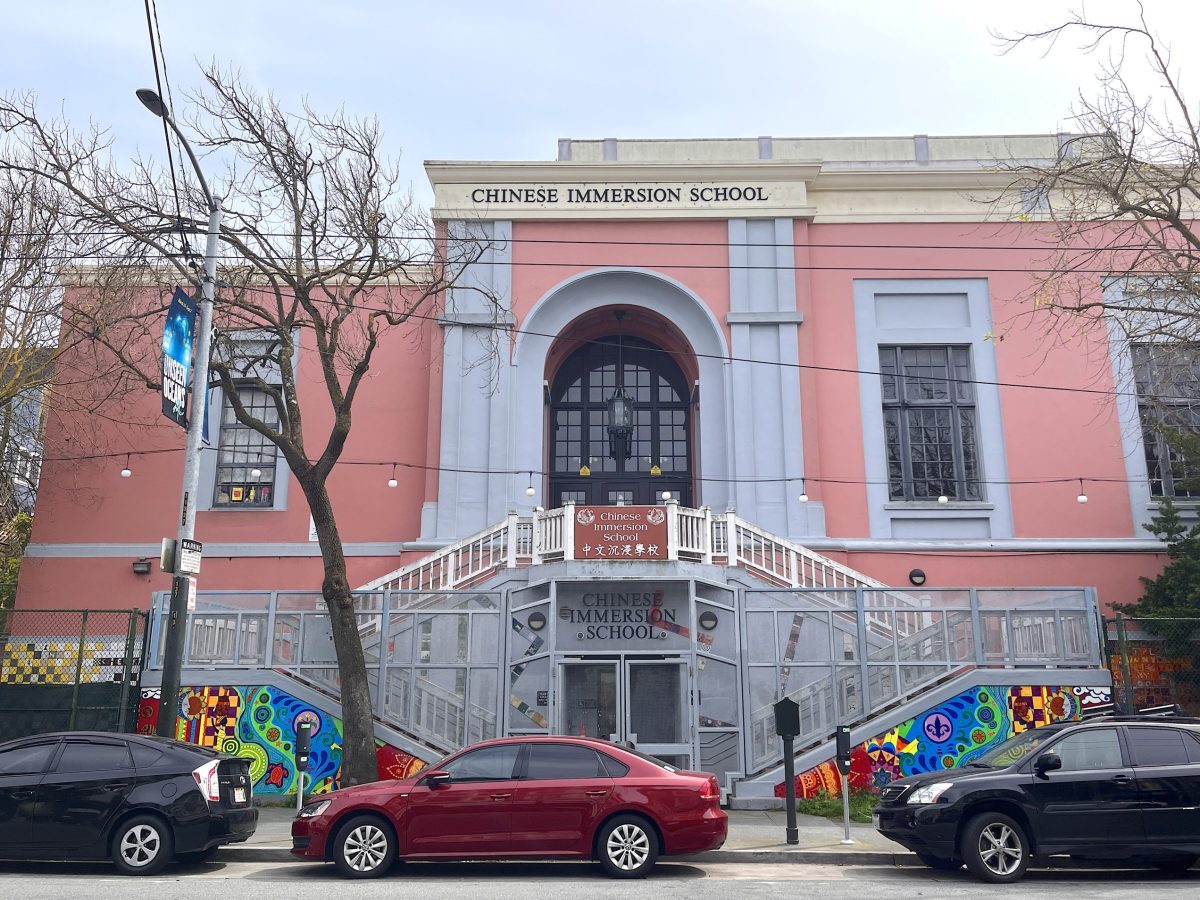
Another reason for the drop is the CCSF dual enrollment, according to SFUSD’s Dudnick. The coordination with City College means an earlier-than-usual enrollment deadline — spring instead of summer. Unless students plan months ahead, they often miss the window.
Blaming the CCSF program rankles families and teachers who thought it would help, not hinder, enrollment. “We were told to redesign a system that students wanted to come to,” said Ryan Hightower, who teaches English at The Academy.
Hightower, other teachers, and families also said a threat of closure has also hurt enrollment. “It’s been going on for three years,” said Hightower.
Rumors, then reality
In October 2024, when the district released its list of schools to potentially close, move, or merge, The Academy was on it. But families and teachers say the threat goes back farther. “You have an entire class of 1765498991 juniors who have had this threat held over their head as they make decisions whether or not to come to our school,” said Hightower.
In 2022, SFUSD administrators met with Academy staff to talk about its enrollment problem, according to current and former teachers, who told The Frisc that the administrators said closure was under consideration — but not set in stone.
“Everyone was upset, but it doesn’t necessarily mean we told the parents and students,” said Patricia Mott, a former Academy special education teacher who now leads special education at Phillip and Sala Burton Academic School. “But that stuff comes out.”
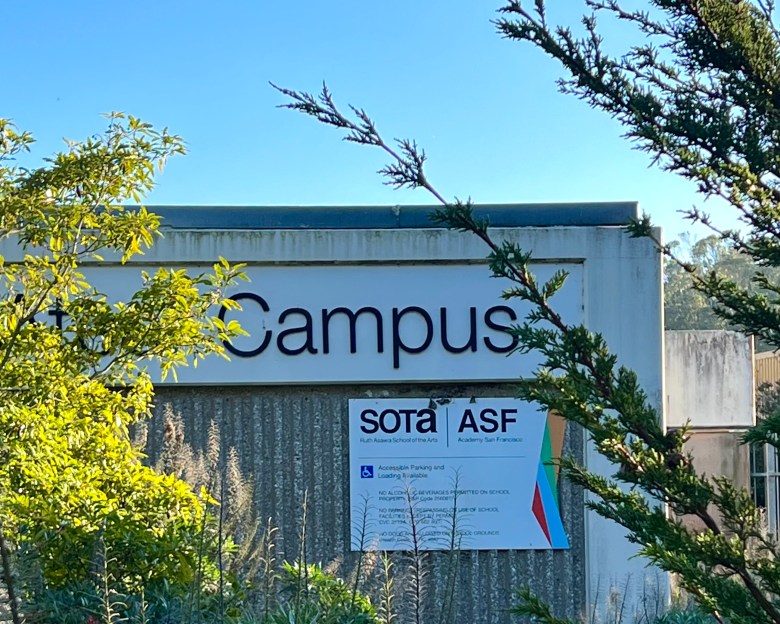 Teachers and other say that rumors of closure, stemming from a 2022 meeting, have dissuaded families from enrolling at The Academy for years. (Photo: Taylor Barton)
Mott said some teachers may have leaked the prospect to their students: “I think that is what started that rumor, way earlier than [the district] officially saying we would close [in 2024]. That starts to scare people into not wanting to come.”
When asked about the 2022 meeting, SFUSD’s Dudnick did not dispute the teachers’ accounts or claims about rumors, but she did not verify that the meeting took place. “We would not want to speak for the decisions of any individual family,” said Dudnick. “What I can share is the district’s focus: ensuring that every student who wants access to a program understands their options and knows how to enroll.”
What do we do with the many thousands of empty seats in our school buildings across the district?
SFUSD school board president phil kim
Mott also acknowledged that enrollment at that point was already low. In the 300s, it was under the capacity the district had planned for. When asked how SFUSD determines if a school is underenrolled, Dudnick said there’s no “blanket definition … given the variety of programs and services for the diverse student populations that we serve.”
Whatever the reasons for The Academy’s decline, some school board members say they should have a vote on the closure. At the Oct. 28 meeting, board member Matt Alexander called it a violation of a core principle to include the community in decision-making. “We should have voted on it.”
Five times the size
Wallenberg currently has 522 students. That’s a fraction of SFUSD’s largest high schools, which have 2,000 kids or more. It’s even smaller than SOTA (680 kids), where The Academy is co-located. The campus, at the top of Glen Canyon Park, is the former McAteer High, where Academy students have their own floor. At Wallenberg, they’ll be integrated with the rest of the school. (The move could also free up space for SOTA to expand.)
While quite small, Wallenberg’s size is a concern for many students and families. “We chose this small school because it’s a small school,” said Finnegan Kelly. “We chose to be here because we will get the one-on-one support that we need and the peer support that we need that you can’t get in a big school.”
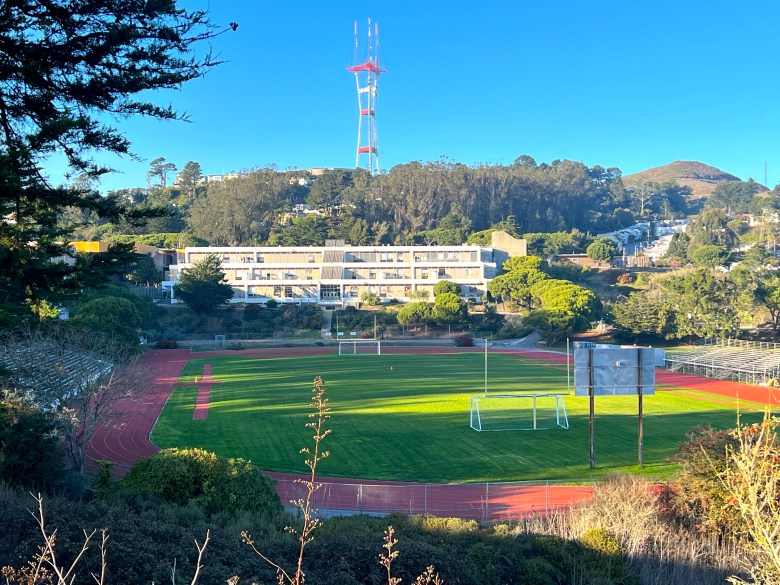 The Academy and Ruth Asawa School of the Arts share the former McAteer High campus. The Academy, which has one of two public high school deaf and hard-of-hearing programs in SF, will move to Wallenberg next year. (Photo: Taylor Barton)
More than a third of The Academy students require special-education plans. About 10 percent of those students are in the deaf and hard-of-hearing (DHH) program, which “really hinges on this very small, tight knit community of students,” said Mott.
The DHH program will also move to Wallenberg. Small, quiet classrooms are important for DHH students, according to current and former Academy teachers. Not all DHH students can read lips, and many depend on classroom interpreters, whose job is more difficult in noisy environments.
“We understand that this program requires specific supports and we are committed to meeting the needs of our students with the utmost care,” said Dudnick. She could not confirm that Academy staff would move with the program.
In interviews with The Frisc and comments at board meetings, some students accuse the district of targeting The Academy for its high special-education numbers. Dudnick responded by pointing out that schools of similar size have similar special-ed proportions, such as June Jordan School for Equity (34 percent of 176 students) and John O’Connell High School (25 percent of 460 students). The tentative plan last year was to close June Jordan and merge it with O’Connell.
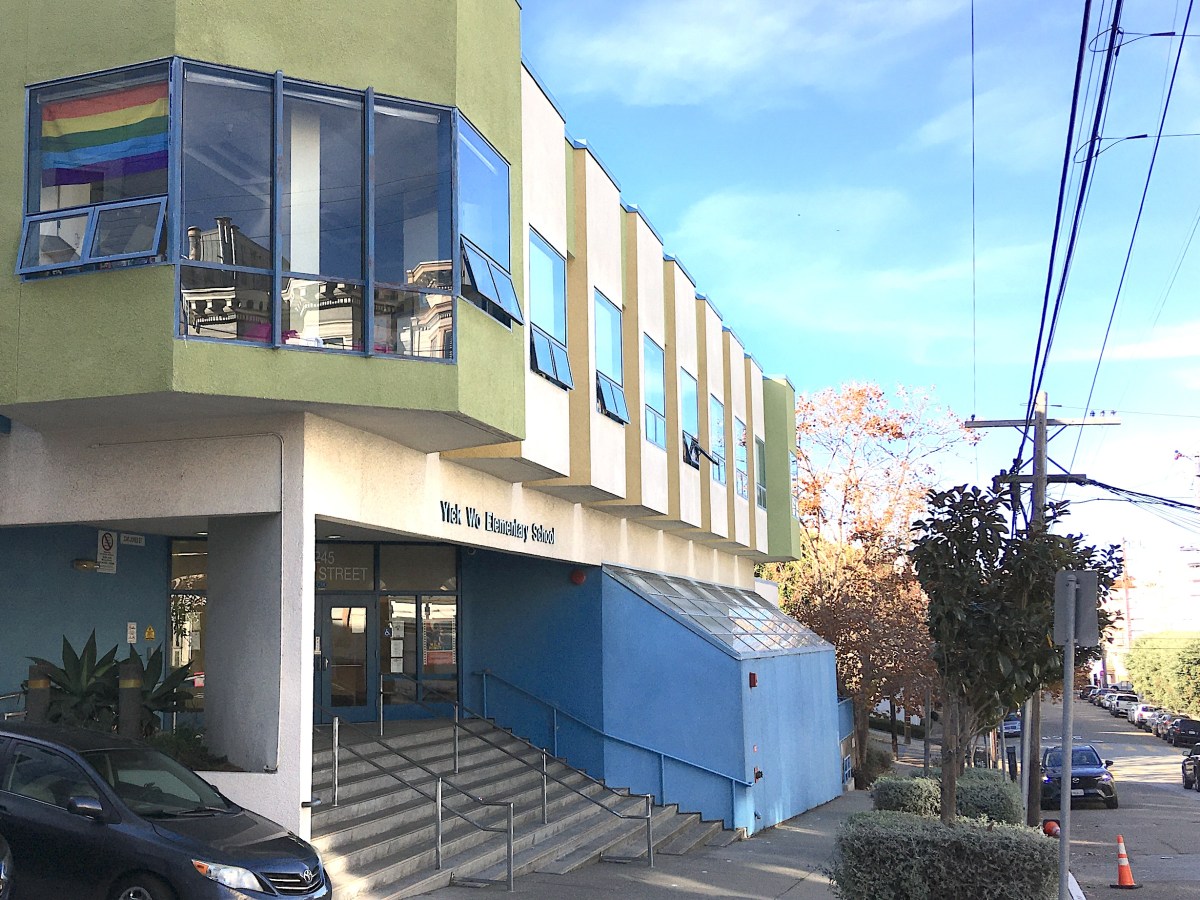
Wallenberg has about 23 percent students with special-education plans. The district’s largest high schools have much lower numbers: Lowell has 8 percent, and Washington and Lincoln both have 14 percent.
Some research has shown that closures affect Black and low-income students disproportionately. Mott said the same is true for special education. “Special-ed students become very sensitive to who the staff are over time, and what the classes are like, and if they’re small and quiet. Getting absorbed into a larger school for a lot of those kids is extra stressful.”
The district has assured the public that students’ IEPs will still be fulfilled, no matter what school they attend.
Specter of closures
During last year’s push for closures, SFUSD admitted sotto voce, and eventually full-throatedly, that closures aren’t primarily about saving money. “School closures or mergers are not part of the budget balancing plan,” board vice president Jaime Huling reiterated at last month’s meeting. She added that the 2026-27 budget must include the current school portfolio, except for The Academy.
But that may only be true for the near term, said Jill Wynns, who spent 24 years on the school board, five years as budget chair: “What they’re actually saying is school closures are not going to fix our budget next year, because it’s not instantaneous.”
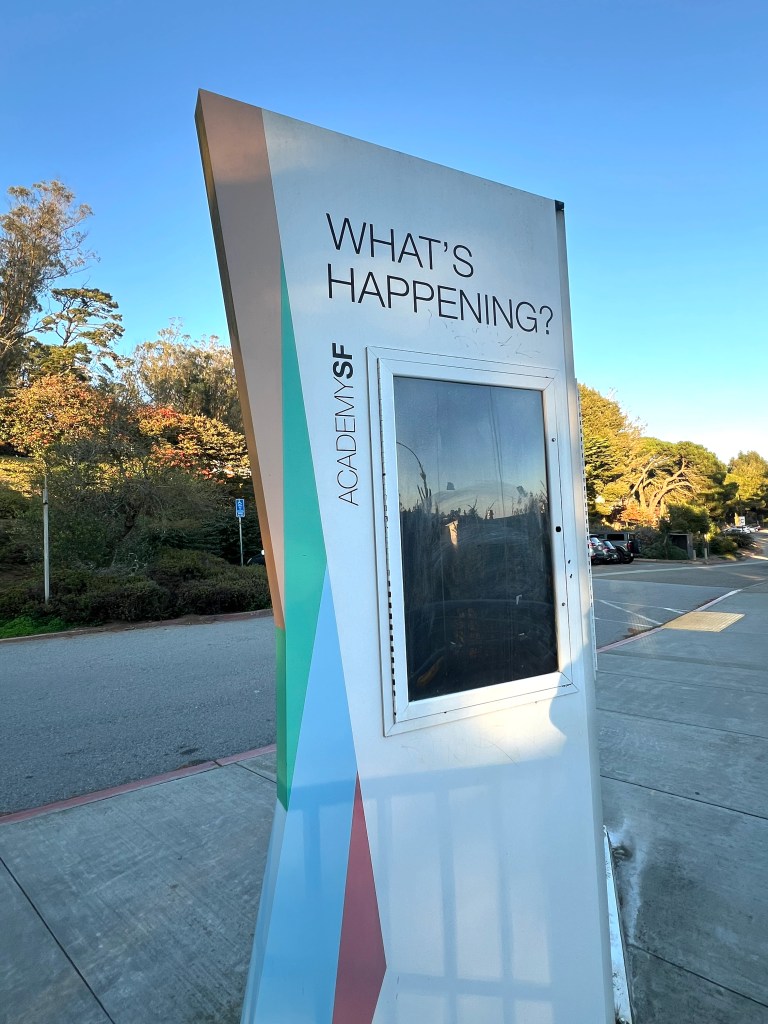 A sign board outside The Academy. The district estimates it will save $3.2 million via school closures and consolidations, including The Academy, in the 2027-28 school year.
There are “short-term costs associated with potentially closing or merging a school,” according to Dudnick. But over time, school closures will save money because of staff reductions, said Wynns. Elliott Duchon, the state advisor overseeing the district’s finances, has said that staffing is by far the district’s biggest expense — more than 80 percent.
In a document posted ahead of the Dec. 16 board meeting, the district projects site consolidations will save $3.2 million in the 2027-28 school year. The plan “assumes three sites/programs per year for three years.” This reflects potential future closures, not just The Academy’s, according to Dudnick, and is only about three percent of the total $103 million the district will need to slash by 2028.
School funding is tied to enrollment. The fewer students, the less state money flows to SFUSD. The district operates 125 schools and says they have space for 14,000 more students than the nearly 49,000 currently enrolled. The district also projects enrollment will decline another 4,600 by 2032.
The disparity between students, facilities, and staff isn’t sustainable, as school board president Phil Kim has stated.
“Does that mean that the only thing we can do is close schools? No,” Kim said on a Zoom call with advocacy group San Francisco Parents Coalition in October. “But we do need to answer: what do we do with the many thousands of empty seats in our school buildings across the district?”
(A charter school veteran, Kim joined SFUSD in early 2024 to run the closure initiative. Mayor London Breed tapped him for the school board in August 2024 when board president Lainie Motamedi abruptly stepped down. Kim became board president early this year and is up for reelection in June.)
The teachers union, opposed to staff reductions, has demanded central office cuts instead. Last spring, to close a $113 million deficit, the district obliged. It cut 177 central office positions (81 were layoffs, the rest were vacancies) without laying off teachers and other school staff — although 352 teachers took an early retirement buyout.
How much SFUSD still needs to cut is a moving target. One year ago, SFUSD projected cuts of $13 million for 2026-27. The projection currently stands at $51 million, Chris Mount-Benites, deputy superintendent of business operations, told the school board Tuesday.
The Academy’s students have until January 30 to confirm enrollment at Wallenberg or request a different high school.
At this point, parents are better off researching and touring other options than fighting closure, Mott said. “You can complain right now all you want to, but without the money [to sustain a school this small], there’s nothing they can do,” Mott said. “There’s nothing that’s going to prevent it. The train’s going.”
More from The Frisc…