
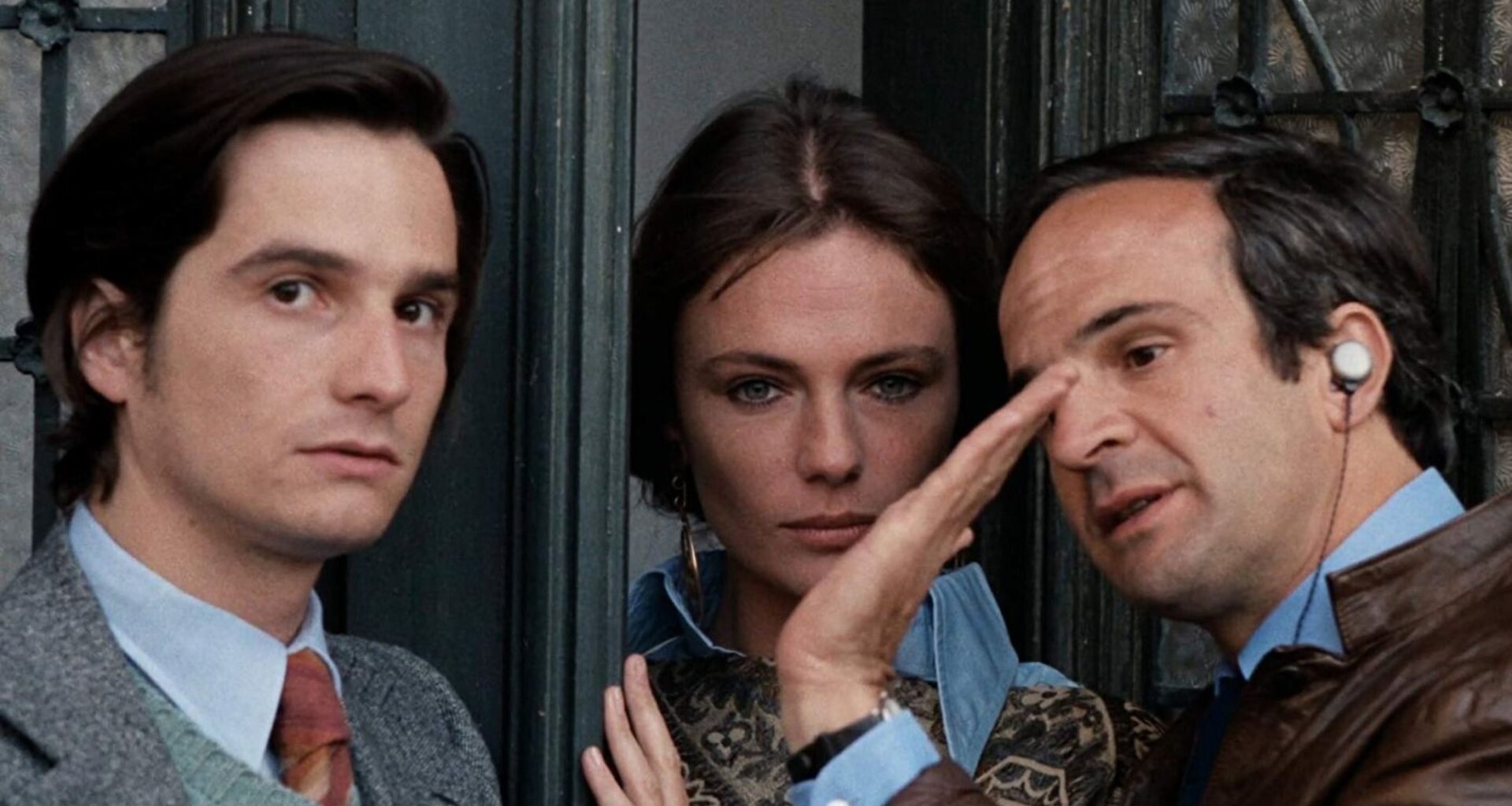
Whether you’re a lifelong cinephile or a newly minted Criterion Channel subscriber, chances are you’ve heard of François Truffaut. One of the founding fathers of the French New Wave in the 1950s and ‘60s, Truffaut directed such masterpieces as “The 400 Blows” and “Jules and Jim,” and his legacy continues to shape cinema to this day.
Truffaut also left behind a legacy here in Berkeley, where his daughter, Laura Truffaut, enrolled at Cal in 1979 — and in a love story worthy of one of her father’s movies, she met her future husband at the Pacific Film Archive and has lived here ever since.
 Laura Truffault. Courtesy of Laura Truffault
Starting next month, Laura Truffaut returns to BAMPFA for a celebration of her father’s movies. Nearly a dozen will screen at the museum this season. A consummate cineaste and a lifelong champion of her father’s work, the younger Truffaut will introduce each of the films and lead post-screening discussions. The series runs Jan.17 through Feb. 28.
It’s hard to imagine a better spokesperson for the cinema of François Truffaut than Laura Truffaut, whose relationship to her father’s movies began when she was a small child. As early as the age of 2, she was by her father’s side on set, and for much of her adolescence she had a front-row seat for his career as a film director — an experience that Laura credits with deepening their relationship.
“It was a very nice experience,” said Laura, of watching her father make movies. “My father’s sets were very no-drama. They weren’t like American film sets. They were almost artisanal.”
When the elder Truffaut was filming the period drama “The Wild Child,” 10-year-old Laura was invited to appear in a crowd scene, one of a multiple times that she can be spotted onscreen in her father’s movies. Based on a true story of an orphan raised in the wilderness, the film is a sensitive, psychologically nuanced portrait of childhood. It’s a central theme in Truffaut’s oeuvre dating back to his debut feature “The 400 Blows,” which is loosely based on the director’s own tumultuous adolescence.
While watching her father’s film “Day for Night” — a screwball comedy about the misadventures of filmmaking, in which Truffaut plays a version of himself — a teenage Laura took an interest in one of the supporting characters, a script supervisor in the film-within-a-film. The character inspired Laura to petition her father to hire her on as the real-life script supervisor for his next production, “Small Change,” a job she took on during the summer before her final year of high school. That film marked the apotheosis of Truffaut’s interest in the cinematic potential of childhood, as its cast was almost entirely children.
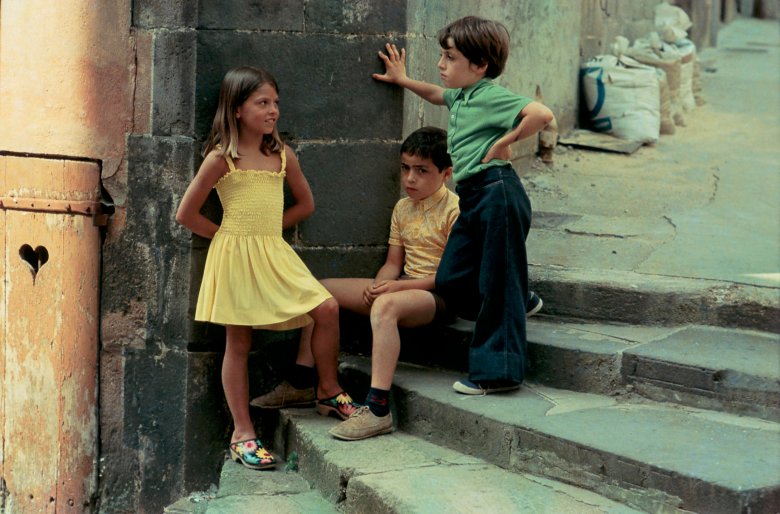 “Small Change” (“L’Argent de poche”) is a 1976 film about childhood, by François Truffault. Courtesy of BAMPFA
“ ‘Small Change’ was a little taxing for him,” recalled Laura, who appears in the film briefly as a pregnant bride. “He was working with children, some as young as 1 year old. Working with toddlers was hard work. He had a very tight schedule, but he was very focused, very disciplined.”
Even though he only lived to 52, François Truffaut left behind a voluminous and influential body of work that has been canonized by generations of film lovers the world over. Decades later, Laura Truffaut continues to publicly champion his legacy — including in her native France, where her father’s work regularly screens on television and remains a source of immense national pride.
According to Laura, American audiences are mostly familiar with her father’s most famous films, but she holds deep affection for some of his lesser-known work — particularly “Two English Girls,” a Belle Epoque romantic drama starring Truffaut’s frequent onscreen alter ego Jean-Pierre Léaud. A notorious box office flop when it was first released in 1971, “Two English Girls” is described by Laura as one of her father’s “most moving and personal films.” It will screen at BAMPFA in a rare 35mm print on Feb. 12.
“If I’m seeing ‘400 Blows,’ I know that anyone — unless you have a heart of stone — it’s going to appeal to you. ‘Day for Night,’ same thing,” said Laura. “To be truthful, ‘Two English Girls’ is not a movie for everybody. If you’re 40 or over, it resonates in a different way. It’s about growing old, and missed opportunities. It’s a grown-up movie.”
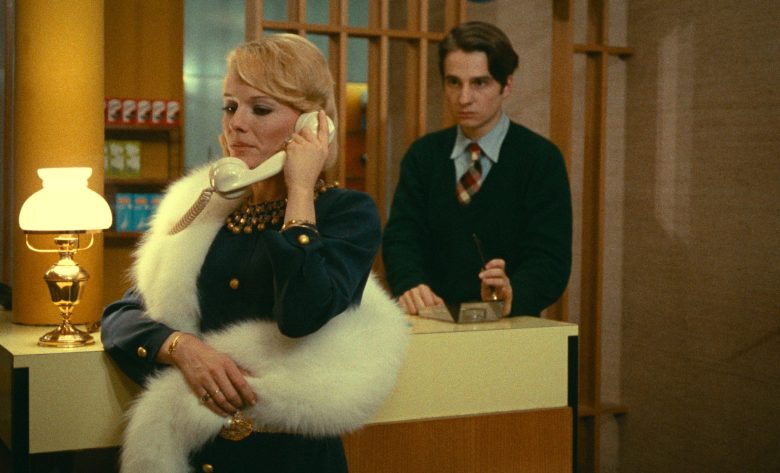 “Stolen Kisses” is a 1968 French New Wave romantic comedy by François Truffault. Courtesy of BAMPFA
Truffaut has worked to make her father’s films more accessible on streaming platforms, but true to her identity as a (literal) daughter of the French New Wave, she insists that there’s no substitute for seeing them projected in a movie theater. And as an avid Berkeley filmgoer for the past 46 years, she’s looking forward to watching them at one of her adopted hometown’s last remaining movie screens.
“Films bear the personality, the voice of the person who made them. When it’s somebody you were close to, and you’ve missed them for many years, it’s an amazing treat to be able to access that. If you can see it with an audience on the big screen, that’s how it’s meant to be enjoyed,” said Truffaut. “And you can’t wish for a better audience to engage with than the audience at the PFA.”
“*” indicates required fields