
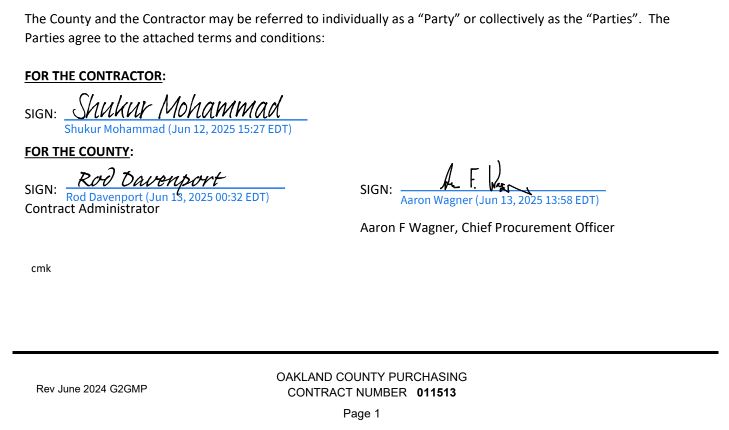
Michigan State Police will not investigate a $450,000 Oakland County tech contract signed with a county employee.
A complaint filed last month by Commissioner Mike Spisz with the county sheriff’s office was referred to MSP.
On Wednesday MSP spokesman Lt. Mike Shaw told The Oakland Press state police received the sheriff’s investigative report and reviewed it but found “no violations of criminal law in the report and no investigation was opened by MSP.”
The Zaydlogix contract provided five tech workers for the county’s Courts and Law Enforcement Management Information Systems (CLEMIS).
CLEMIS was turned into an independent authority earlier this year. County officials received an anonymous email in July that Zaydlogix was owned by a county employee. It’s against county policy and state law for a government employee to have an outside contract with their government employer. County officials conducted an internal investigation and canceled the contract less than a week after receiving the tipster’s email.
A county-funded external investigation by the law firm Miller Canfield led to discipline for four employees. CLEMIS manager E.J. Widun and Zaydlogix founder Shukur Mohammad, a county IT employee since 1999, were suspended without pay for four weeks and resigned in November.
Zaydlogix did not receive any payments. Company employees already working on CLEMIS were transferred to other tech-staffing agencies with county contracts.
Spisz, an Oxford Republican, told The Oakland Press he was “overly frustrated” that there would be no police investigation, adding that state police investigators didn’t have all the information they needed, because they only received a summary of the Miller Canfield report.
Spisz said an MSP official told him Thursday that investigators “didn’t think anything was there.”
He said he’s especially frustrated that no one outside of the administration has seen the complete Miller Canfield report, “not even the police.”
County spokesman Bill Mullan said the administration was unaware of MSP’s decision, but otherwise had no statement.
Spisz said his requests to read the complete Miller Canfield report were rejected.
“I’m all for a redacted report,” Spisz said. “The summary (of the Miller Canfield report) begs for additional questions because it says that state laws were broken.”
The public, he said, “needs to understand what truly transpired.”