
Three months behind schedule — and absorbing several bumps along the way — a Measure C advisory group finished its work Thursday. The group, which started meeting in April, was tasked with shaping the plan for Fresno County’s $7 billion transportation sales tax renewal.
Fresno Council of Governments staff provided the initial a 36-page draft of Measure C, with the Steering Committee suggesting revisions. The committee also reviewed several pre-submitted comments from members and from officials representing cities across the county.
“One of the principles we discussed in the very first meetings is about fixing the roads that are worst, first,” said committee member Evelyn Morales, who represents Cultiva La Salud.
“This document has more holes than Swiss cheese.” — Mohammad Alimi, Fresno County public works department.
The steering committee has now completed its revisions. The original goal was to finish by September, but the process drew steady criticism throughout and got bogged down.
The recommendations will now go to other COG committees, including the policy advisory board — a group made up of 15 mayors and a Fresno County supervisor — on Dec. 20.
The renewal would then advance to the 15 city councils and the Fresno County Board of Supervisors. A majority of councils — both by population and overall — must approve. In practice, that means the Fresno City Council plus eight other jurisdictions need to consent.
From there, the proposal goes to the Fresno County Transportation Authority before returning to the supervisors, who would vote on placing it on the November 2026 ballot.
Supervisors again expressed doubt at their meeting this week. An alternative tax plan from transportation experts could also be in the works.
Transportation Official Skeptical of Changes
Even the steering committee’s last-minute changes met with skepticism from transportation officials.
The committee voted to increase Fresno County’s mandatory annual spending in “disadvantaged unincorporated communities” from 7% to a minimum of 12%. That equates to about 56 miles of roads. Funds dedicated to those areas cannot be spent elsewhere until all roads reach a certain pavement quality index score.
Mohammad Alimi, a Fresno County public works official, said even 7% was too much. The funds, he argued, would not be enough to build and maintain “complete streets” with sidewalks and storm drains.
“We strongly oppose this proposed language,” Alimi said. “The unincorporated areas do have a lot of needs … but forcing the county to maintain a set-aside allocation for these communities is absurd.”
Alimi also said that projects are not completed in a year, and the 12% per year did not make sense. And, any road fixed would be improved to 100 on the PCI scale, not just the 70 requirement of the committee.
Committee member Gloria Hernandez, an alternate representative for Stop the Violence Fresno, asked whether roads could be repaired mile by mile. Alimi said that is not how repaving works.
At one point, Alimi, perhaps facetiously, suggested the county hand over pavement management to the Measure C oversight committee.
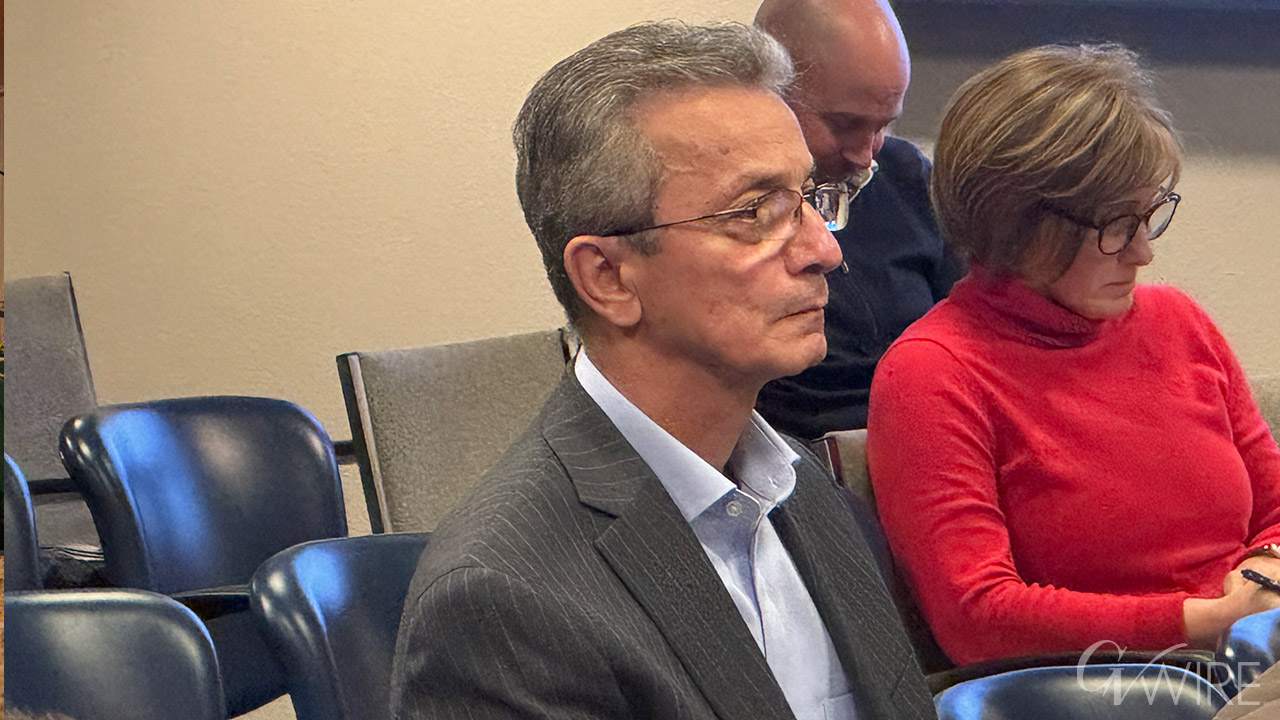 Fresno County public works official Mohammad Alimi attended a Dec. 11, 2025 Measure C Steering Committee meeting. (GV Wire/David Taub)
Votes on Trails, Spending Requirements
The steering committee also took up several other proposals during an extended Thursday night meeting.
After four rounds of votes over 45 minutes, the committee approved — 24-2 — a staff recommendation to add 120 miles of new bike or trail facilities by 2057, split 70%/30% between urban Fresno/Clovis and the rest of the county. Mona Cummings of Tree Fresno sought to increase the mileage to 150 but could not find enough support.
The committee also proposed several transportation goals, including 15-minute frequency for urban bus routes and rural travel times comparable to personal vehicle use. COG staff made language tweaks that satisfied transportation experts from the county and from the cities of Fresno and Clovis who attended the meeting.
The advisory group said the Measure C oversight board will meet quarterly. Although the current requirement is only once a year, the board has already been meeting more frequently. Measure C will also be required to develop a whistleblower and anti-fraud program, with information posted on its website.
A proposal by Veronica Garibay of the Leadership Counsel for Accountability and Justice — to remove the U.S. citizenship requirement for serving on the citizen oversight board — was not pursued. Members must be at least 18, live in Fresno County, and be U.S. citizens.
A Measure C spending plan was already approved last month by the steering committee and the policy advisory board. It calls for allocating 65% to existing neighborhood streets and roads, 25% to public transportation, 5% to regional connectivity, 4% to transportation innovation, and 1% to administration.
COG Executive Director Robert Phipps warned that the reduced administration share — down from 1.5% in the current Measure C approved in 2006 — could force cuts within the agency.
“You get what you pay for. There’s not enough money or resources to meet the additional requirements the committee expects,” Phipps told a group of public works officials on Friday.
Local jurisdictions may have to make up the difference, Phipps said.
Experts Cautious of Steering Committee Plan
A group of public works officials — the COG technical committee — met Friday morning and voted not to recommend the steering committee’s suggestions.
Alimi said he was stunned the committee increased the spending requirement.
“The 12% makes no sense,” Alimi told his colleagues. He said disadvantaged communities make up less than 8% of the population and 2% of the roads.
He said it was “not fair to the rest of the county’s residents.”
“I get it. They have needs. I’m not trying to ignore them. But it seems they have the loudest voice — and that doesn’t mean they should get the biggest share,” Alimi said.
He said the draft contains many errors, inconsistencies, and ambiguities that need to be corrected.
“This document has more holes than Swiss cheese,” Alimi said.
Jennifer Clark, the city of Fresno’s planning director, said the technical group’s role can sometimes be “frustrating.” She was among several officials who made recommendations that essentially reversed many of the steering committee’s proposals.
Organizing the Meeting Bureaucracy
The steering committee first had to decide how to run its meetings, which had previously been conducted informally.
Amber Crowell, representing the Center for Community Voices at Fresno State, suggested using Robert’s Rules of Order to govern the meetings. Last week, Mark Keppler — hired by COG to preside — said he was unfamiliar with Robert’s Rules. Larry Westerlund objected, and the group agreed to a compromise: ten minutes of discussion before any potential motion.
Attendees joked beforehand about the meeting ending at the usual 5:30 p.m. stop time. But because this was the true final meeting, there was no hard stop.
“We’re getting awfully specific for guidelines,” said Lee Delap, who represents the county, after a lengthy debate over trail mileage.
Although the committee has 38 members, only 30 are considered active, and 25 attended at the start of the meeting. Only one of the three members representing the city of Fresno — Westerlund, a former Fresno City Councilmember — was present. Chuck Riojas was absent, as he has been for several recent meetings, and Ashley Webster, an alternate for Karen Musson, was also absent.
Several times, a new comprehensive motion required staff to take extra time to type up the language and display it on a screen.