
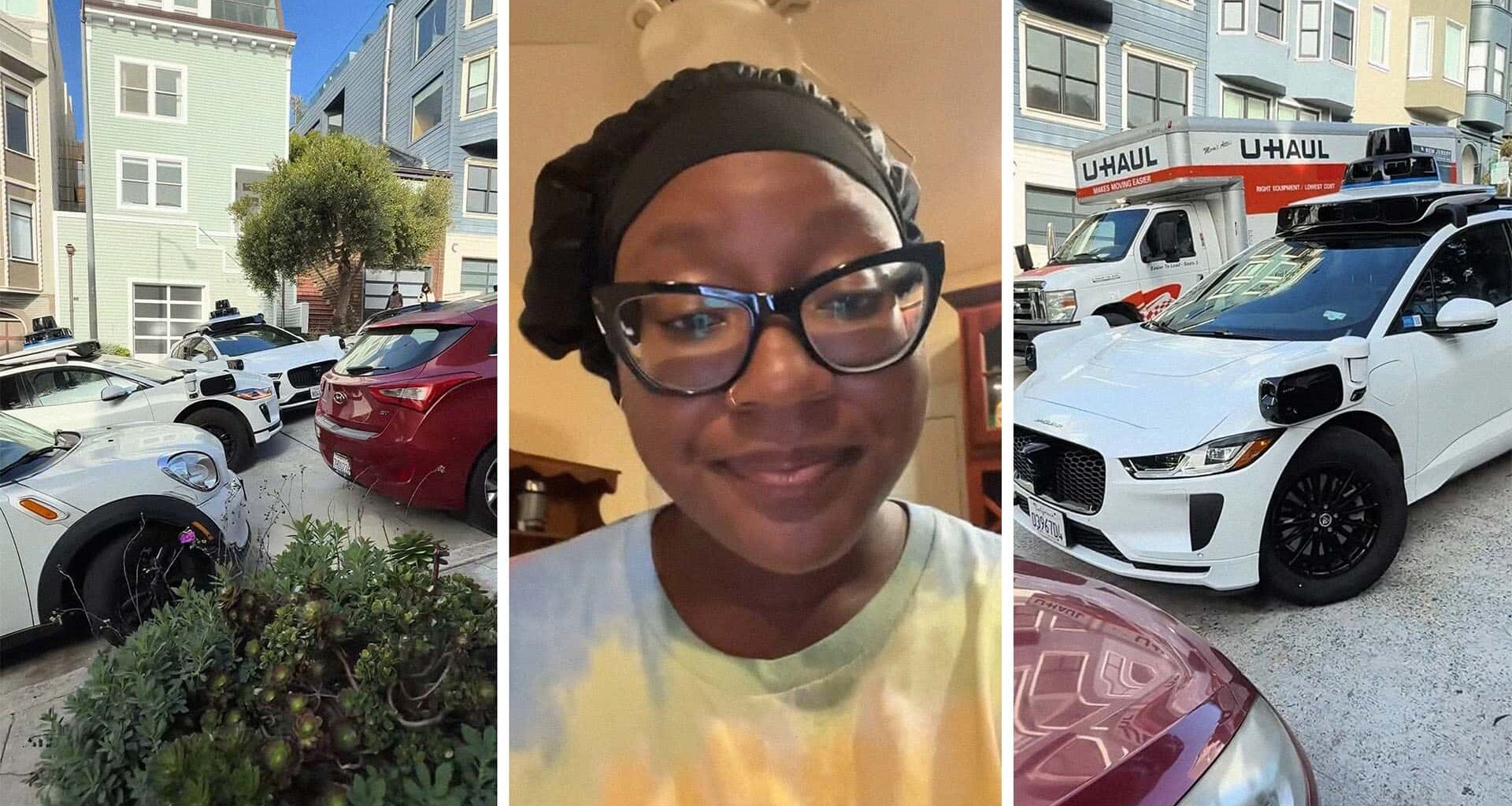
Two of the cars had touched; a third pulled to a stop, headed in the opposite direction, and then all three Waymos simply… stopped. No horn, no gesture, no backup maneuver. Just silence. For pedestrians in San Francisco filming the scene, it was a perfect snapshot of the challenge facing autonomous vehicles today: What do machines do when the rules don’t tell them what to do next?
A viral TikTok from SF creator @chii_rinna captures the uncomfortable bind still facing new technology platforms that rely on artificial intelligence and automation instead of human decision-making. On a steep, narrow residential street, the gridlocked Waymo taxis, none of which seemed to contain passengers, created a spectacle and dashed any hopes of driving through or around the impasse.
“So the Waymos are causing a traffic jam… cars are stuck,” she said in the clip that’s been viewed more than 3.9 million times. In a follow-up video, what appears to be a Waymo service technician entered one of the vehicles and moved it to allow enough room for another autonomous vehicle to begin driving.
The brief stalemate quickly became a flashpoint in the long-running debate over the safety and reliability of autonomous vehicles operating on public streets. Commenters were split between amusement and alarm, with many replaying the clip to understand how three independent cars, each equipped with dozens of sensors, lidar arrays, HD mapping data, and a decade of real-world testing, could still end up in a mutual deadlock. Others began trading puns and searching “Waymo accident” just to keep up with the online joke cycle, a testament to how quickly any AV mishap becomes a cultural moment.
For some locals, the incident reinforced a sense of unease following a series of highly publicized AV failures in San Francisco. State regulators temporarily suspended Cruise’s driverless permits in late 2023 after a collision and subsequent reporting issues, although Waymo was not implicated in that decision.
When Waymos Touch: What The Rules Actually Say
The precise nature of the contact between the two vehicles remains unclear, and Waymo has not confirmed whether it will classify the event as a reportable crash under California law. Under California regulations governing autonomous vehicle deployment, AV operators are required to document collisions that result in property damage, bodily injury, or significant vehicle impairment. Minor scraping or incidental contact between two vehicles owned by the same operator can fall into a gray area depending on severity and whether the event meets the legal definition of a collision.
When an autonomous Waymo detects abnormal force or finds itself in an unexpected, unrecoverable state, it activates a “minimal risk condition,” bringing the vehicle to a controlled stop while remote fleet specialists review sensor feeds. These specialists cannot “joystick” the car or directly drive it, but they can issue guidance that allows the AV to attempt a planned route out of the disturbance. If the car remains blocked or immobilized, Waymo may dispatch a field team to manually recover the vehicle.
Viral bits from across the social media landscape
Our team of experts tracks what’s trending so you don’t have to—from viral videos to online debates that have everyone talking.
Why Incidents Like This Go Viral
Despite the attention they attract, autonomous taxis continue to demonstrate strong overall safety performance, especially at scale. Waymo’s published data show lower crash rates per million miles than those of human drivers, including fewer injury-causing collisions and fewer events involving improper driving behaviors. Independent research from the NHTSA and academic institutions supports the notion that automated driving systems reduce human-error crash factors such as speeding, distraction, impairment, and aggressive behavior.
But the gap between statistical safety and public trust remains wide. Humans are quick to dismiss their own driving mistakes yet disproportionately alarmed by machine error. A minor fender-bender involving a human taxi would never trend on social media; a malfunction involving two driverless taxis becomes a referendum on the future of transportation.
The TikTok clip succeeded because the incident visualized a lingering cultural anxiety. People want to know what happens when automated systems fail in unfamiliar ways. They also want to know who’s responsible, who’s in control, and who fixes the problem when nobody is in the driver’s seat.
For all the humor surrounding the “Waymo standoff,” the moment offered a revealing look at the challenges still facing autonomous taxis, particularly on the older, narrower grids of cities like San Francisco. Rare, unpredictable edge cases remain the most stubborn hurdle for companies like Waymo and Cruise, often involving interactions that humans navigate easily: informal negotiation, improvisation, and nonverbal communication.
Waymo has said repeatedly that incidents like these are valuable for improving its software stack, training perception models, and refining how vehicles handle multi-agent interactions. But for the pedestrians who filmed the jam, the lesson was simpler: Technology may advance quickly, but the messy choreography of real-world streets advances even faster.
As companies continue to scale deployments in new cities and new climates, the pressure to resolve these vulnerabilities will only grow. The San Francisco standoff may have been brief and mostly harmless, but it captured what many people still feel about the driverless future: fascinated, skeptical, and unsure what happens when the rules run out.
InsideEVs reached out to the creator via direct message and comment on the clip. We’ll be sure to update this if they respond.
We want your opinion!
What would you like to see on Insideevs.com?
– The InsideEVs team