
BAKERSFIELD, Calif.(KBAK/KBFX) — The California State University (CSU) system approved a centralized Native American Graves Protection Act (NAGPRA) policy that is leading to improvements at CSUB.
In November, the CSU announced it had adopted a resolution outlining standardized practices to comply with NAGPRA and its California counterpart, CalNAGPRA. The laws require government institutions, like universities, to preserve Native American gravesites and return remains and cultural items to the tribes they belong to.
The adoption of the policy follows the passage of AB 389 (Ramos), which put pressure on the system to comply with the laws that were passed multiple decades ago.
“As a university system, we acknowledge that we have fallen far short of our legal and moral obligation of these laws,” said CSU Chancellor Mildred Garcia in a video statement following the approval of the CSU policy. “The policy establishes consistent and timely repatriation processes to be followed by the CSU’s 22 universities.”
Among other provisions, the policy requires every campus to have a full-time NAGPRA/CalNAGPRA coordinator, establish campus and system-wide committees, and survey the remains and items in their collection; among other provisions.
Proponents say the policy also improves communication with indigenous tribes across the state and nation, giving them more power when it comes to repatriation of remains and cultural items. The system-wide policy also streamlines the process so tribes know what to expect when communicating with each university in the CSU system.
Nearly two years ago, Eyewitness News reported on an audit that found CSUB was falling behind when it came to complying with the laws.
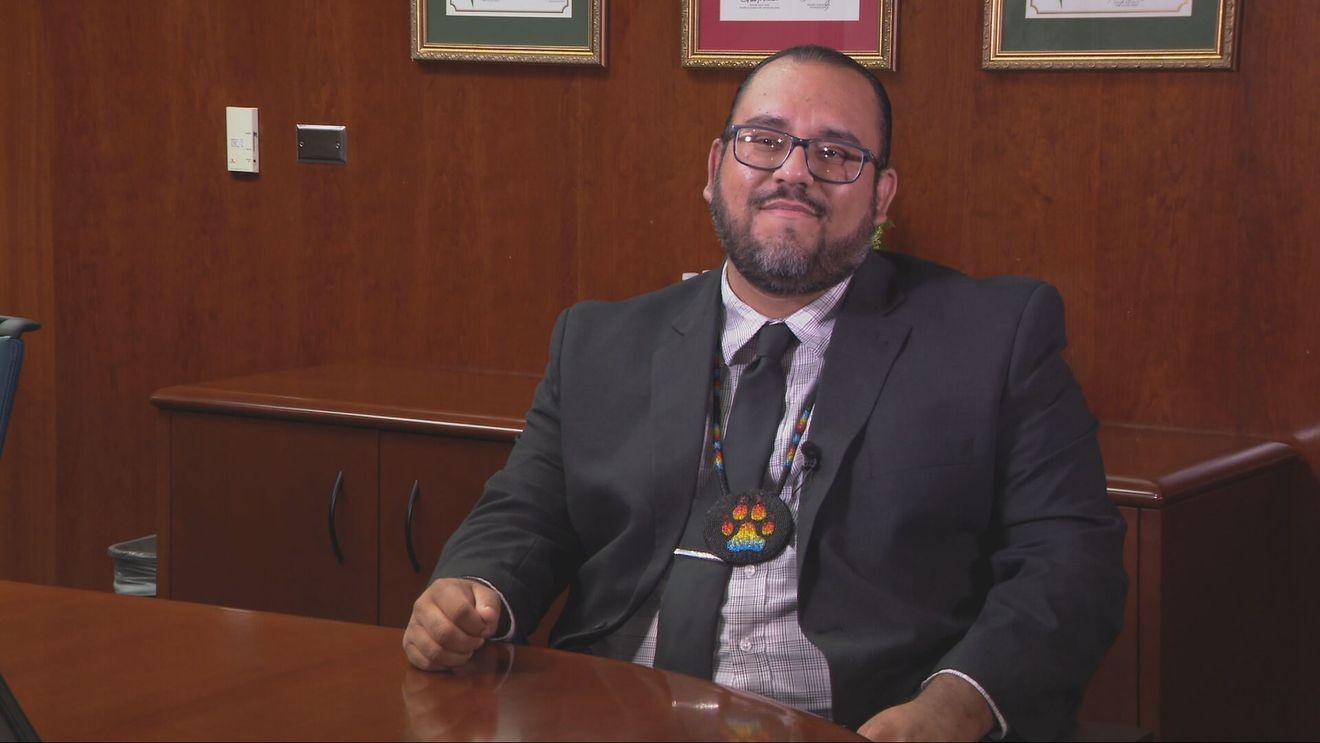
At the time, the university lacked a full-time NAGPRA coordinator, but there were plans to hire one. Since that report, the university has hired David Silva, the former tribal liaison at CSUB.
“This work means the world to me; to work alongside our tribal community and tribal partners and make sure that we’re following every instance of NAGPRA and CalNAGPRA to the fullest extent possible that we can as a university,” Silva told Eyewitness News.
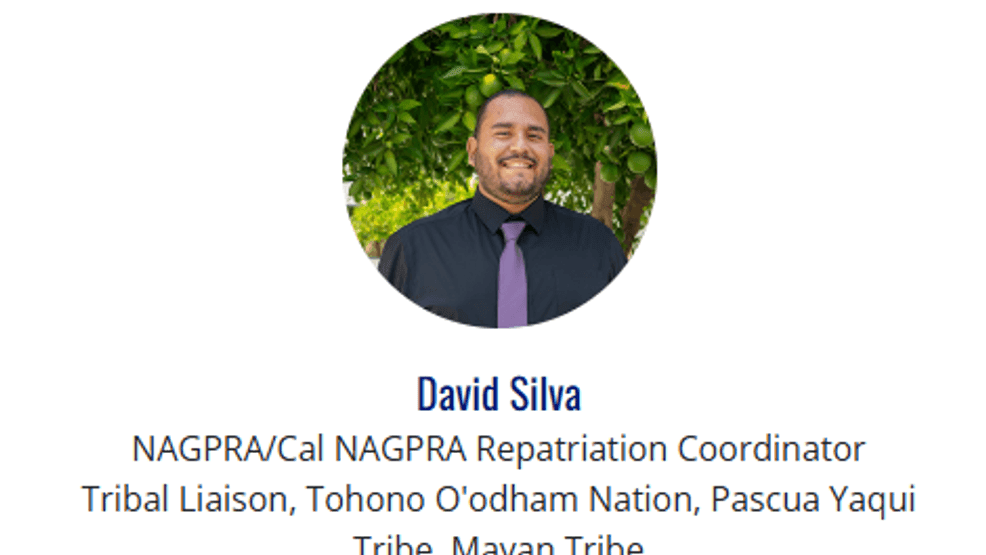
CSUB NAGPRA/CalNAGPRA coordinator David Silva and his indigenous heritage.
Silva, who identifies as Indigenous, said the creation of a centralized policy is crucial for the university and tribal communities across the state.
“It’s going to make that system seamless for tribal communities across California and the campuses as well because now we’re working in coordination with each other to make sure that everyone is following the same policy,” Silva said.
While Silva did concede that the university still does not have a full understanding of just how many cultural items it has, he said CSUB has started consulting with tribes to begin that work.
“Legally, we’re not able to open the boxes until we have tribal consent and tribal consultation in place,” Silva said. “Because of that, we’re awaiting tribal consent to go through our collections.”
Silva also noted that in recent years the university has developed a controlled storage system for its collection so that it is protected from unauthorized access.
Overall, Silva believes that the CSU policy is a step in the right direction in correcting a long-overdue historical wrong.
“In my family, our tribe’s cemetery was buried over by a highway. So when I’m able to help other tribal people to have either their ancestral remains or cultural items or sacred objects returned to them, it gives me a deep sense of gratitude,” Silva said.
To learn more about the CSU’s NAGPRA/CalNAGPRA compliance, click here.