
San Francisco is so not back.
That was one of the winning arguments at Wednesday night’s Utopia Debate, hosted by Substack. The goal was to take the most stimulating — or aggravating — fights on tech Twitter and transfer them to the stage. Mission accomplished.
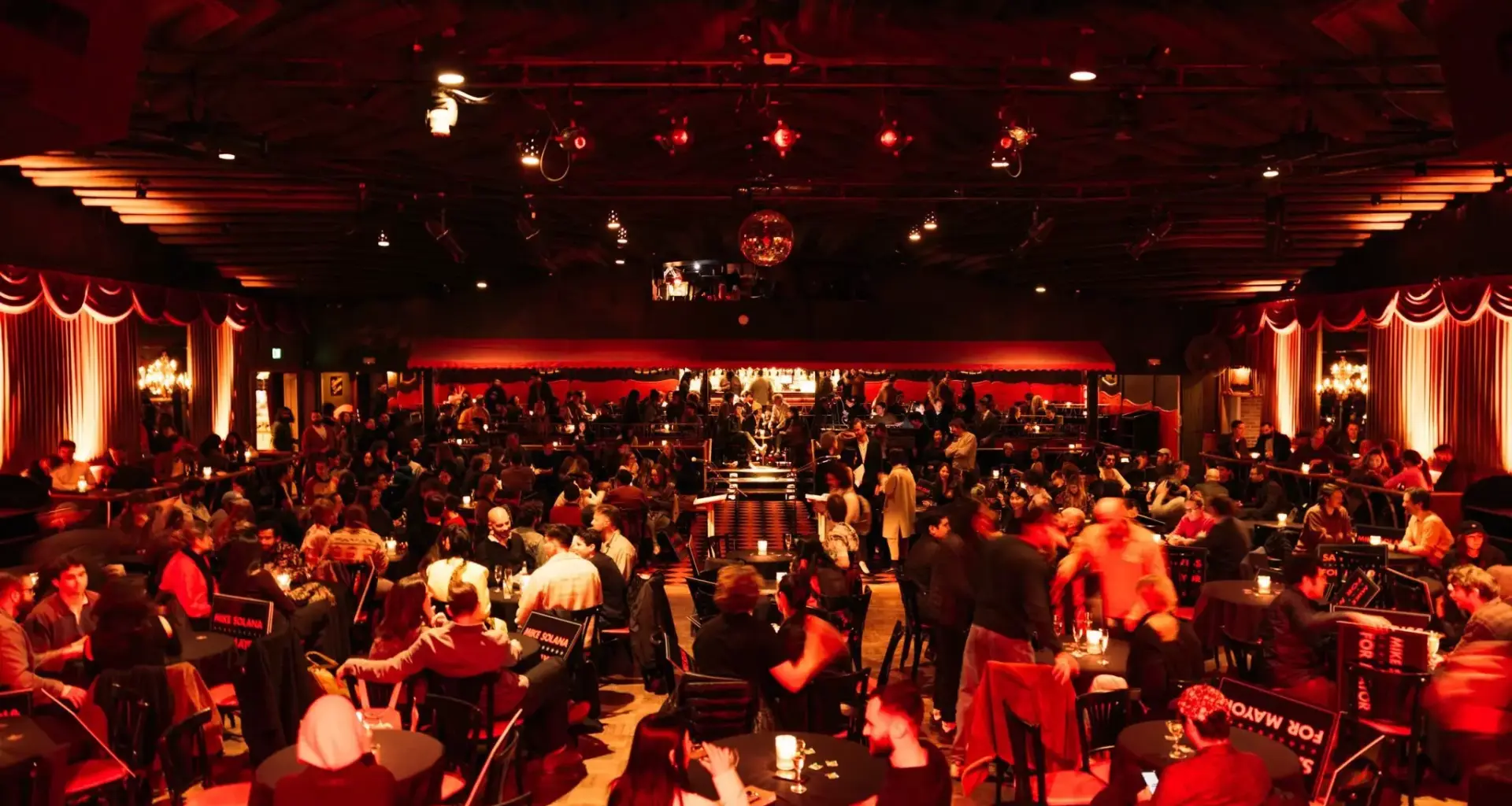
Substack CEO Chris Best wore a Santa hat as he introduced the event at Bimbo’s 365 Club in North Beach. It was a festive touch on an otherwise rage-baiting evening meant to promote the kind of heterodox thinking and writing that has taken off on the platform.
“This strange and wonderful mix of people is something very special,” Best told hundreds of attendees seated around two podiums in the center of the venue. “It’s also what I love about San Francisco, even if some of our debaters flew in to hate on it.”
And hate on it they did. In the first bout, British writer Sam Kriss took on Pirate Wires founder Mike Solana on a question of fundamental interest: Is SF back?
Solana argued that SF is indeed on the upswing. He parroted Mayor Daniel Lurie’s Instagram talking points — business is coming back, crime is down — and argued that, unlike other purported liberal hellscapes, San Francisco is trying to clean up its brown-stained streets.
Not that it was all warm and fuzzy from Solana, who called out progressive Supervisor Jackie Fielder and her “deranged barista friends” in City Hall for being “genuinely malevolent,” while throwing out an R-word for good measure.
Kriss, on the other hand, stole the show by bashing SF in every way he could, at once dodging the matter of whether the city is improving and imploring the audience to question what we can really call progress.
“It feels like being trapped in a kind of Playmobil toy town that’s recently been assimilated by the Borg,” Kriss said. “Spending any amount of time in San Francisco is — I’m sorry — a crushing and miserable experience, because this city actively militates against everything that’s good in ordinary human life.”
 Entry for the event (and champagne) was free. | Source: Courtesy Vikram Valluri
He bemoaned the cringeworthy AI mottos plastered all over the area’s billboards, tech’s appropriation of MAGA, and the millionaires who inject themselves with Chinese peptides and live without bed frames. Whatever culture is being created here is rotten, he said.
“The tech industry is the only Bay Area subculture to have never produced any of its own music,” he noted. “Instead, your contribution to global culture is software for churning out AI-generated crap. Your version of Jefferson Airplane or the Dead Kennedys or E-40 is, ‘We are Charlie Kirk (opens in new tab).’”
By the end of the 20-minute verbal sparring session, most in the audience were loudly cheering against the city they presumably live in.
In short, Solana got his ass kicked.
The rest of the debates were muted in comparison, but here were the results as judged by the audience. Should robots take our jobs? Yes. Should superbabies be allowed? No. Can AI have taste? No.
Despite the theme of utopia spurred by futuristic cities and technology, the event seemed to be an attempt to harken back to the past. From the Frank Sinatra impersonator to the butlers pumping soap in the bathrooms and the red-hued venue itself, the affair was a relic of midcentury urbanity.
Substack, the company branded as “a new economic engine for culture,” was attempting to make two points at the same time: that today’s culture is both progressive and conservative — that the best is ahead of us, and also behind.
This is the tension Substack can’t help but confront: The software that makes the company possible pushes San Francisco — and the world — away from what it was. It exposes people to new media and demolishes their attentional capacity to read it. It makes people understand each other, and fight about it. It builds, while it gentrifies.
The city might be back, but it’s nothing like it used to be.