
It was advertised as bargain day at the local supermarket, 25% off all cans of tuna. You visit the store, select cans of tuna and go to the register, but the store refuses to honor its advertisement. “The advertisement contained an inadvertent error,” the store manager explains. “The price applies only if you buy over $50 in groceries.”
The San Diego City Attorney’s Consumer Protection Unit might investigate such bait and switch practices in the retail world, but is unlikely to investigate its own client, the city of San Diego, which engaged in bait and switch arising from the 2022 elections.
In November 2022, San Diego voters approved Measure B by less than 1%, permitting the city of San Diego to charge a fee for trash-hauling services.
Voters were told in the fiscal analysis supporting the ballot measure that the city’s “best estimate” was the fee would range from $23 to $29 per month. “This range,” the fiscal analysis explained, “is similar to the fees charged by other peer cities that offer similar services.”
After the election, the City Council voted to impose a $43.60 per month fee, significantly higher than fees charged by surrounding cities.
The explanation? An inadvertent error.
Had voters known the true fee, how many would have voted for Measure B? Since it was adopted with only 50.48% voter approval, would it have passed?
San Diegans deserve better treatment than this. The most equitable remedy would have been a re-vote with knowledge of the true fee. But the city will not voluntarily do that and pending litigation will likely not achieve that result.
If nothing else, city leaders have lost significant credibility with the people they represent.
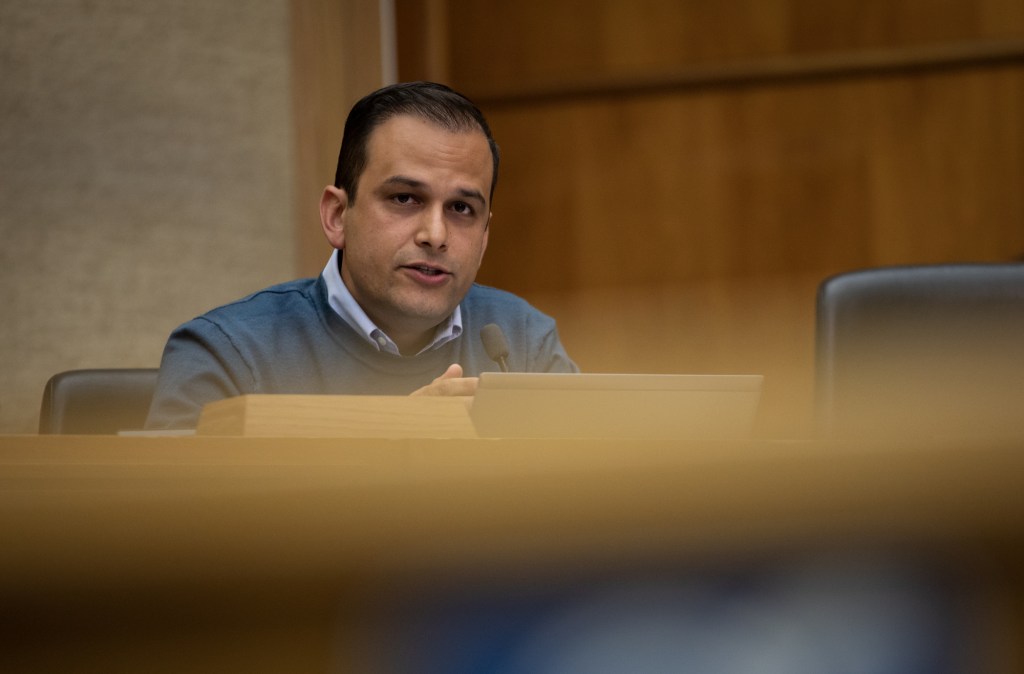
Enter Councilman Raul Campillo, who voted against the trash fee amount because it exceeded the range represented to voters. He has proposed reforms to earn back some of that credibility.
One of his proposals is intended to prevent another city-generated bait and switch. Before asking voters to authorize the City Council to impose a new fee for a service, the City Council would conduct a comprehensive cost-of-service study to determine what it would actually cost the city to provide the service. Since state law bars cities from charging fees higher than their actual costs, this cost-of-service study would tell voters the upper limit of the new fee.
Absent a re-vote, Campillo’s proposal is the next best step, with one caveat. His proposal gives the city a choice of whether to conduct a cost-of-service study. That creates a huge loophole that needs to be closed.
To close that loophole, the proposal should provide that, where there is no cost-of-service study, any new fee proposal presented to voters must contain a maximum amount that cannot be exceeded without additional voter approval. That would give voters confidence in what they are voting on.
As Campillo said, “San Diego residents should never feel baited and switched by their own city government.”
In addition to preventing a future bait and switch, Campillo has gone further in his plan to help the city regain credibility. He wants more clarity in city notices of proposed increases in existing fees and residents’ right to protest. Instead of burying information in complicated legalese, he wants the notice forms to be clear and concise. That is a much-needed reform.
There is an additional reform that should be made. City law imposes a preference that initiatives by way of citizen petitions be placed on November ballots which typically have higher turnouts than June ballots. This preference should be extended to propositions placed on the ballot by the City Council, particularly where the council seeks a fee or tax increase.
The issue will be raised in connection with Councilman Sean Elo-Rivera’s proposal for a controversial “vacation home tax,” which he wants presented to voters in June 2026. That would be an obvious attempt to have his proposal considered in a lower-turnout election with presumably a better chance of success.
The mayor and City Council should join with Campillo in a sincere effort to regain credibility lost following the trash-fee fiasco by adopting these three reforms.
Goldsmith is a Union-Tribune contributing columnist and former Superior Court judge, San Diego city attorney and California state legislator.