
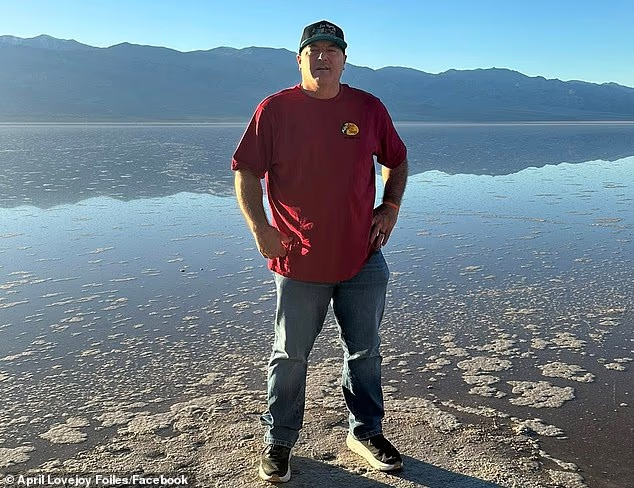
An ancient lake that disappeared from a California national park more than 100,000 years ago has dramatically returned following record-breaking rainfall.
The massive Ice Age lake roughly 100 miles long and 600 feet deep dried up between 128,000 and 186,000 years ago as the climate warmed in present-day Death Valley National Park, according to Los Angeles Times.
However last week the National Park Service (NPS) revealed the area had its wettest fall season on record, resulting in a rare return of the body of water.
‘These fall storms brought more rain than Death Valley typically receives in an entire year,’ the agency wrote in a news release.
Badwater Basin, one of the hottest places on Earth and the lowest point in North America at 282 feet below sea level, recorded 2.41 inches of rain in just three months.
Death Valley shattered a nearly century-old record in November, receiving 1.76 inches of rain and eclipsing the 1.70-inch mark set in 1923.
‘It’s an attraction, but it’s not really a lake,’ Katt, an employee at the Death Valley Inn, told the LA Times.
‘It’s the size of a lake but it’s not deep,’ she added. ‘It’s more like a very, very large riverbed without the flow – a wading pool maybe.’

Tourists have flocked to visit the newly returned body of water, informally known as Lake Manly, which has sprung up in Badwater Basin, one of the hottest places on Earth, following record-breaking rainfall
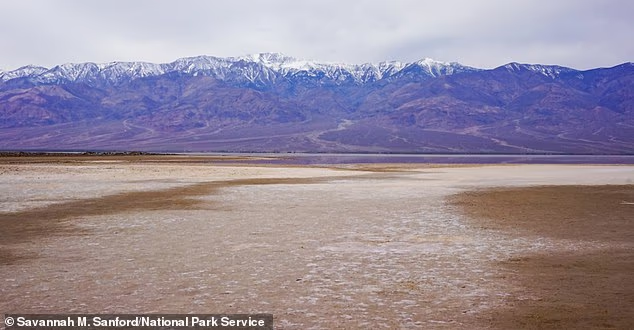
A massive Ice Age lake roughly 100 miles long and 600 feet deep which dried up between 128,000 and 186,000 years ago as the climate warmed in present-day Death Valley National Park, California has returned
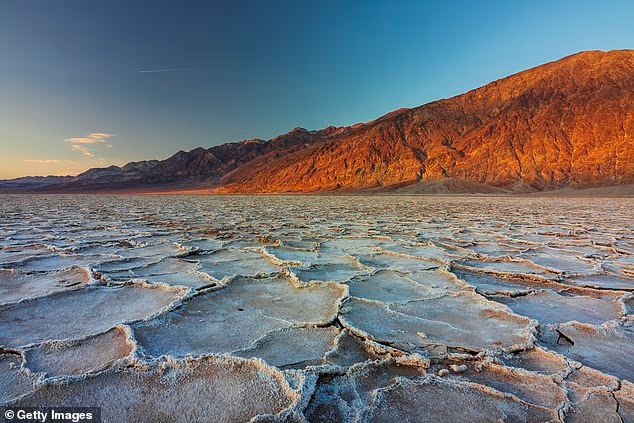
Last week, the National Park Service (NPS) revealed the area had its wettest fall season on record, resulting in a rare return of the body of water
The lake reappeared more than two years after its last return in 2023, when Hurricane Hilary hit the state and dumped more than 2.2 inches of rain on the valley.
Then, in February 2024, the normally dry basin filled as Hilary’s remnants combined with 1.5 inches of rainfall from an atmospheric river.
Thanks to the continuous rainfall, the basin stayed deep enough for kayaking for several weeks. NASA measured the water at between 1.5 and three feet over six weeks in February and March of last year.
Videos showed visitors strolling through the lake’s shallow waters and reaching down to touch the basin.
Now, the lake – informally known as Lake Manly – has transformed into a smaller and shallower version of the one that formed after Hurricane Hilary swept through the park.
Nevertheless, the phenomenon has boosted business in Death Valley from 20 to 30 percent since the lake reappeared, the inn employee told The Times.
The staffer said that when the lake last returned in 2023, the inn was fully booked for several nights. Following recent storms, the inn has once again seen an increase in visitors, as it is only about seven miles from the park’s entrance.
She recently explored the newly formed lake and noted that in certain spots, the water came up to her knees.
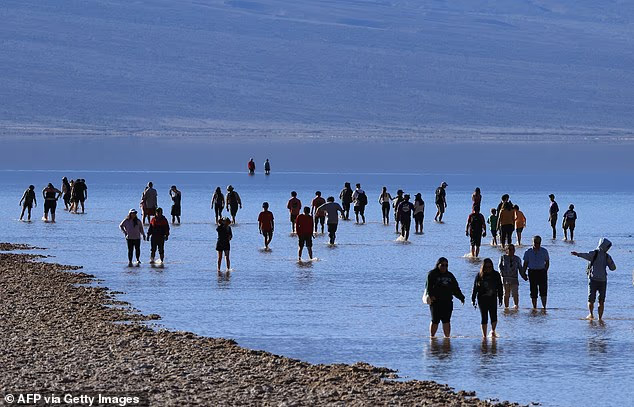
It is not the first time the lake has returned, in February last year after the remnants of a hurricane combined with an atmospheric river to deluge the site. Pictured: Tourists wade in the lake in on February 18, 2024

The lake reappeared more than two years after its last return in 2023, when Hurricane Hilary hit the state and dropped more than 2.2 inches of rain on the valley. Pictured: People relax by the water’s edge during the lake’s last appearance in 2024
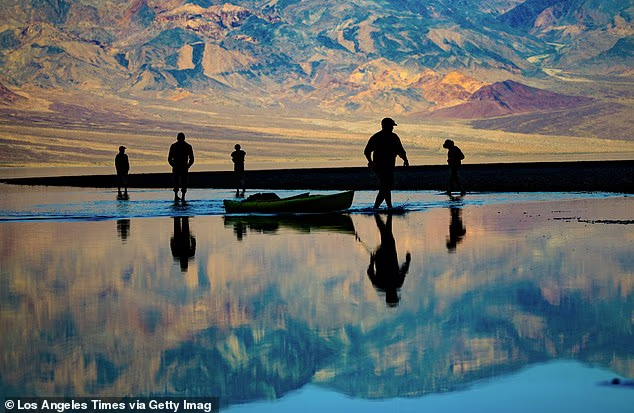
Thanks to the continuous rainfall, the basin stayed deep enough for kayaking for several weeks in 2024 before vanishing again
Officials have cautioned that no one can say how long the lake will persist before vanishing again and that it is unlikely to stick around for long.
The lake’s fate hinges on three things: how windy Death Valley gets, how warm it becomes and whether more rain arrives soon.
At such a low elevation, rainfall in the valley typically evaporates almost immediately due to the intense heat.
However, due to recent cooler temperatures, Death Valley park ranger Nichole Andler told the LA Times that visitors can expect to see the lake into the new year and possibly longer.
‘Some of the best views of the lake are from Dante’s View, and sunrise is a great time to see it,’ she added.
Long before the water dried up, hundreds of thousands of years ago, ice cloaked the Sierra Nevada while the vast lake stretched across what is now the Mojave Desert.
Today, the towering Sierra Nevada range blocks moisture from the Pacific, causing most of the rain to fall on the mountains’ western side.
But thanks to mountain rain shadows, Death Valley now averages roughly two inches of rain annually.
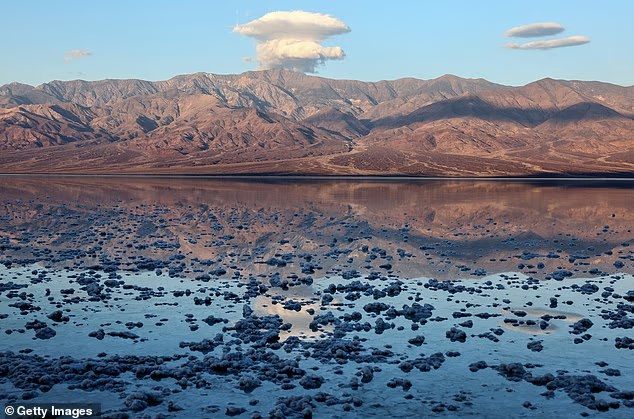
Now, the lake – informally known as Lake Manly – has transformed into a smaller and shallower version of the one that formed after Hurricane Hilary swept through
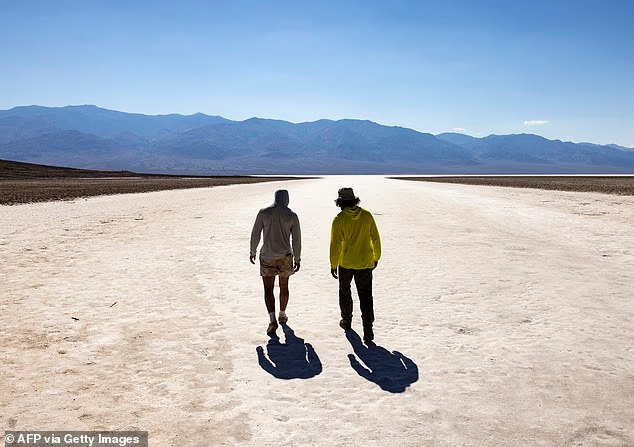
At such a low elevation, rainfall in the valley typically evaporates almost immediately due to the intense heat. Pictured: Visitors walk under the sun at Badwater Basin in Death Valley National Park, near Furnace Creek, during a heatwave impacting Southern California on July 7, 2024.
The recent storms have caused road closures throughout the park, with debris covering paved roads and making them impassable, according to the National Park Service.
Some of the park’s most popular sites – including Zabriskie Point, Dante’s View, Badwater Basin and Mesquite Sand Dunes – remain open and accessible.
‘If traveling on backcountry roads, visitors should proceed with caution,’ the agency wrote.
‘The water is about a mile from the Badwater parking lot and in most places, would not rise above the tops of your shoes,’ the release added.
‘Be prepared to self-rescue and always check current conditions before visiting.’
The National Park Service did not immediately respond to Daily Mail’s request for comment.