
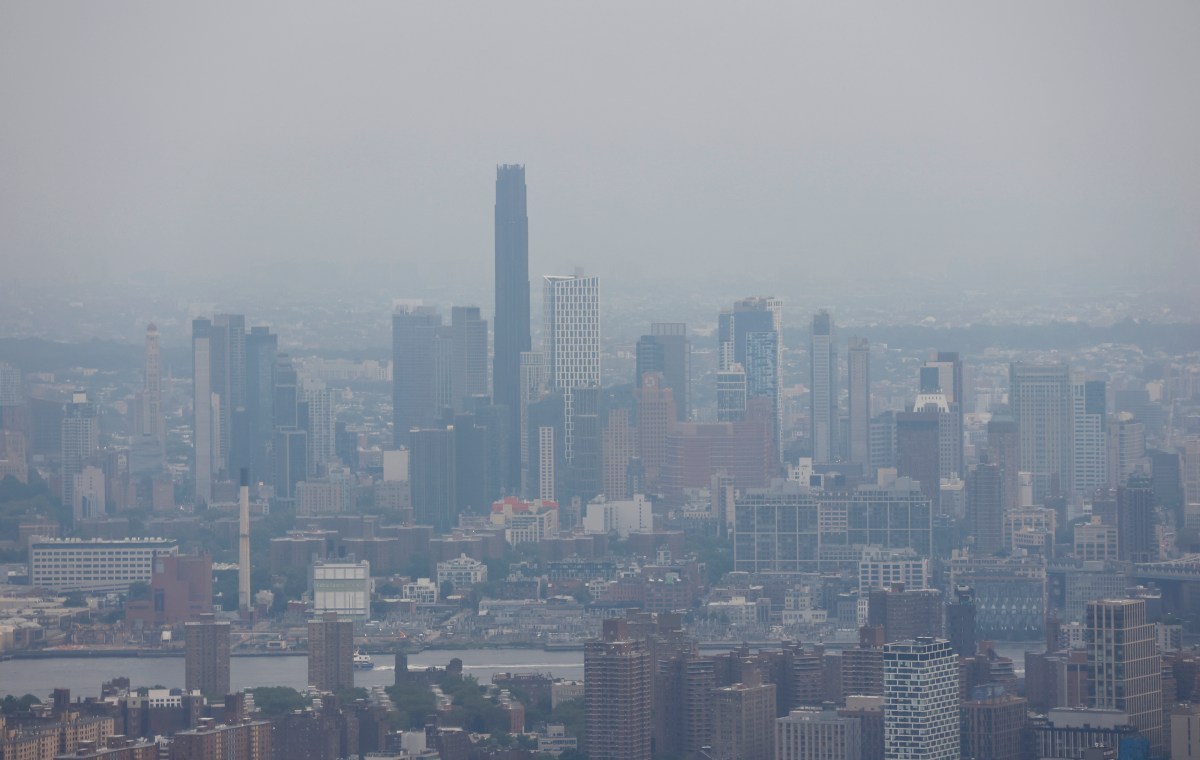
Thousands of residents across California—including Portola, Sattley and Cromberg, and also parts of the Plumas National Forest and Sierra Valley—have been advised to stay indoors due to high levels of fine particle matter pollution—PM2.5—in the atmosphere, according to the Environmental Protection Agency (EPA).
A live map, produced by AirNow, which monitors and measures the air quality across the United States, recorded elevated levels of PM2.5 at 10 p.m. PST on December 13. Air quality levels reached up to 157 on the Air Quality Index (AQI)—a standardized scale which AirNow and the EPA use to categorize and communicate the quality of air—which is considered “unhealthy,” due to increased amounts of PM2.5.
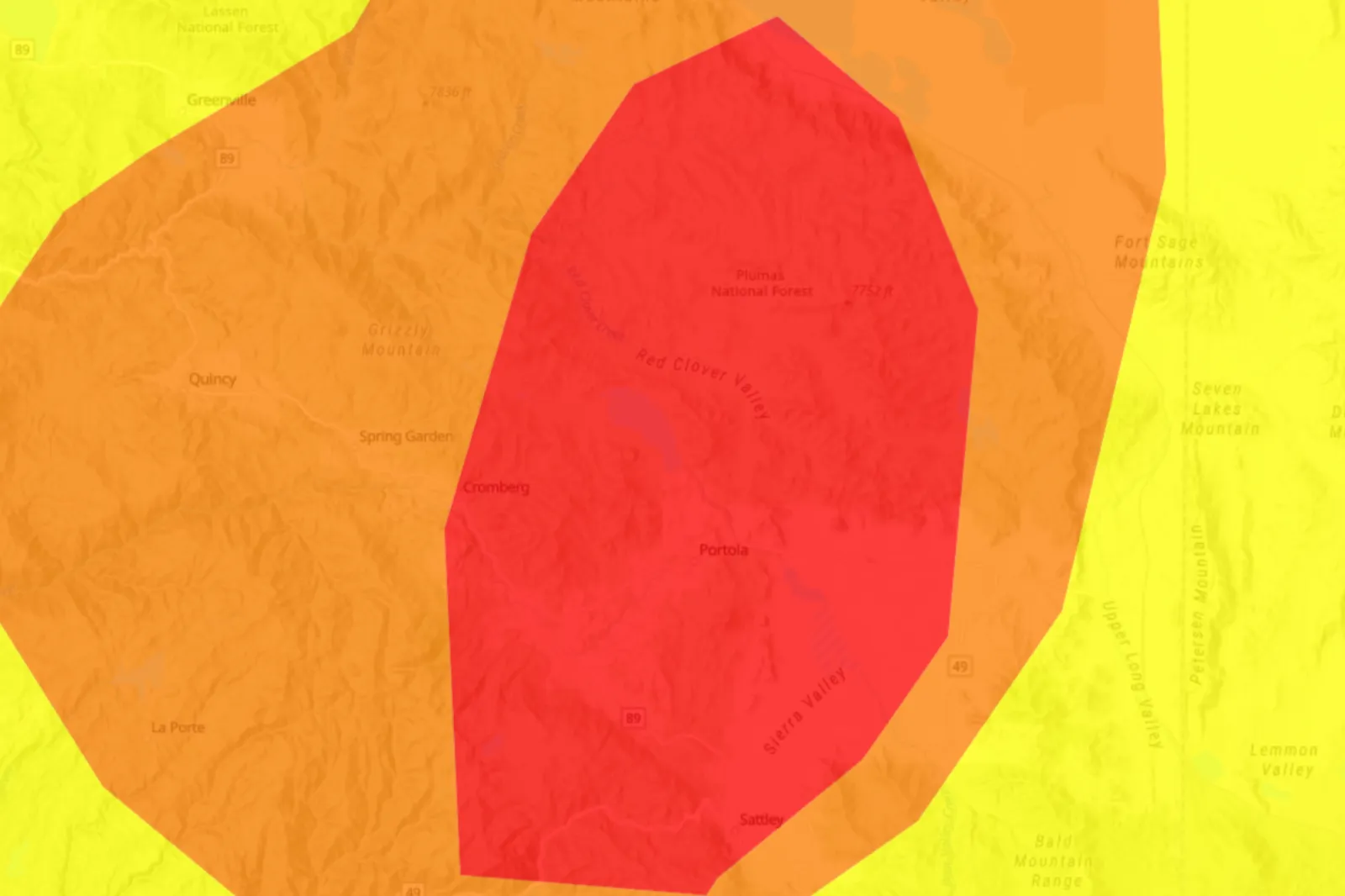
For context, according to the AQI, if AirNow records a score of between 0 and 50, it means the air quality is “good,” and “air pollution poses little or no risk” to the public. A score of 151 to 200 is considered “unhealthy,” which means “some members of the general public may experience health effects,” and a score of 301 or higher means it’s a “health warning of emergency conditions: everyone is more likely to be affected.”
AirNow is warning people in vulnerable groups in affected areas in California—such as those with existing heart or lung conditions, young children, teens, and older adults—to “take steps to reduce exposure” to the polluted air, including avoiding strenuous outdoor activities and limiting time spent outside, by either moving outdoor activities inside or rescheduling them.
All others in the affected areas have been advised to “choose less strenuous activities (like walking instead of running)” and limit the amount of time spent outdoors.
PM2.5 are tiny inhalable particles of pollution that are around 2.5 micrometers or less—smaller than a single strand of hair—which can be transmitted into the air from a variety of sources, ranging from wildfires to vehicle emissions. The EPA warns that PM2.5 is one of the most dangerous forms of particle pollution, as it can be unknowingly inhaled, causing serious health problems if it enters the lungs or bloodstream, especially for vulnerable people.
The EPA said: “Particulate matter contains microscopic solids or liquid droplets that are so small that they can be inhaled and cause serious health problems. Some particles less than 10 micrometers in diameter can get deep into your lungs and some may even get into your bloodstream. Of these, particles less than 2.5 micrometers in diameter, also known as fine particles or PM2.5, pose the greatest risk to health.”
Those in affected areas should monitor air quality maps for updates, as conditions could change rapidly.