
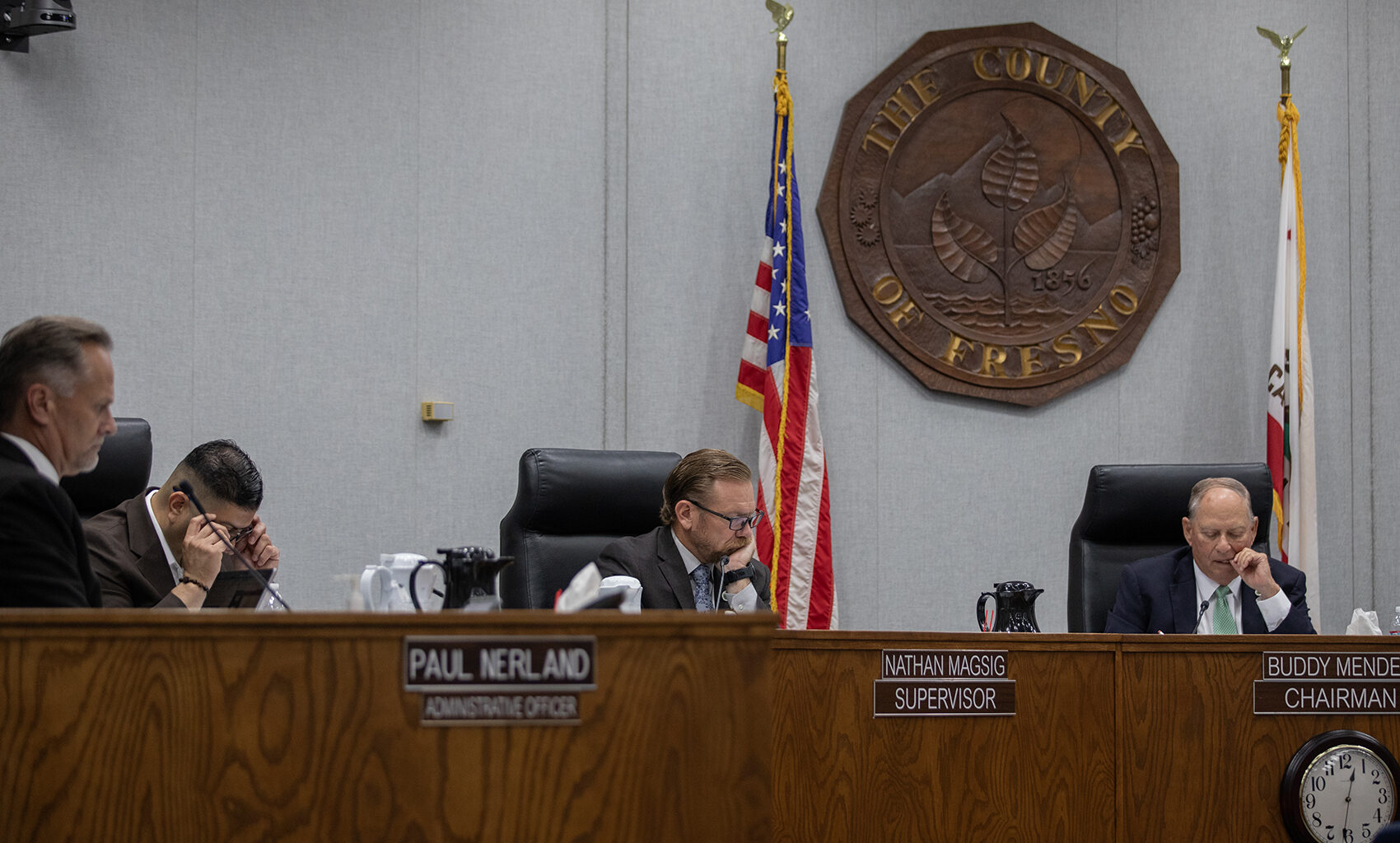
FRESNO COUNTY – With no changed minds or resolution of any kind, the Fresno County Board of Supervisors rehashed its issues with the renewal process for Measure C, the county’s sales tax dedicated to transportation projects.
Included on the Dec. 9 agenda was an information-only item in which the board received an update on the renewal process. Following the approval of an allocation plan by the Fresno Council of Governments Policy Board in November, multiple supervisors have repeated their opposition to both the allocation plan itself and the entire measure renewal process.
“I want to support a Measure C, we need a Measure C, but I’m not going to allow this to be hijacked,” Supervisor Garry Bredefeld said. “I’m not going to support it.”
Before the conversation turned toward the more political aspects of the renewal, county staff provided an overview of how the county would be impacted by the allocation proposal.
Allocations and guidelines
The Measure C allocation proposal determines how much tax revenue will go to different kinds of projects. The proposal approved by the policy board would provide 65% of the funds to existing neighborhood roads, 25% to public transportation, 5% to regional connectivity projects, 4% to transportation innovation projects and 1% to administrative costs.
This drastically reduces the amount of funding for regional projects, which has been at 36.4% through the current version of Measure C.
Supervisors spoke about how the county was not able to complete all proposed regional connectivity projects with the funding it received over the last 20 years of the measure. This means it would have a limited ability to continue to improve roads between rural cities, as well as interchanges within major cities.
County staff also noted that some of the draft implementation guidelines — which had not been finalized by the Fresno COG Policy Board as of the meeting — would make it challenging for the county to actually use the funds it would receive.
Mohammad Alimi with the public works and planning department said some requirements, such as the construction of bike lanes on all major arterial roads, would not fit within the county’s budget.
“Every project, basically, that the county uses Measure C, in whole or partial funding, needs to have bike lanes,” Alimi said. “That is contrary to what our ATP (active transportation program) plan shows — we cannot really afford to put bike lanes on every project that we work on using Measure C. So that is not a reasonable request.”
The Fresno COG Policy Board still has time to review and revise the implementing guidelines, and Fresno COG staff have said there will be additional program strategic guidelines created if the measure passes. However, county staff said there are still areas where they have concerns or questions about how they would be able to use the money.
Political processes
In addition to discussing their issues with the technical aspects of the renewal proposal so far, supervisors again brought up their problems with how the process has played out.
Bredefeld, along with Board Chair Buddy Mendes, have been vocal about their opposition to an outside group called “Transportation for All” joining the Measure C Steering Committee. Bredefeld has called the groups’ members “radicals” on multiple occasions, and Mendes removed the county from some meetings over Brown Act violation concerns.
In questioning Fresno COG Executive Director Robert Phipps about the process, Phipps likened the current tension between the county and various cities within Fresno County to parents fighting.
“We’re getting ready to sit down at the Christmas table, and the family is fighting, and we don’t like it when mom and dad are fighting, and so we would really appreciate the opportunity to come together and have an agreement on this,” Phipps said.
That ship has sailed, Bredefeld said.
Further, he said that it was voters in his district in north Fresno and Clovis who voted down the last Measure C renewal attempt in 2022, and if the renewal plan continues in its current form, “I’m going to make sure this fails.”
Supervisor Luis Chavez asked if the board could at least commit to keeping the conversation going until the deadline for putting the measure on the ballot gets closer. Mendes replied that there hasn’t been any conversation, to which Chavez said “that’s exactly the problem.”
“I think we need to open that space for folks to have further discussions,” Chavez said.