
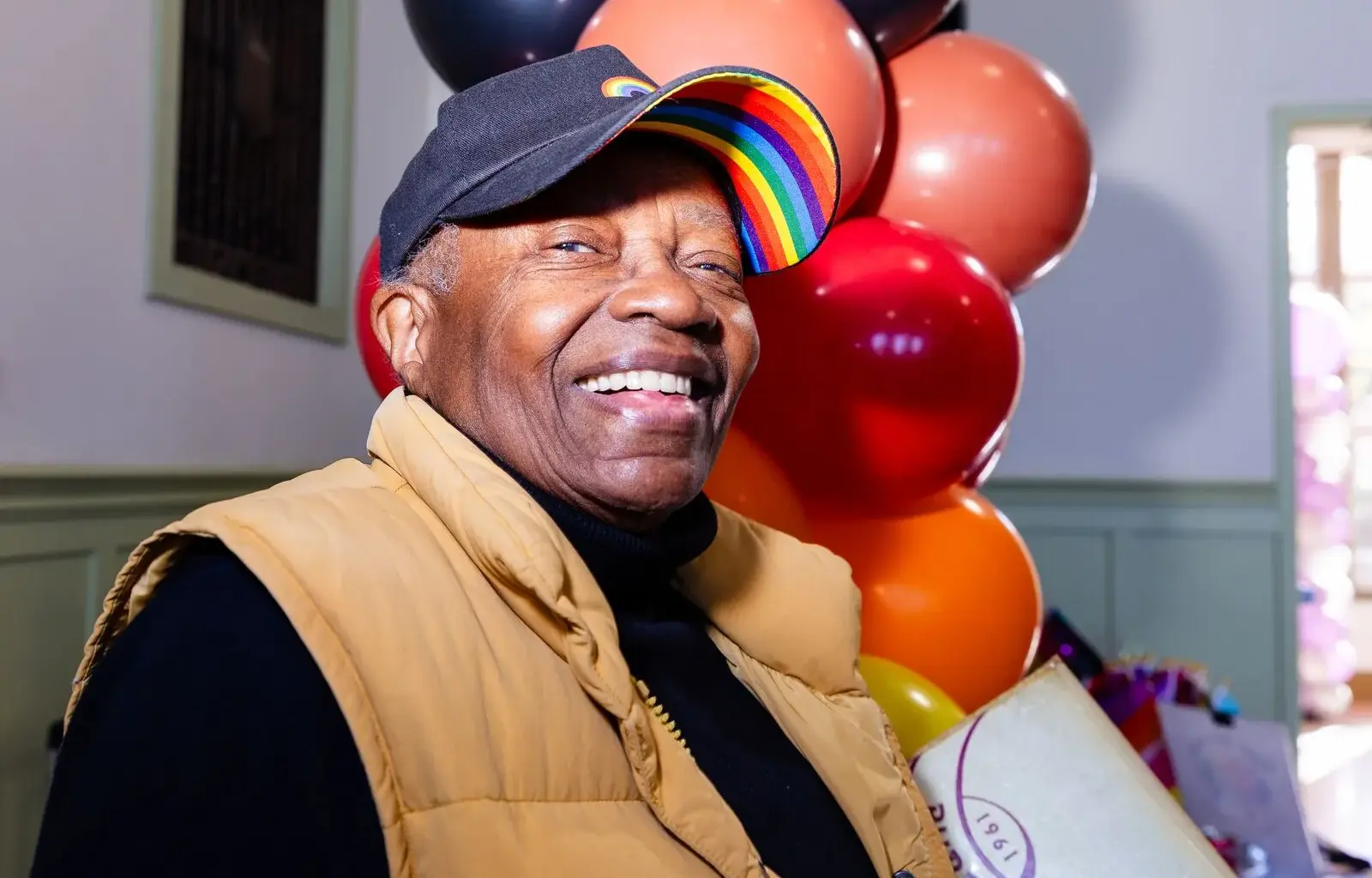
When Karen Anderson landed in the Bay Area in 1985, she eagerly began looking “for anything gay.”
It wasn’t that the queer community in her native Chicago was nonexistent. Far from it. But at the time, the scene was focused on partying, and generally segregated by both gender and race, she recalled.
In Oakland, Anderson was overjoyed to find a thriving, diverse lesbian community, often concentrated at local bars like Ollie’s on Telegraph.
“It was very loving, supportive, and social,” she said.
Anderson arrived in California during a period of tragedy, with the AIDS epidemic raging through the community, ultimately taking tens of thousands of lives and tearing apart groups of friends, families, and couples. But in the thick of the crisis, Anderson found love. Years later, she and her wife became one of the first same-sex couples to be married at Oakland City Hall, in a 2008 ceremony conducted by then-Mayor Ron Dellums.
Anderson, who is now 81, spoke with The Oaklandside at the 30th anniversary party last month of Lavender Seniors, an organization for local LGBTQ+ elders. The group first began meeting in the 1990s at a church in San Leandro, fed up with what they saw as a lack of dedicated services in the East Bay for the “gay and gray.”
Last year, Lavender Seniors acquired a permanent address, becoming an official program of the Oakland LGBTQ Community Center. John David Dupree, 83, a former Lavender board member, said the organization had been doing well on its own, bringing in grants and running robust programs. But the leadership “got old,” Dupree said, and they welcomed the center’s offer to take over the administration.
When Lavender Seniors first got underway, “all us old bags were able to have a place to meet and be together, here in Oakland,” said Anderson. “Everything else was happening in San Francisco. People weren’t throwing money at us.”
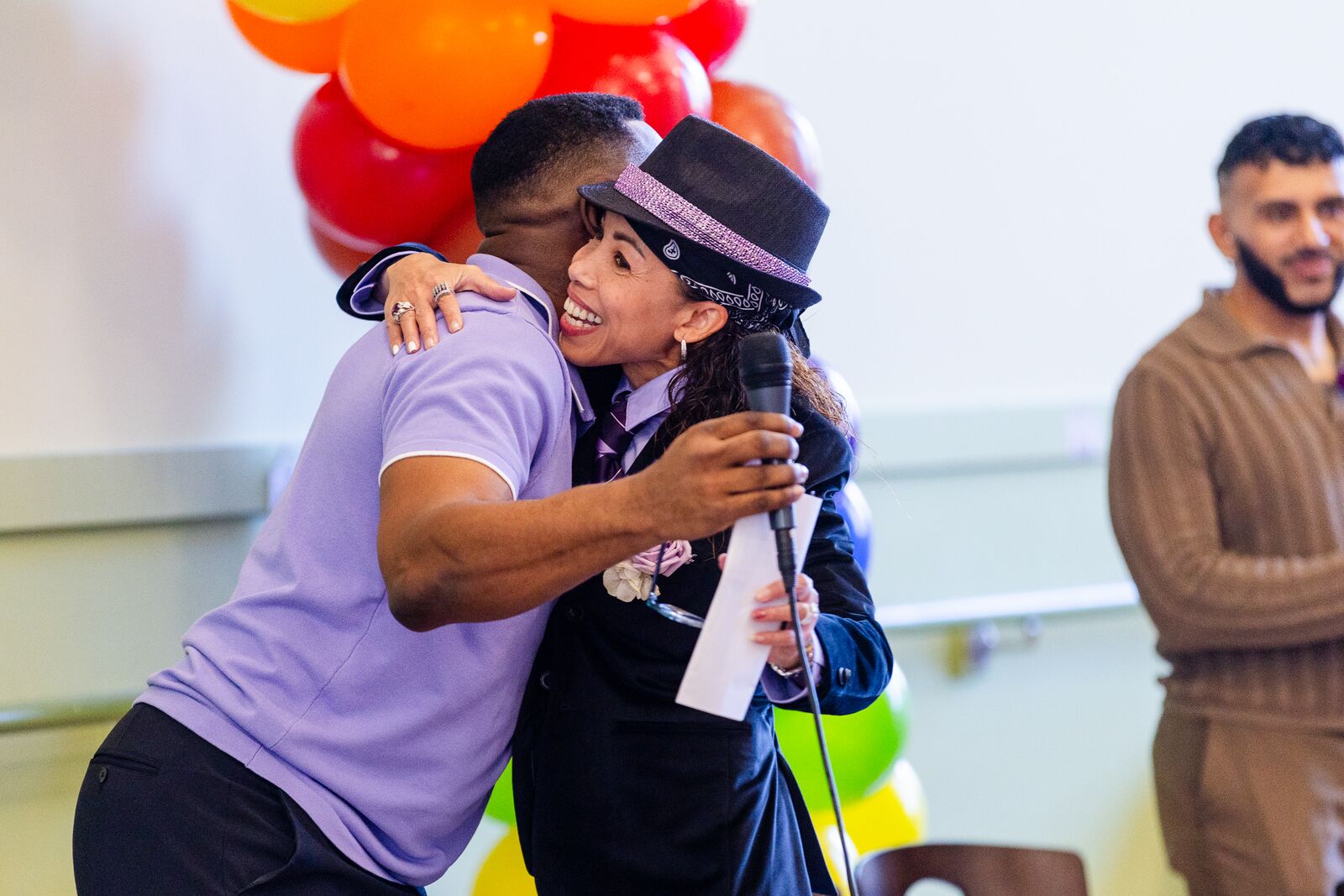 Oakland LGBTQ Community Center director Joe Hawkins, left, embraces Noela Campbell, the center’s new elder services manager. Credit: Estefany Gonzalez for The Oaklandside
At the November party, held at the North Oakland Senior Center, dozens of veteran Lavender Seniors joined newer folks who’ve recently found the organization or aged into it. Together, they got a chance to revel in what they’ve built together, eating, schmoozing, embracing, and enjoying performances under an arc of rainbow balloons.
It felt special, Anderson said, “to be able to have this recognition while we’re still above ground.”
Aging with pride
Lavender Seniors’ mission is to help its 150-some members age with “health, happiness, and pride,” now as part of the LGBTQ center’s broader Elder Services program.
The group runs a certification program for service providers that are friendly to LGBTQ+ seniors, and offers training materials to organizations on how to better support an older queer population. Much of the programming also revolves around opportunities for mutual support and socialization: regular lunches, events, and outings; support groups and social circles for older gay men and lesbians; a volunteer service that coordinates visits to isolated members. Lavender Seniors also participates in political advocacy.
At the anniversary party, the community center’s director, Joe Hawkins, announced that Elder Services will be expanding into its own space next door to the main Grand Lake building, with drop-in services, a pharmacy, and a library. The news elicited cheers.
Older LGBTQ+ people are twice as likely to live alone or be single than their heterosexual counterparts and are four times less likely to have adult children, studies have found. That means the dangers that come with isolation for all seniors are exacerbated among queer elders.
Lavender Seniors’ mission of marrying respect with tangible services “made me really love this group,” Noela Campbell, the center’s new Elder Services manager, said by email.
Many older LGBTQ+ people have “experienced a lifetime of prejudice and stigma, making elderly individuals distrustful of aging and healthcare providers,” she said. Some members also find themselves in acute need: The center gets calls from people who can’t afford long-term care or, in a few cases, have become homeless, she said.
Campbell plans to continue Lavender Seniors’ existing programs and hopes to add visual and performing arts activities. She’d also like to forge more connections between younger queer people and the seniors. The older generation can inspire and teach the young folks, she said, while the young people can assist and be in community with their elders.
Rich histories of struggle and connection
 John David Dupree, a former Lavender Seniors board member, was at the forefront of the battle against AIDS and the homophobia that was omnipresent at the time. Credit: Estefany Gonzalez for The Oaklandside
It is impossible to have lived the past six, seven, eight, or nine decades as a queer person in the Bay Area without having experienced a remarkable and challenging life, in many cases replete with both loss and love.
Dupree, the Lavender Senior former board member, does his best to document those lives while they’re still being lived. In almost every issue of the Lavender Notes newsletter, Dupree publishes a colorful, in-depth profile of one of the group’s members. Over time, he’s built an archive of rich, wrenching, and exciting lives.
“It’s one of my wishes in life to make sure people are acknowledged,” said Dupree, a former journalist.
Dupree, who’s also covered his own life, said he first knew he was gay as a 6-year-old in Michigan, but didn’t come out until he was a 30-year-old post-doc at UC Berkeley with a wife and two children. After a messy divorce and the traumatic, if temporary, loss of contact with his children — a product in part of attitudes about gay fathers in the 1970s — Dupree got married to a man, with whom he still lives happily in East Oakland. The couple adopted four children together.
In 1978, Dupree got a job at the Pacific Center for Human Growth in Berkeley, which describes itself as the Bay Area’s oldest LGBTQ center. He led the group’s advocacy work, including a campaign to remove a fear-mongering video warning male students about homosexuals that was shown in schools across Alameda County at the time. The center’s vague name was chosen because no organization explicitly supporting gay people could receive funding then, Dupree said. At the center’s founding, in 1973, homosexuality had not yet been decriminalized in the state.
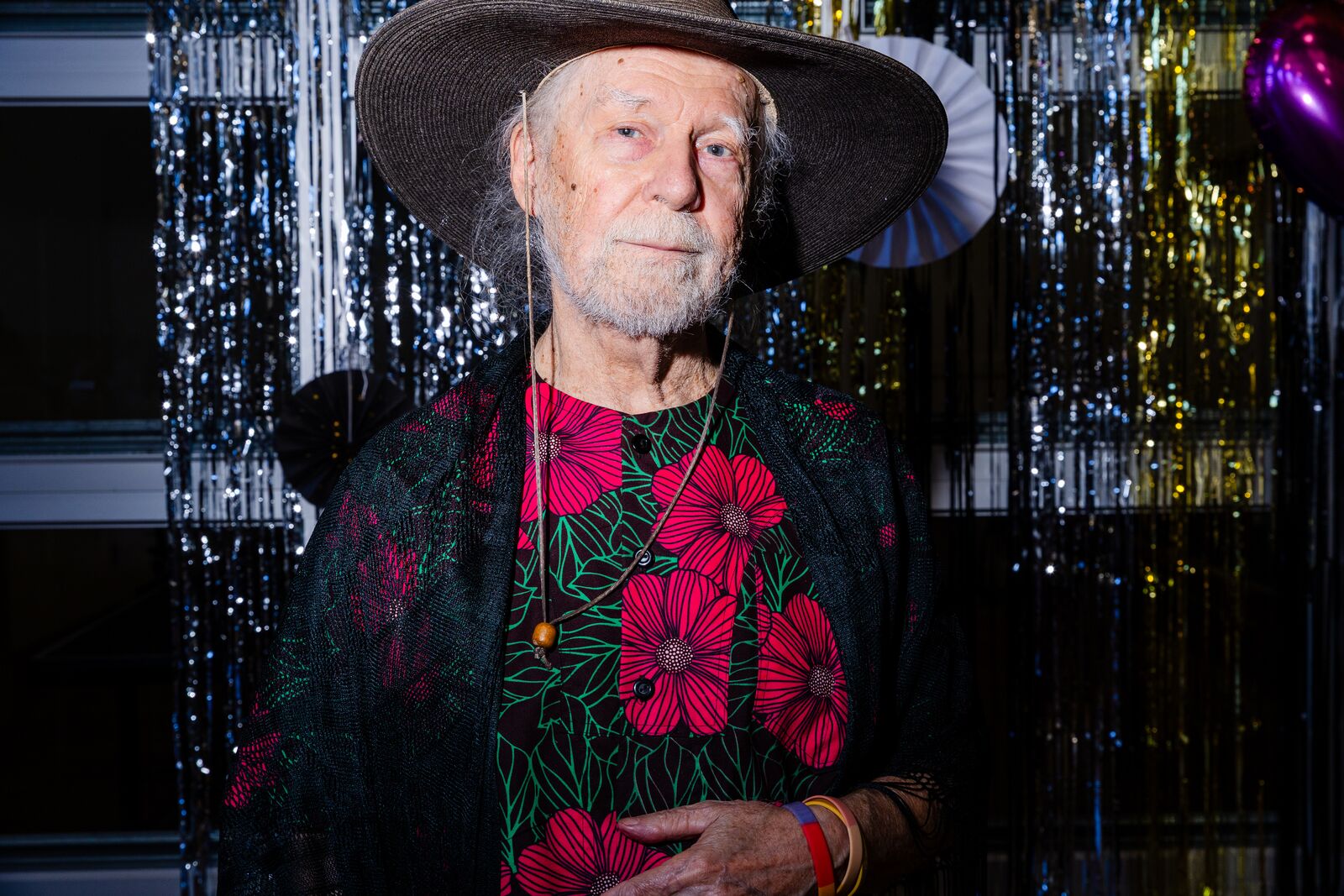
 Gary Turner, who said he identifies as “kind of a troublemaker,” was a prominent member of Boston’s bear scene. He was profiled several years ago in the Lavender Seniors’ newsletter, Lavender Notes. Credit: Estefany Gonzalez for The Oaklandside
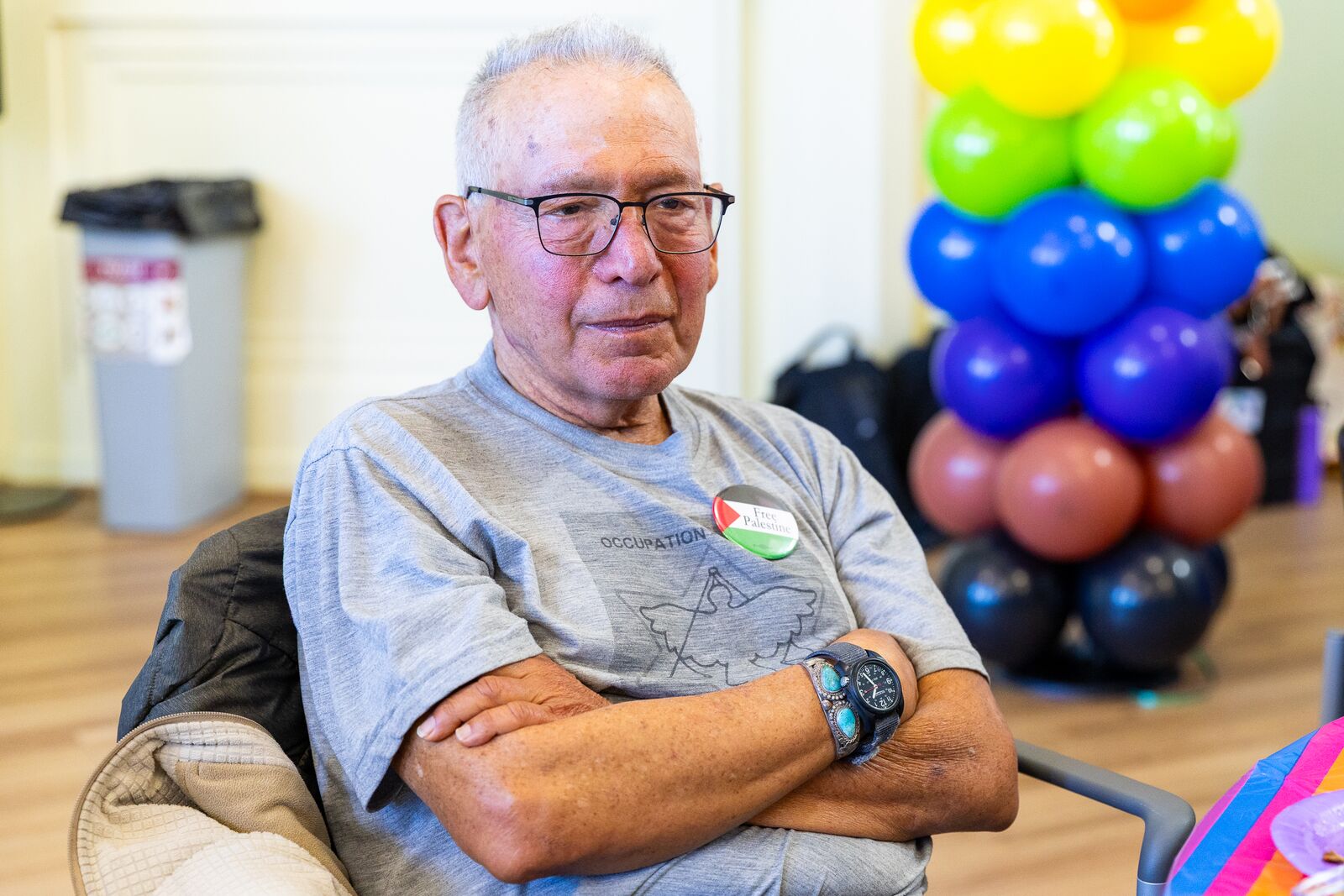 Jerry Geffner said his history fighting for gay rights has been closely interwined with his participation in the struggles for other leftist and social justice causes. Credit: Estefany Gonzalez for The Oaklandside
Not long after the HIV epidemic emerged, Dupree helped launch the AIDS Project of the East Bay. He hosted nightly support groups for gay people and their family members who were struggling under the emotional weight of experiencing loss after loss.
His dedication to the cause soon took him abroad, as a “Global AIDS Warrior” for the U.S. Agency for International Development. The work brought him and his family to dozens of countries, where he forged deep connections with local gay communities. He said he worked with local activists to put on the first pride march on the continent of Africa, in Johannesburg, South Africa, in 1990.
Confronting a rollback of rights
Dupree said it was painful, after being at the forefront of many successful struggles for rights and recognition, to see so much of that progress stripped away in 2025. President Donald Trump dismantled the agency that employed Dupree to help battle the global AIDS crisis, and his administration has systematically deleted all references to LGBTQ+ Americans from government websites, issued anti-trans executive orders, and canceled dozens of grants supporting queer healthcare.
“When he was reelected, I’d read a lot of Project 2025 and I knew what was in store,” Dupree told The Oaklandside. “I went through probably the most profound depression of my life, where I just felt like everything I had worked for…was flushed down the toilet.”
Although many in the room said they have witnessed a lifetime of discrimination, Dupree said this moment feels different.
“Institutionalized homophobia was alive and well from the time I was born in 1942 to currently,” he said, “but it never had so much the force of all the levers of power as it does right now.”
While communities across the Bay Area are experiencing a sense of crisis over the administration’s attacks, some Lavender Seniors told us it can feel especially scary for people living the last chapters of their lives and needing more support than before.
“Sometimes you feel hopeless and sad,” Anderson said.
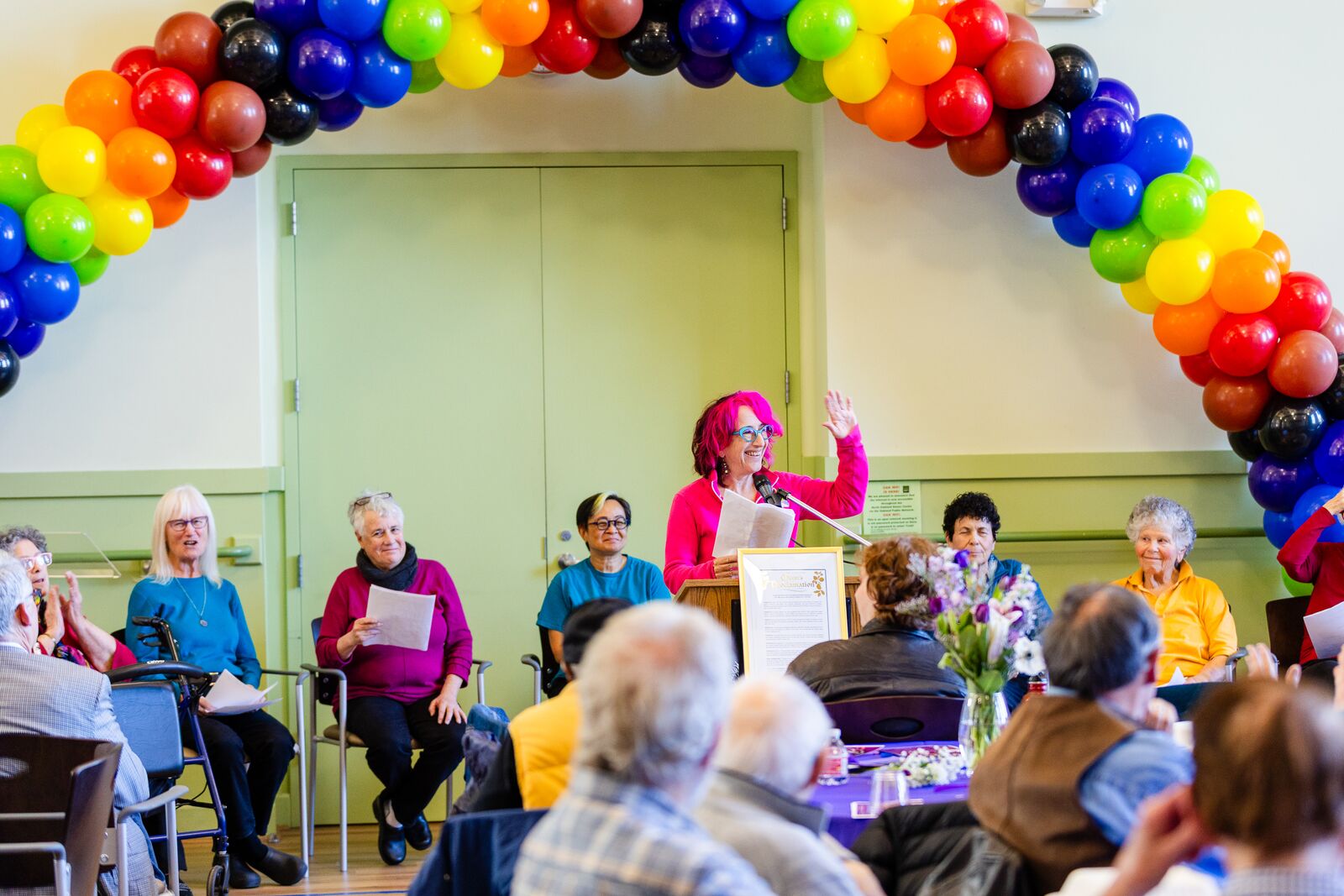 Mothertongue Feminist Theater performs the writing of Corky Wick at the Lavender Seniors 30th anniversary party in November at the North Oakland Senior Center. Credit: Estefany Gonzalez for The Oaklandside
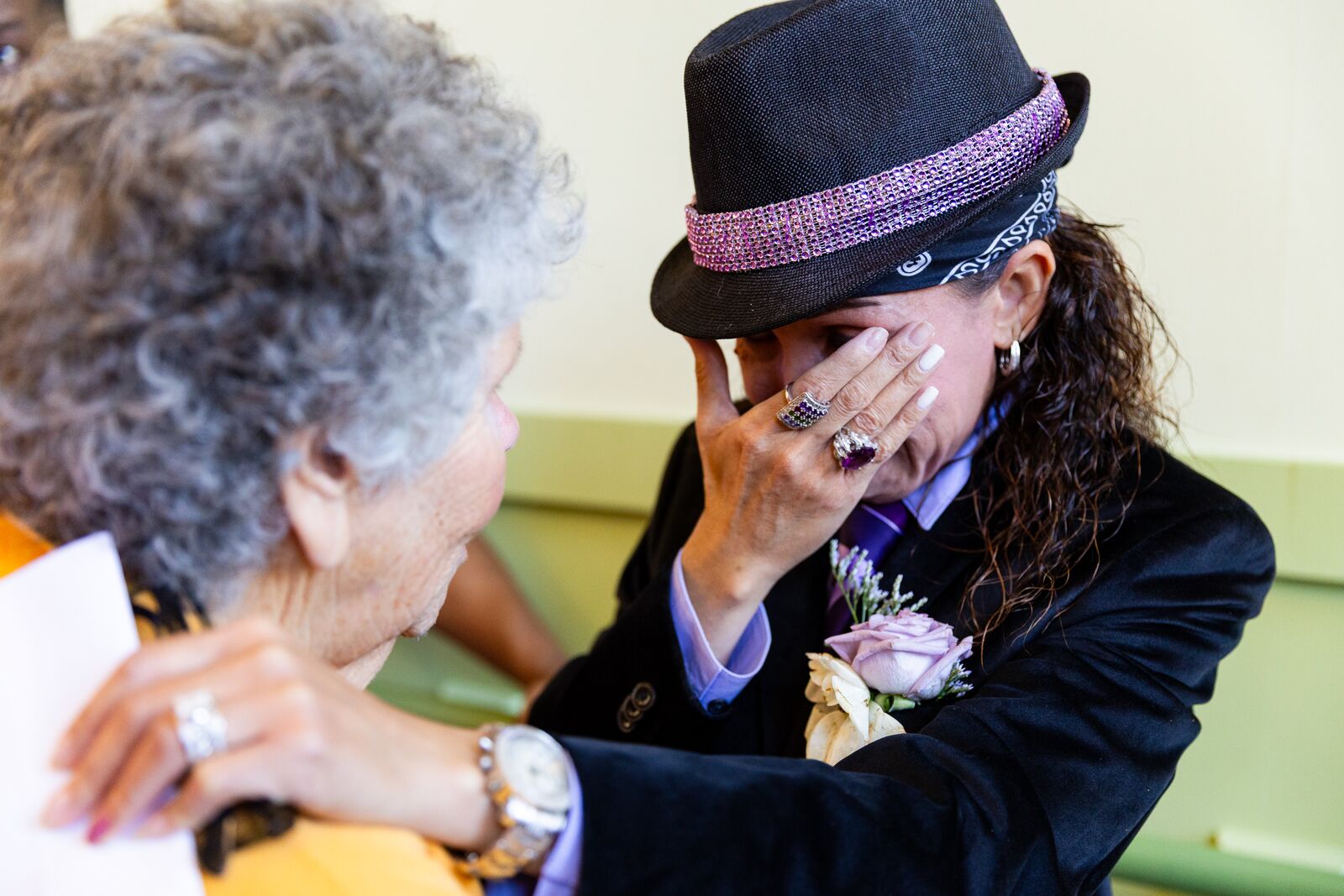 New elder services manager Noela Campbell wipes away tears while talking with a Lavender Seniors member. Credit: Estefany Gonzalez for The Oaklandside
But the pessimism and fear were blissfully relegated to the background during the November celebration, for at least a few hours.
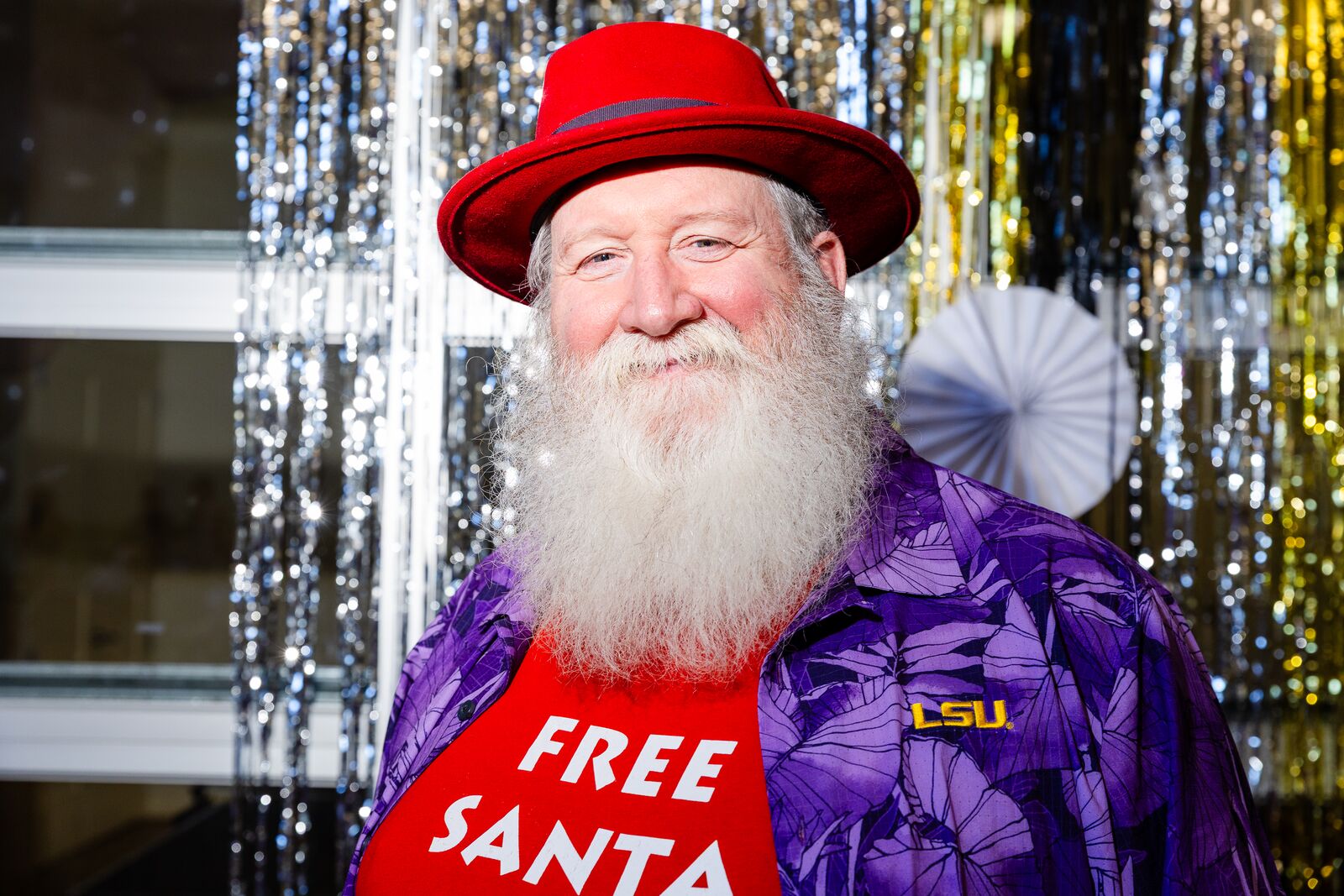
Seniors took photos in front of a shimmery backdrop. They chowed down on fried chicken and salad. They received a proclamation signed by Mayor Barbara Lee. They watched a performance by Mothertongue Feminist Theater, a nearly 50-year-old collective, dramatizing the personal writing of 90-year-old member Corky Wick.
They laughed and cheered the performers — and they enjoyed the fleeting late-autumn afternoon light.
“*” indicates required fields