
What’s at stake?
Researchers who studied Fresno County’s first-ever guaranteed basic income program say the investment is an “important part of the anti-poverty agenda.”
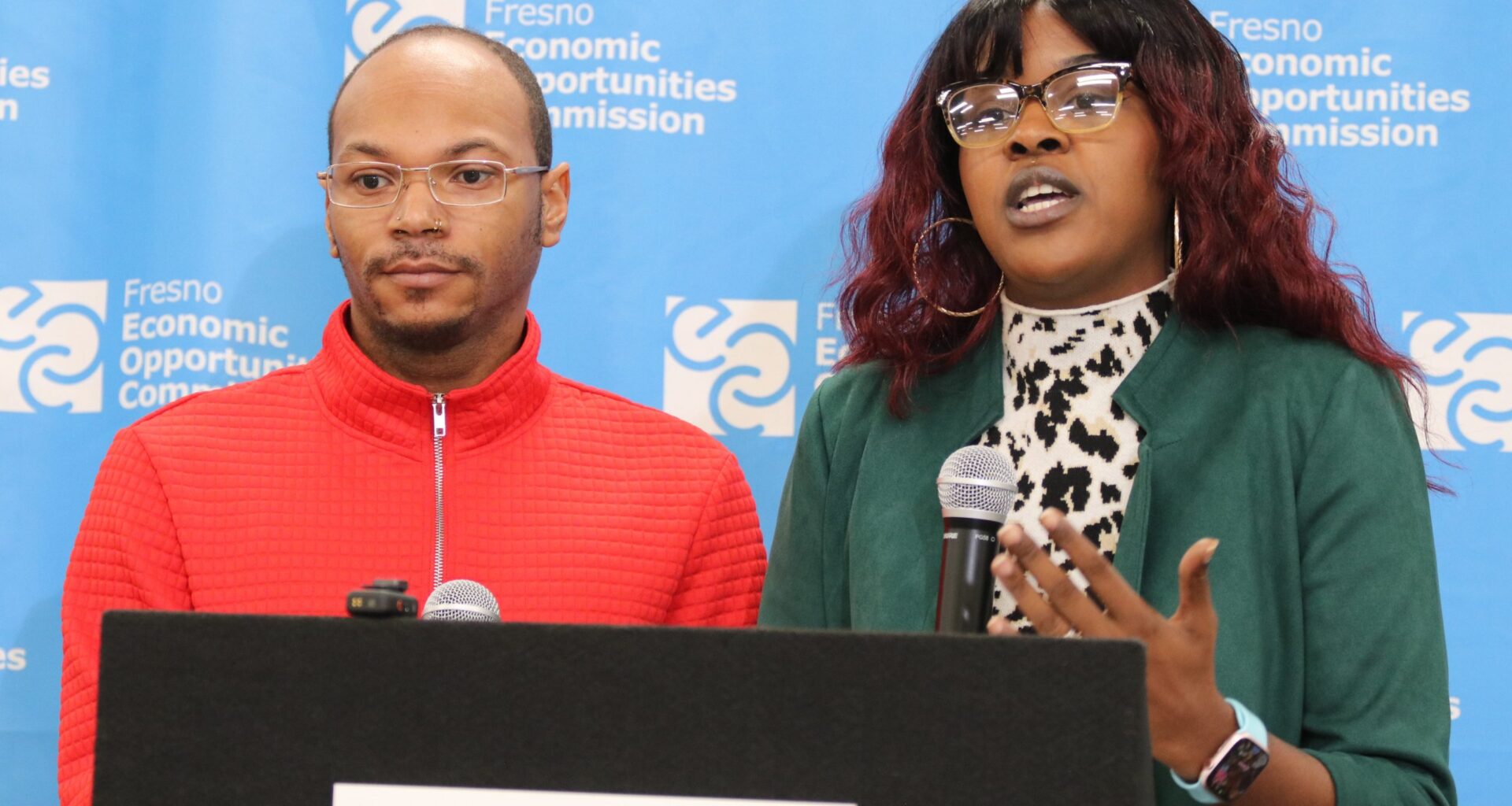
A little over a year ago, Ariel and Derek Williams weren’t sure how they were ever going to pay down their PG&E debt.
Then came Fresno County’s first-ever guaranteed basic income program.
The Williams were one of the families selected to participate in the Fresno Economic Opportunities Commission’s program that provided no-strings-attached monthly stipends of $500 to 150 families over the course of a year, starting in July 2024.
Paying down that utility debt was one of the main priorities for the Williams family during their time receiving the stipends — especially for Ariel, whose multiple sclerosis flares up in the Fresno summer heat.
“We were able to pay that debt to zero,” she told Fresnoland following a news conference Tuesday, where program leaders highlighted a newly-released study on the results of the pilot. “It’s like we were starting our account all over again.”
That report shows that the payments also helped lift many of the other 150 participating families out of debt, as well as had other benefits like reducing food insecurity and alleviating stress for parents.
“While it cannot overcome every barrier,” said Amber Crowell, an associate professor at Fresno State that led the program’s evaluation, “and it cannot alone eliminate poverty, it’s an important part of the anti-poverty agenda.”
Though guaranteed basic income has been studied all over the United States, Fresno’s pilot marks one of the first to include rural residents.
Half the program’s participants — including the Williams family — were from Huron, a small town in rural Fresno County. The other 75 participants hailed from the 93706 ZIP code in the city’s southwest area.
The two communities experience some of the highest rates of concentrated poverty in Fresno County.
With the study helping illustrate the benefits of the program, organizers now hope to take these results to policymakers to extend this program long-term — if not make it permanent.
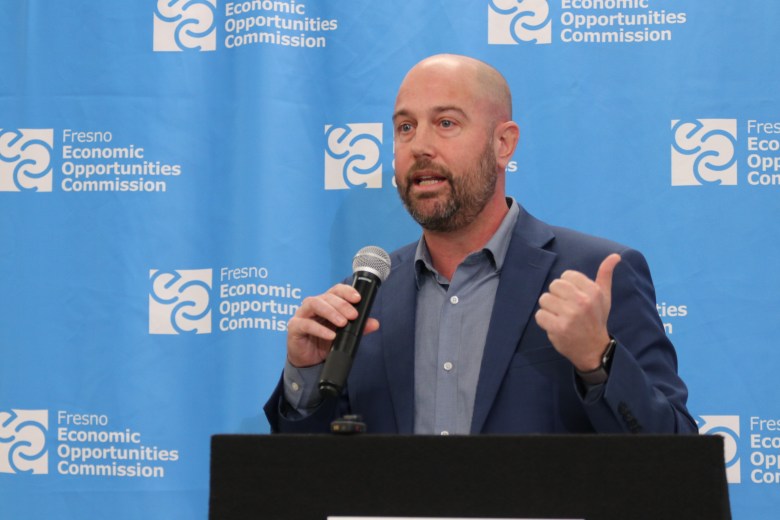
“Guaranteed income works,” said Andy Levine, an adviser for the program who’s also a Fresno Unified trustee.
“This is something that should not just be a 12-month program, not just for 150 families,” he added, “but really, this is a model that works and needs to be expanded.”
What other impacts did guaranteed basic income have in Fresno?
Families put more of their stipends toward buying groceries than any other expense, the study found.
Participating families received debit cards that were credited with the $500 each month. About 23.2% of all transactions recipients made with those cards were at grocery stores and supermarkets.
The second-highest spending category was transactions labeled as “other,” followed by fast food restaurants at 9.6% and discount stores at 8.8%.
But “the most significant finding” from the Fresno State data had to do with debt spending, Crowell said.
“From the very start of the program, we saw a dramatic drop in families’ reliance on borrowing from any source to cover regular expenses,” she added. “This is an important finding because it demonstrates how guaranteed income was helping families avoid accruing debt and even get out of debt.”
Researchers found that this included anything from making a dent in debt from utility bills, as was the case for the Williams family, to paying off student loans.
Other positive impacts the researchers found were “improved parenting experiences.”
For the Williams family, that included having the means to support their children’s creativity — and to model it themselves.
“Them seeing mom and dad get creative — mom painting, dad reading … now she picks up a paint brush,” Ariel said of her 4-year-old daughter Aniyah.
“She’s Picasso. I’ve got the walls to prove it.”
The report found no significant impact on other categories such as participants’ rates of employment — and that finding is consistent with studies of dozens of other guaranteed basic income pilots, according to the report.
“Nobody reported that they quit their job,” Crowell said. “In fact, what we did hear is that people were maintaining their regular jobs, but cutting back on gig hours that they’d been doing to make extra money.”
Rural versus urban
Some of the report’s findings were unique to the rural versus urban participants in Fresno County’s pilot.
That stemmed partly from population differences. About 41% of Huron’s residents are immigrants — more than Fresno County as a whole, where immigrants make up about 22% of the population, and southwest Fresno, where immigrants make up about 20%.
That meant Huron felt the impact of intensifying immigration enforcement especially under the Trump administration about halfway through the pilot program starting in January.
Guaranteed income, the researchers found, provided a benefit for those families who not only weathered the instability of agricultural employment but also those who stayed home from work for fear of deportation.
“For the Huron residents, having the guaranteed income provided some security through the fluctuations of seasonal labor,” the report said, “and then as immigration enforcement forced them to stay home instead of going to work.”
 Andy Levine served as an adviser for Fresno County’s first-ever guaranteed basic income program. Julianna Morano | Fresnoland
What’s next for guaranteed basic income in Fresno?
Even now that the pilot program has ended, Ariel Williams said that doesn’t mean her family is back at square one.
“Don’t think because we had $500 a month and it’s month 13 that we’re struggling again,” she said. “We’re not.
“It allowed us to make sure we budget,” she added, “and we’re not going back down to that same place we were before.”
But program organizers also hope that this doesn’t spell the end of guaranteed basic income in Fresno County.
The Fresno EOC raised about $1 million in philanthropic contributions to make the pilot program happen this past year, after the “shocking” news that Fresno County’s application to receive state funding for a guaranteed basic income pilot wasn’t selected.
Program leaders now plan to bring the results of this pilot to more funders, as well as local and state policymakers, to make the case for an expanded version.
“We need the political will now,” Levine said, “to take this even further.”
Disclosure: Amber Crowell is a Fresnoland board member. The California Wellness Foundation, one of the funders of the GBI pilot, is also a Fresnoland funder.
Related