
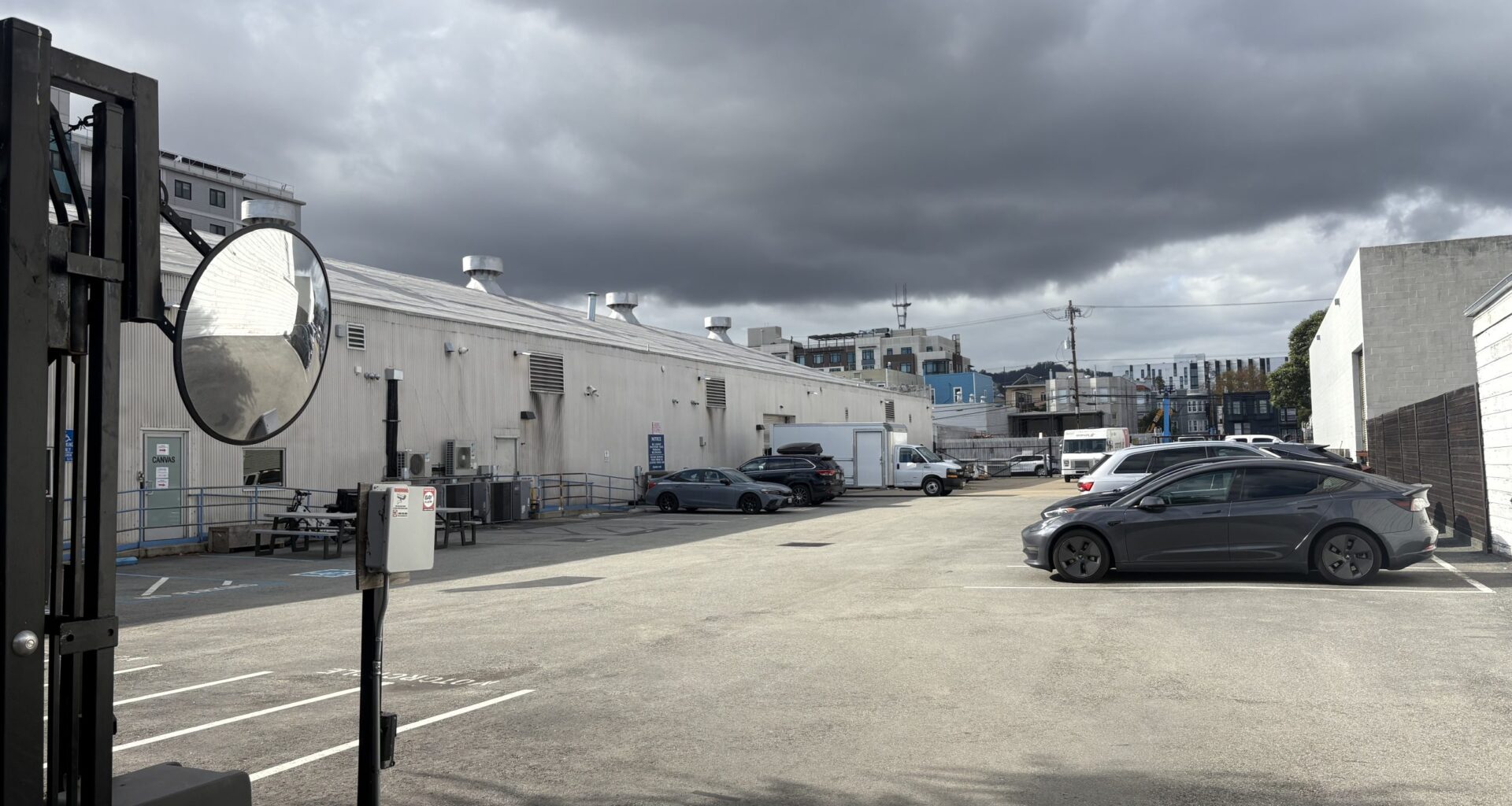
DoorDash, the delivery app company, must now ask permission from the San Francisco Planning Commission to operate drones outdoors at its drone delivery testing site in the Mission District, capping off a drama that saw tech CEOs trade online barbs with the legislation’s sponsor over the city’s approach to new research and development.
The Board of Supervisors unanimously passed District 9 Supervisor Jackie Fielder’s legislation to enact interim zoning controls for outdoor spaces in certain PDR districts — that’s “production, distribution and repair,” which encompasses a range of uses from auto shops and furniture wholesale to audio engineering.
The proposed legislation inspired hyperbolic online statements from tech luminaries, who characterized it as a wholesale attack on innovation.
“They are *literally trying to ban R&D and innovation in the city*,” wrote Garry Tan, the CEO of startup incubator Y Combinator. Fielder’s proposal sought to put stricter rules on certain light industrial spaces, rather than ban companies from using them, tech or otherwise.
Fielder’s response to these accusations was equally heated. “Any company whose innovation is equated with killing jobs, injuring or killing humans and pets, and massive privacy violations, can no longer do what they want, when they want,” she wrote in a Tuesday press release. “The public wants transparency and regulation on these companies, not a free for all to line the pockets of tech billionaires.”
The vote adds constraints to a determination by the city’s zoning administrator this August — shortly after DoorDash leased the space — that the company could operate drone testing at the Folsom Street site, which is zoned PDR.
While Fielder’s legislation was clearly inspired by DoorDash’s announcement that it was testing drone delivery, it applies to any company.
Under the new legislation, for the next 18 months, any company wishing to use an outdoor PDR space for development or engineering “laboratory use” will need to obtain conditional use authorization from the Planning Commission. That applies to areas in the Mission District, Dogpatch as well as some smaller pockets in SoMa and Bayview.
The zoning controls do not outright prevent companies, like DoorDash, from using those outdoor spaces for testing, but add an extra step of vetting before they can do so — namely, acquiring that conditional use permit.
If Doordash decides to seek a conditional use permit, the Planning Commission will hold a public hearing to determine whether testing delivery drones outdoors at the Folson site is “necessary or desirable” to the neighborhood, and whether it would have a negative impact on the surrounding area.
Permits like these are not uncommon in San Francisco — typically chain stores, nightlife venues and some restaurants have to obtain them before opening in certain parts of the city.
At Monday’s Land Use committee meeting, around a dozen people gave public comment when the legislation was discussed. While Fielder’s legislation drew heated scrutiny online, every person who showed up to make in-person public comment spoke in support of the proposed or amended legislation.
Many expressed concerns about protecting manufacturing jobs in the northeast Mission and other PDR zones.
“Safety and privacy are shattered if unregulated delivery drones are allowed to fly around our city. Delivery drones that weigh the same amount as bowling balls hovering over San Francisco streets and neighborhoods at 50 to 100 feet high are not welcome,” said Tony Delorio, principal officer for the Teamsters Union Local 665s, during public comment.
The Teamsters Union Local 665, which represents over 70,000 workers in the Bay Area, filed a separate appeal earlier against the zoning administrator’s decision, on the grounds that drone testing does not fall within the city’s defined “laboratory” uses.
New interim zoning controls would apply to PDR-1-G zoning districts
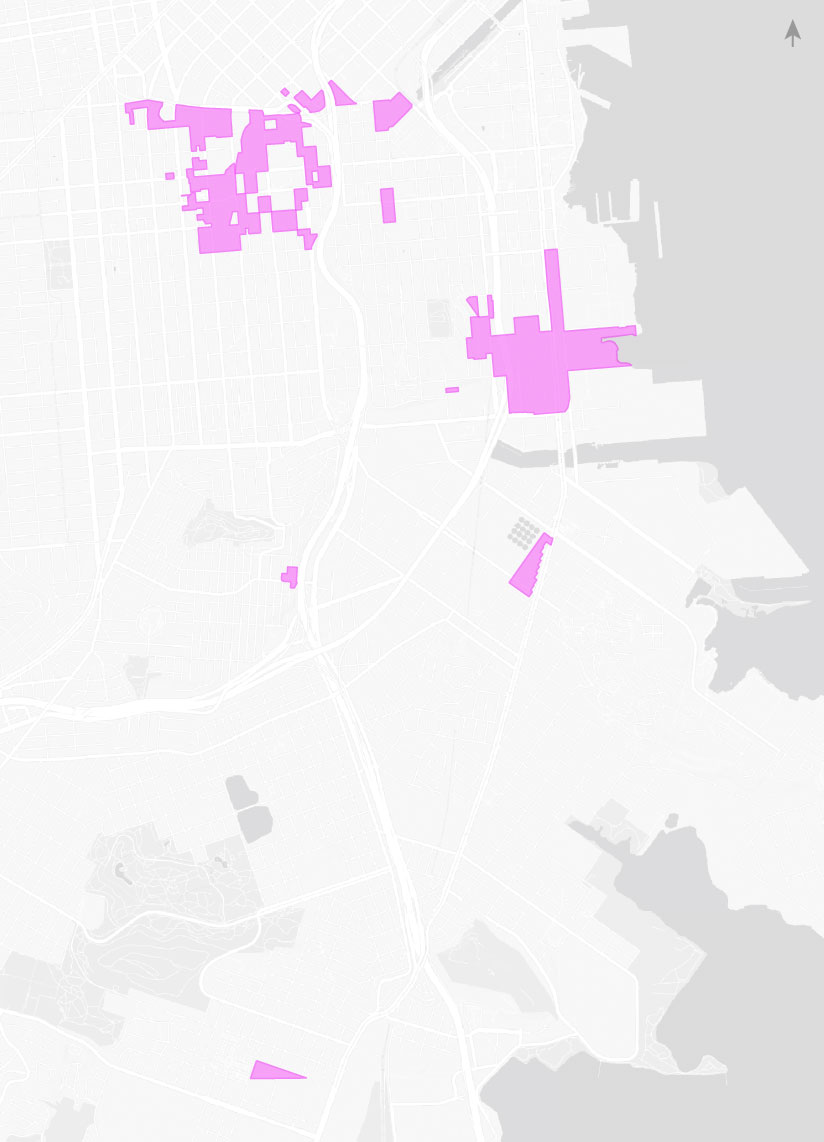
Data from S.F. Planning Department via S.F. Open Data. Graphic by
Kelly Waldron.
DoorDash did not immediately provide a comment. A spokesperson for the company previously said “DoorDash is excited to continue contributing to San Francisco’s economic recovery as the global capital of innovation with our new research and development site at 1960 Folsom.”
Fielder’s legislation was, in earlier drafts, more broadly encompassing. It would have required that companies obtain a conditional use authorization for all “laboratory use” in PDR districts — not just laboratory use in outdoor spaces for development and engineering.
The version that passed today contains amendments written by Supervisor Bilal Mahmood to exclude several categories of companies that would also have been required to get conditional use permits, including life science laboratories.
“I want to make sure with this legislation and the interim zoning controls, that we do not have unintended consequences on scientific innovation,” Mahmood said, during Monday’s meeting.
PDR districts were created in the Eastern Neighborhoods Plan amid a citywide effort to retain low- and middle-income residents and manufacturing jobs. Sites like the Heath’s factory and showroom at 18th and Florida, for example, are zoned PDR.
“It’s a legitimate question, when technology advances and the code is stuck: Are we utilizing the land the way it was meant to?” asked Supervisor Myrna Melgar, who chairs the board’s Land Use Committee.
The legislation also requests that the Planning Department conduct a study in the next six months to survey existing PDR spaces and how they are used, to see whether those uses are consistent with the city’s planning goals.
The results of that study could inform more permanent changes to the city’s regulations on PDR spaces.