
The pandemic pummeled Oakland’s small businesses. Some closed. Others recovered, but were punched again and again — with slow-to-recover business, an uncertain economy and rising costs along with break-ins, shattered windows, and graffiti.
To help these businesses hang on, the East Bay Community Foundation partnered with the Oakland Economic and Workforce Development Department to create a grant program. The program was funded with $2.5 million from Kaiser Permanente, and is now looking to raise more funding.
“It was important for us to provide a bit of relief in this crisis because we know small businesses are the heart of Oakland,” said Sabrina Wu, senior program officer for the foundation. The nonprofit works to build community and advance social, racial and economic justice in Alameda and Contra Costa counties.
“We want to make sure we are investing in the legacy businesses that made Oakland what it is,” Wu said.
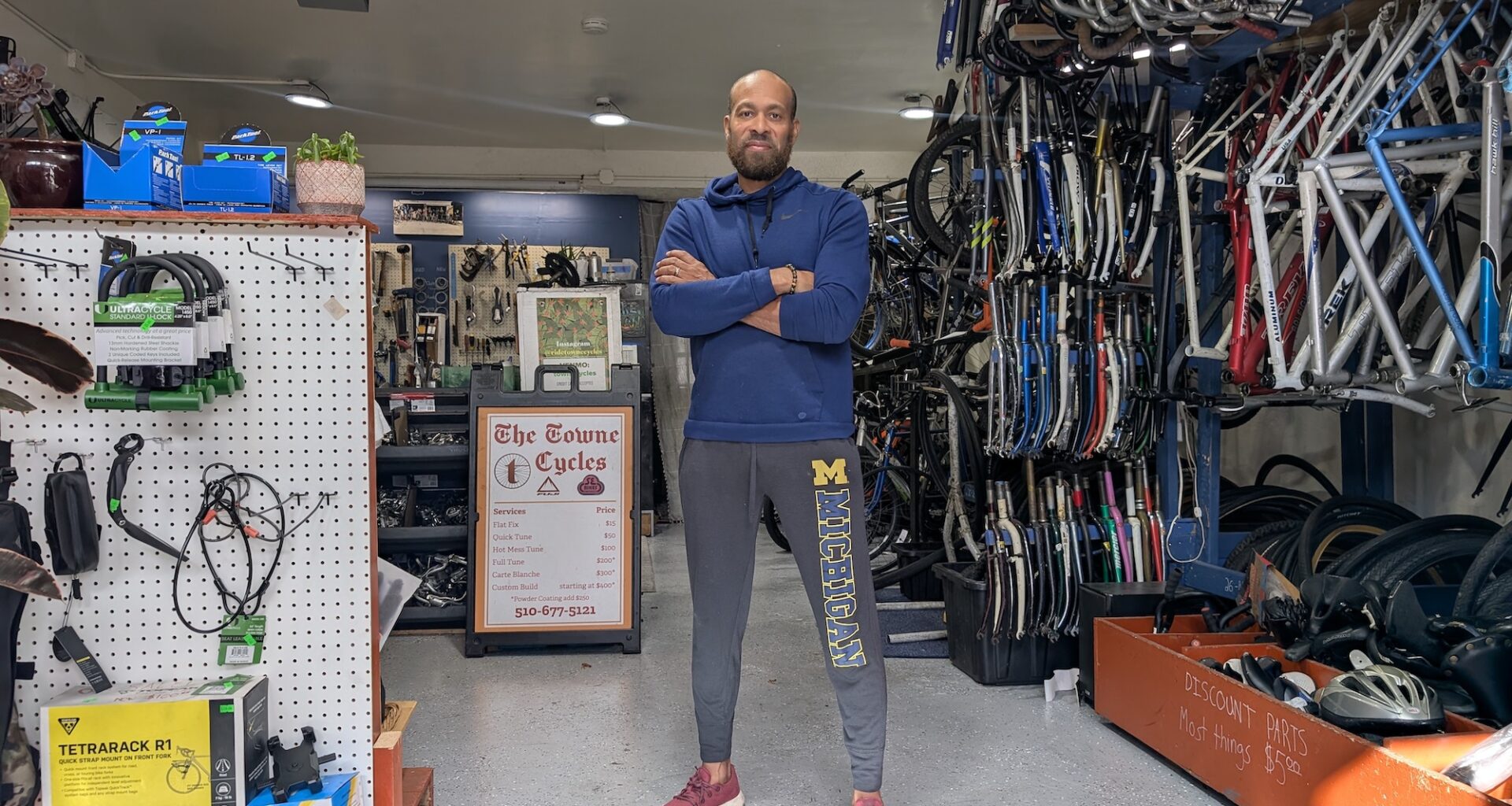
One of those businesses was Towne Cycles, the only full-service bike shop in West Oakland. David Boone has run the shop since 2014, and moved it to Adeline Street in 2022. He began repairing flats and building custom bikes with used parts, and ended up helping create a pedal-powered community.
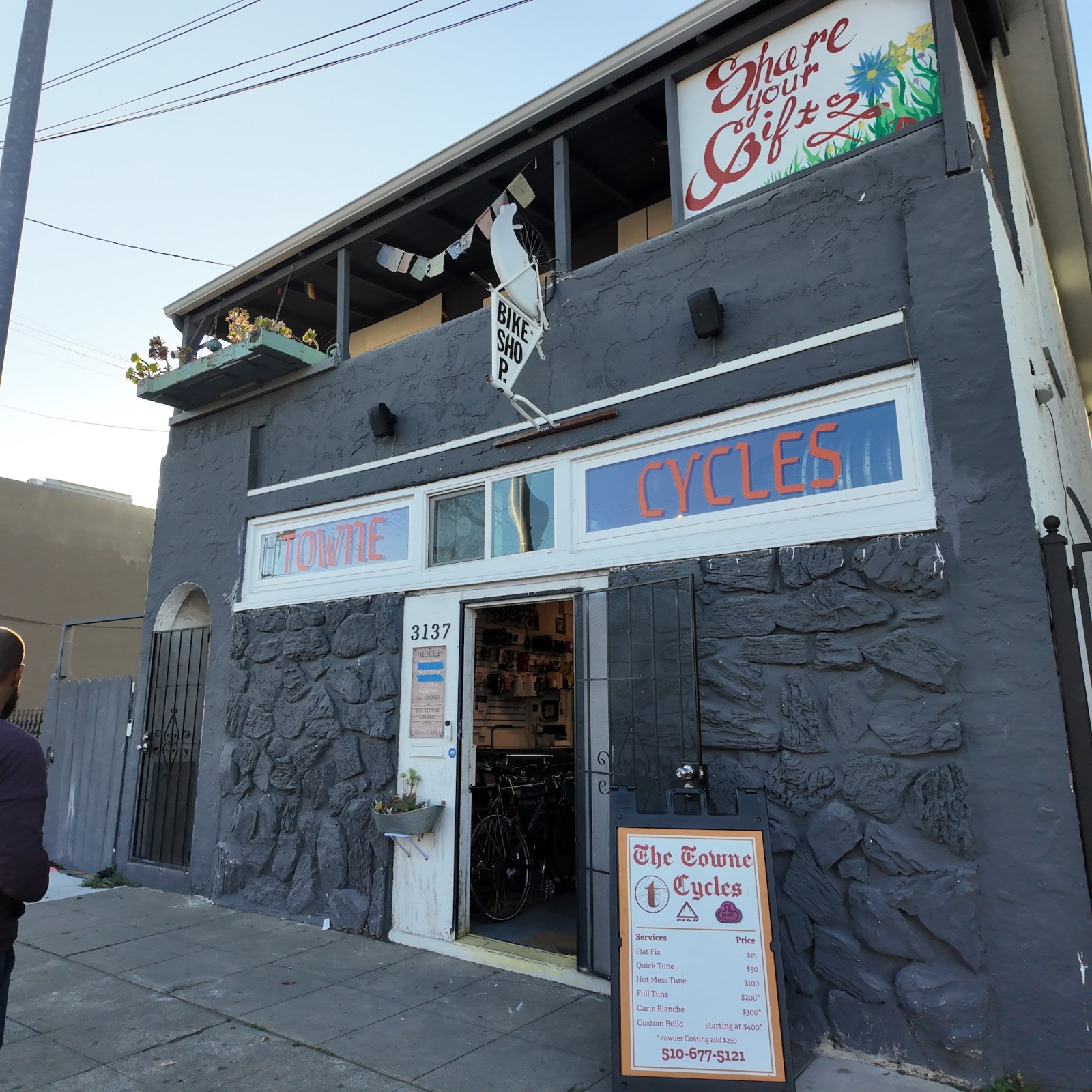 Towne Cycles is on Adeline Street near 32nd in West Oakland. The windows above the door were replaced with grants funds. Credit: Yanira Cortez
But the new space had a lot of problems, including broken windows and leaks. Boone didn’t have the money for repairs. Even worse, he just couldn’t afford to shut down the shop long enough to do the work.
The grant from the Oakland small business resilience fund made the work possible.
Why supporting small businesses matters
Like in many cities, small businesses are the backbone of the local economy. In Oakland, 90% of establishments are small or micro enterprises.
“Our small businesses create jobs, add interest and vibrancy to a neighborhood, and are involved in the community,” said EWDD Deputy Director Cristy Johnston Limon.
And the data from economic analysts, Civic Economics, show that for every $100 dollars spent at a local business, $68 of that remains or starts circulating in the local economy, versus only $14 when that same $100 is spent at a typical chain or big box store.
High demand for grants
The Economic and Workforce Development Department provided the knowledge of local businesses and districts that were struggling hardest while the East Bay Community Foundation supplied the expertise in distributing funds. Working together, the agencies launched the program about a year ago, and planned to distribute the $2.5 million over three years.
They gave it out in just five months, said Yanira Cortez, an urban economic analyst with the city.
About 500 businesses applied for the grant program, requesting a total of $10 million, illustrating the community’s need. The program distributed grants to 170 businesses with checks ranging from $5,000 to $25,000.
“We tried to get grants to as many businesses as possible,” Cortez said.
Given the grant program’s popularity, she and Wu said, the agencies are seeking funding for another round.
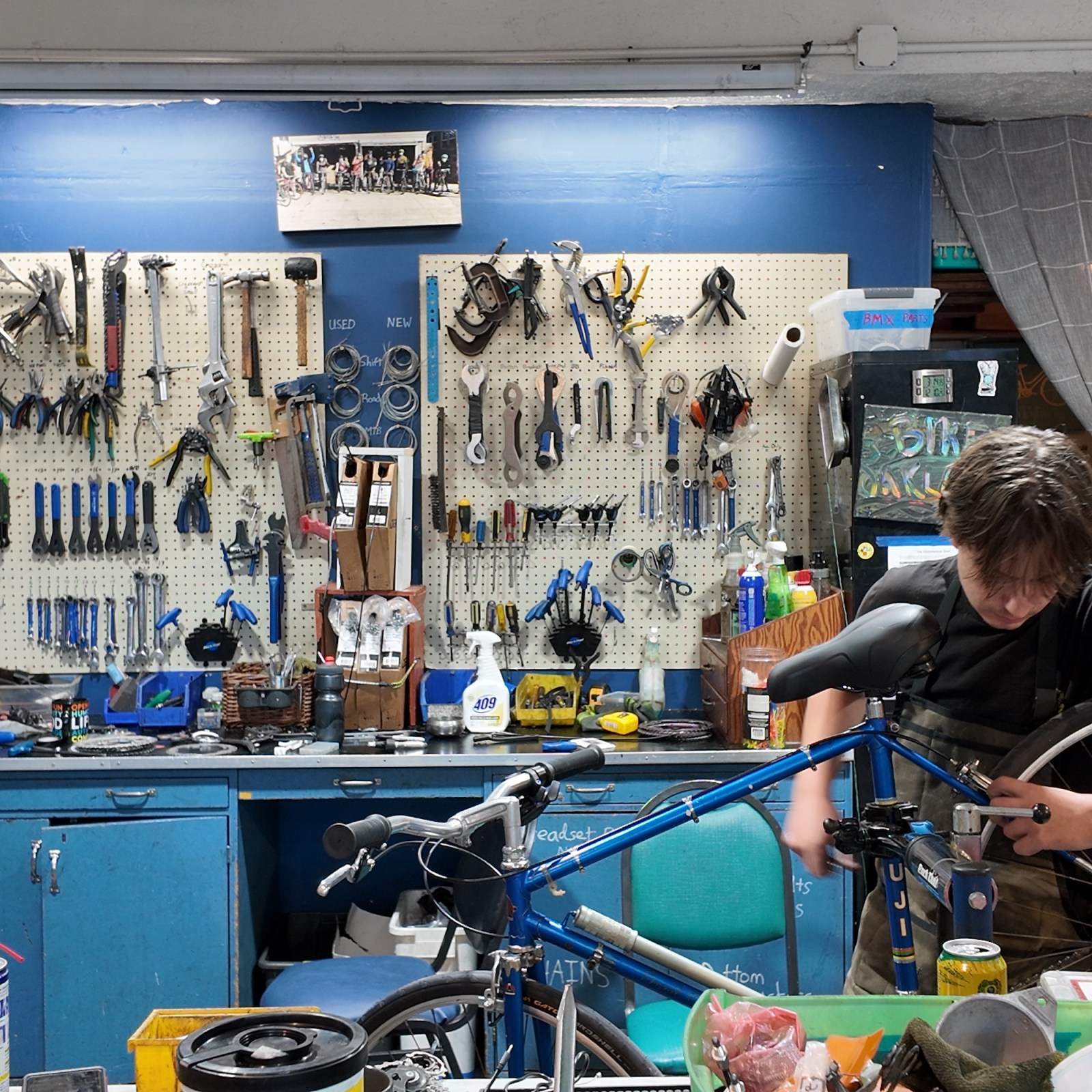 Dylan Parod customizes a vintage bike at Towne Cycles. Credit: Yanira Cortez
How recipients were picked
With so many applicants, the program used an advisory board to help ensure a diversity of businesses would be selected. They used city demographic data to identify business districts and neighborhoods historically neglected and ranked each application considering each business’s need, the challenges it faced, its longevity and its importance to the community.
”We really wanted to make sure the money went to a business that was encountering challenges but was going to be able to survive so the community could also benefit,” Cortez said. “We wanted to help businesses to stay and thrive in Oakland.”
The list of businesses that received grants reflect the lively and colorful diversity of Oakland — barbers and hair stylists, cake bakers and donut makers, the nation’s oldest Black-owned bookstore, a wedding and quinceanera coordinator, sit-down restaurants and taquerias, markets, and clothing makers and sellers, including well-known T-shirt creators Oaklandish.
Sprucing up the cycle shop
Like many old-school bike shops, Towne Cycles doesn’t just sell bikes. It’s a part of the community — fixing flats, making repairs and tune-ups, and encouraging people to ride bikes. The shop also holds monthly community gatherings with live music.
“For me, my commitment is to the community first and to bike riders, to the people who rely on their bikes,” Boone said. “Our shop is not a money-first shop. Money, of course, always matters, but we’re not just here to sell new bikes. Bikes are the tools of the people. Being in West Oakland, this is the perfect place to demonstrate that.”
Boone said his building was functional but needed work: besides the problems with windows and leaks, the lighting was poor, and the grungy floor just couldn’t be cleaned no matter how much he tried.
“The space was a little bit makeshift and a little bit not-representative of the integrity of the business and what we’re trying to do,” he said.
The $10,000 resiliency grant allowed him to close the shop for a week, add a storage area, and — with the help of friends and volunteers — replace the windows, improve the lighting, upgrade the flooring and even install speakers for music.
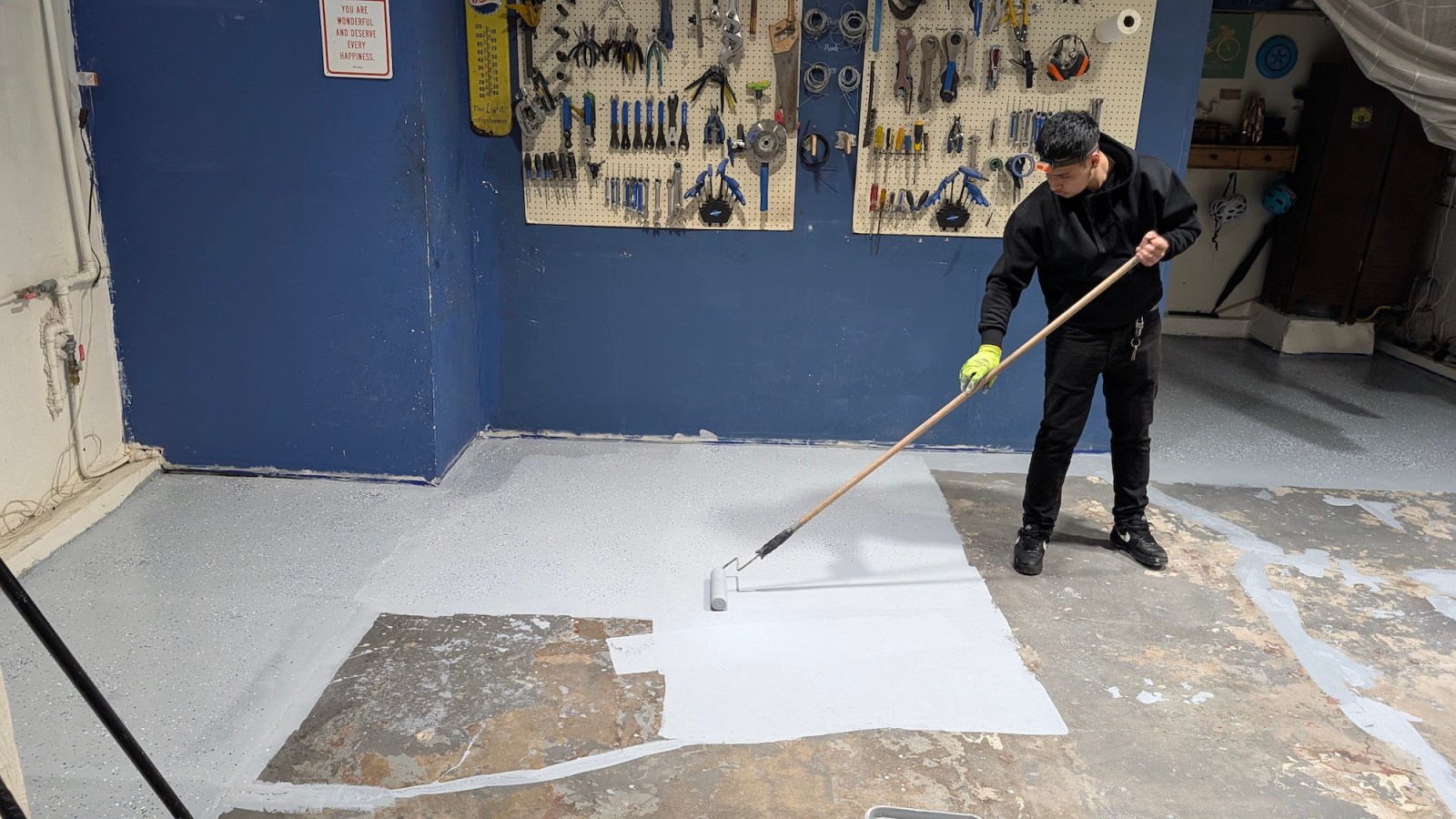 Kevin Herrera, a mechanic at Towne Cycles, paints the floor of the shop, funded by the grant program. Courtesy of Towne Cycles
“Everything has worked out really great,” Boone said. “The renovation was really successful. The vibes are so much better. The aesthetics now match the energy of the shop.”
And perhaps the best part? After Towne Cycles reopened with the grant-funded improvements, the business had its most profitable month ever, Boone said.
“That grant was a big deal to me and the business,” he said.
Raising more funds
Wu said the East Bay Community Foundation has held a session introducing potential funders to the program and is encouraging interested organizations to contact the foundation.
“We are exploring opportunities for future rounds of grantmaking and expanding to the broader East Bay region, ” she said. “We invite more funders and donors to join us in our commitment to providing much-needed grant resources to small businesses.”
Prospective donors can get more information by e-mailing SmallBusinessResiliencyFund@eastbaycf.org.
“*” indicates required fields