
Oakland police will continue using a mass surveillance network of nearly 300 cameras to track vehicles throughout the city under a $2.25 million contract approved by the City Council on Tuesday.
The entire council approved the deal with the Georgia-based company Flock Safety with the exception of Councilmember Carroll Fife who, in her words, voted “Flock no.”
Councilmembers Charlene Wang and Rowena Brown each made a slew of amendments to the contract, restricting which other agencies can access Oakland’s Flock data and for what purposes. The company has faced scrutiny amid reports that data from its cameras — also called automated license plate readers or ALPRs — have been used to investigate people who’ve had abortions, monitor protesters, and locate undocumented immigrants for deportation.
Some cities have canceled or paused their use of Flock over these concerns or upon finding out that the company misled them.
Several leaders who approved the contract Tuesday said they’re not all-in on Flock but are comfortable continuing their use given the guardrails established.
“We’re not aiming for perfection,” said Councilmember Zac Unger. “This is not Orwellian facial recognition technology — that’s prohibited in Oakland. The road forward here is to add as many amendments as we can.”
Can Oakland thank Flock for lower crime?
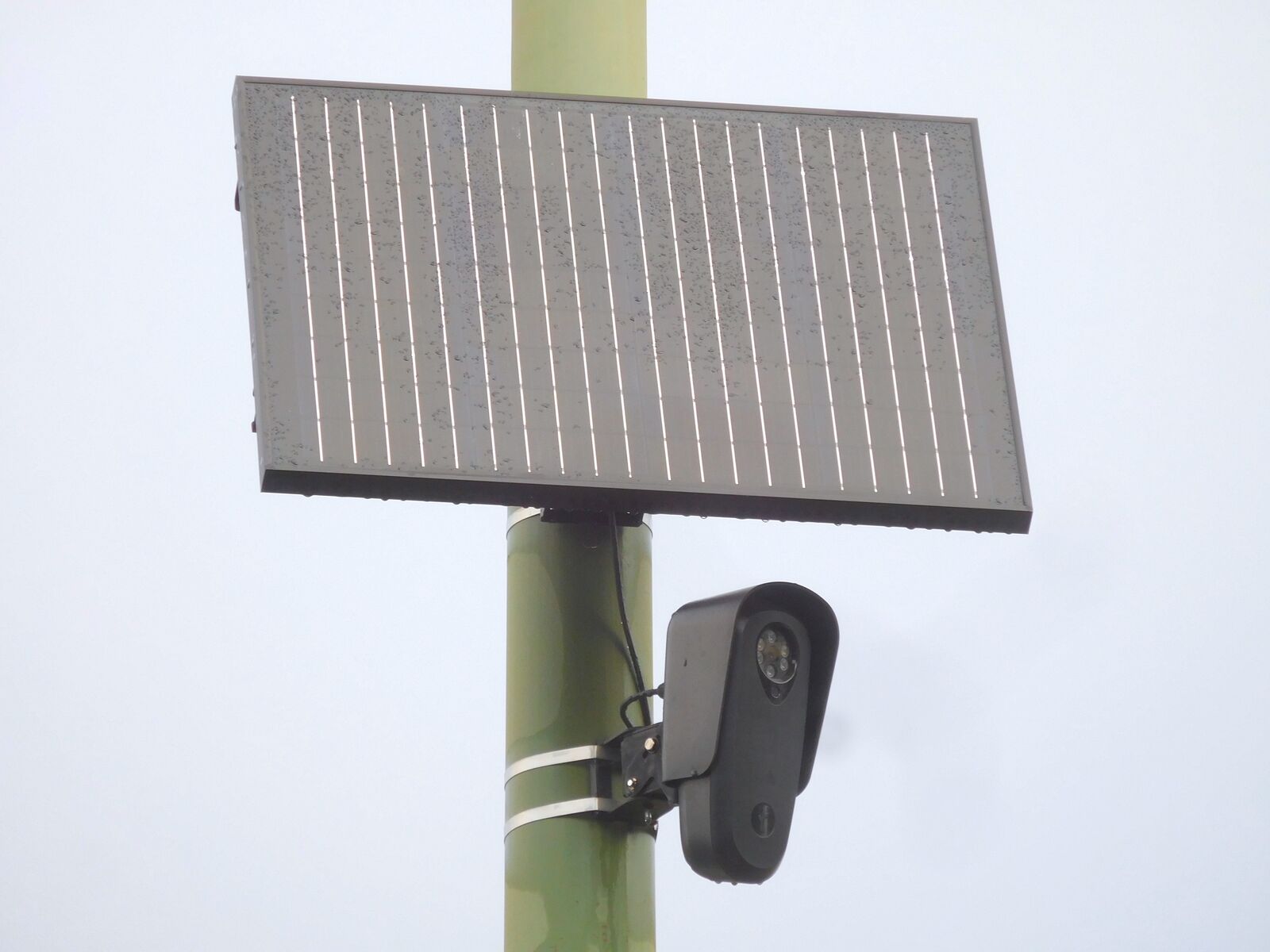 A solar-powered Flock Safety license plate reader affixed to a pole in Oakland. Credit: Darwin BondGraham/The Oaklandside
In their pitch to the council Tuesday, OPD representatives showed off arrest statistics and crime data.
Oakland police made 232 arrests using data from Flock license plate readers between July 2024 and November of this year, said Lt. Gabriel Urquiza.
The data has also led the department to recover 68 guns. A regional task force relying on cameras throughout Alameda County has reportedly found 1,100 stolen vehicles from their data.
These arrests and gun recoveries represent a tiny fraction of the overall license plate scans Flock’s cameras record in Oakland. The company’s 293 Oakland cameras captured license plate numbers and other information about 1.4 million vehicles just in the last month, according to Flock.
OPD retains data scanned by the cameras for 30 days but saves information connected to specific investigations for longer. Urquiza told the council that OPD has shared Flock data with 50 other law enforcement agencies so far.
Crime has generally dropped in the time period since Oakland began using Flock. Homicides plummeted from 126 in 2023 to 86 in 2024. As of late November there had been 59 homicides in 2025. There’s also been a 66% decrease in carjackings and 53% decrease in homicides, according to OPD.
“We implemented Flock in 2024, and you see a significant drop-off immediately,” said Urquiza, displaying graphs with downward trend lines. With OPD staffing at a low of 509 sworn officers, the department needs tools like Flock to supplement paltry patrols, he said.
Many public speakers, and a couple of councilmembers, questioned the connection between Flock and low crime. A number of other factors, like recovery from the pandemic and Oakland’s Ceasefire anti-violence program, could have played big roles, they said. Across the country, violent crime, including homicides, rose sharply at the start of the pandemic and then dropped over the past two years, including in cities and counties that don’t use license plate readers.
Research has lent support to the idea that Ceasefire helped reduce crime in Oakland. There are currently no independent studies showing OPD’s use of Flock’s cameras is linked to the current drop in crime.
Attempting to add guardrails
Wang and Brown’s amendments, in part, prohibit Flock from allowing the federal government or any out-of-state agencies to access data from Oakland’s cameras, and they prevent Flock from allowing Oakland’s data to show up in any national or multi-state searches. If Flock violates these provisions, the company will be on the hook to pay Oakland up to $200,000.
The amendments also prohibit OPD from sharing camera data with any other agencies for the purpose of “criminalizing reproductive or gender affirming healthcare” or for federal immigration enforcement. California state law also prohibits the sharing of license plate reader data with the federal government, and because Oakland’s a sanctuary city, OPD is not allowed to cooperate with immigration authorities.
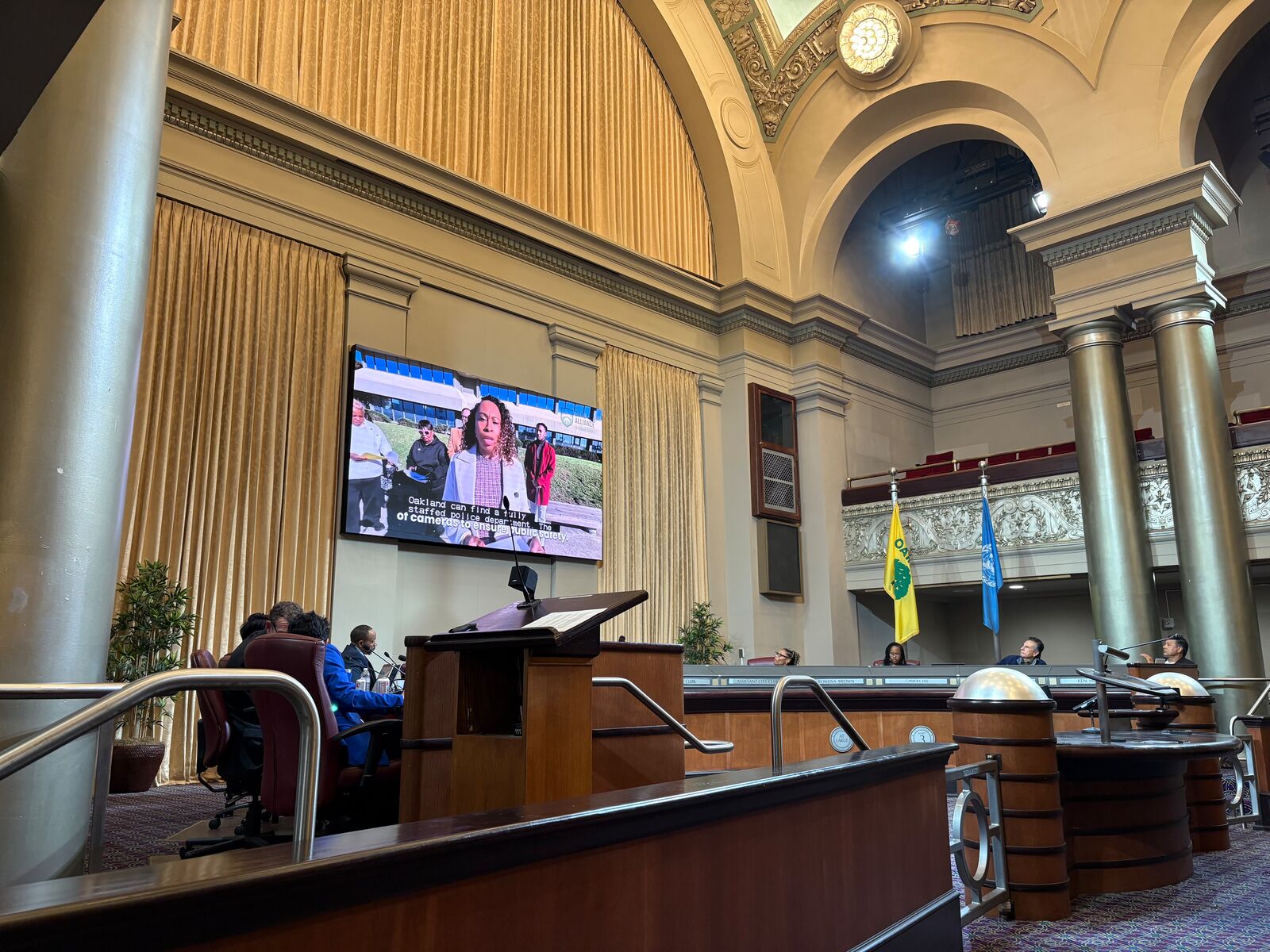 Claiming that the Flock opponents in the crowd didn’t represent the general public, Councilmember Ken Houston played a lengthy video by the Oakland Alliance for Public Safety featuring pro-Flock residents. Credit: Natalie Orenstein/The Oaklandside
Additionally, if any California law enforcement agencies request data from OPD, they are required to affirm they will follow state law. But reports have found that once the data is in the hands of other agencies, they don’t always follow the rules.
A former member of Oakland’s Privacy Advisory Commission — which did not support the new contract — has sued OPD, alleging that the department has violated its own rules around sharing data.
Some councilmembers told the public that they were skeptical of Flock at first — although the council unanimously approved their use in Oakland in 2024 — but came around to believing the cameras were important public safety tools, as long as the right restrictions were in place.
“If there’s the slightest indication this company is in violation, we’ll cancel the contract,” Ramachandran said.
Councilmember Ken Houston made his unconditional support for the contract clear when he kicked off council discussion on the item by streaming 10 minutes of a video made by the Oakland Alliance for Public Safety, featuring a montage of Oakland residents and business owners speaking in support of Flock. The alliance is run by the leaders of the District Attorney Pamela Price recall campaign and business representatives.
“If they come out deep, we can come out deep too,” said Houston, referring to the Flock critics who spoke during the public comment period and accusing them of spreading a “false narrative.”
Observers in the chamber and online were abuzz trying to decipher whether the councilmember gave members of the public the middle finger while they were speaking. Houston didn’t immediately respond to a question about this.
Intense opposition, fervent support
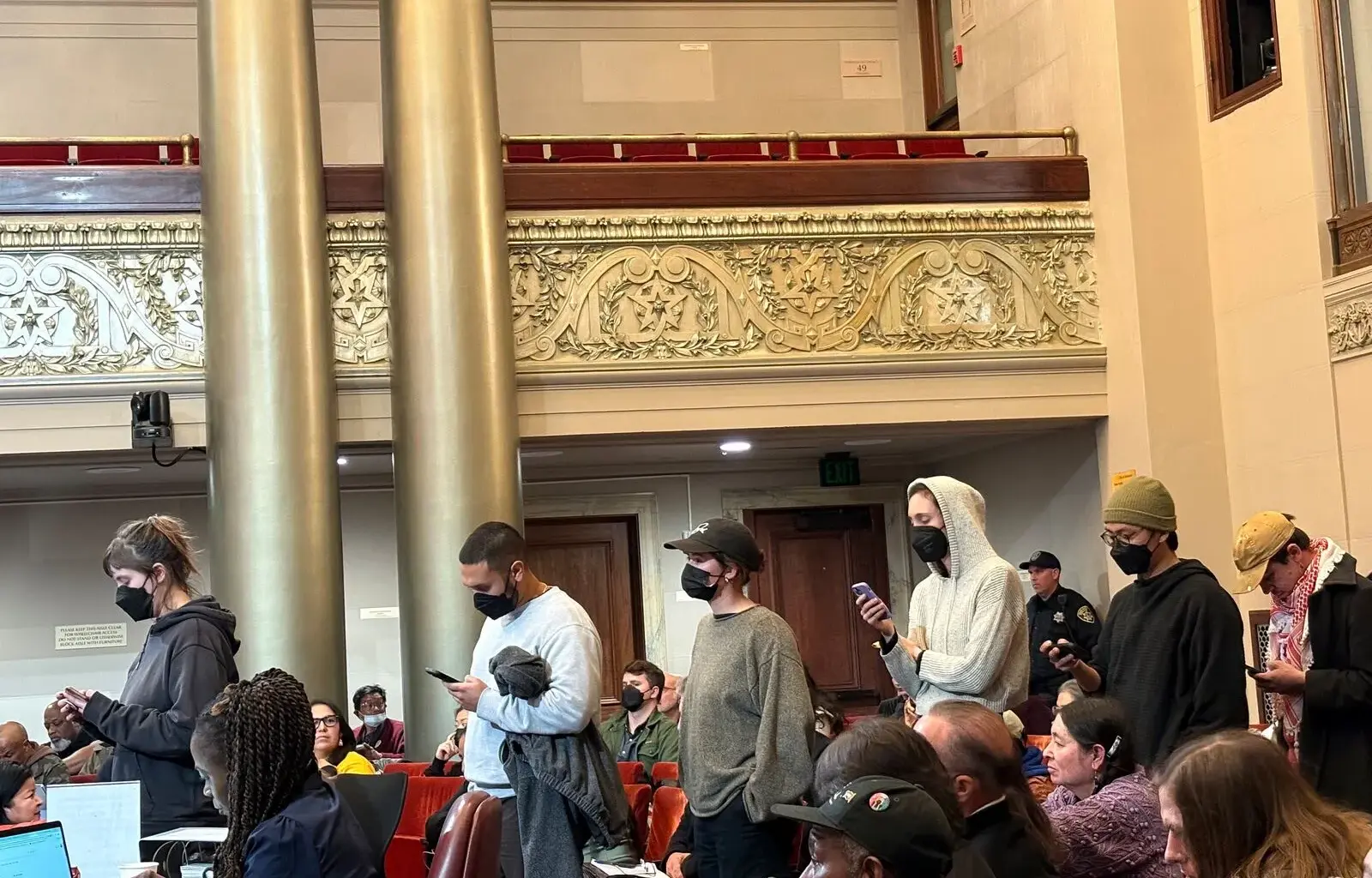
The 145 community members who signed up to speak about the surveillance cameras at Tuesday’s meeting — about two-thirds opposed and one-third in support — narrowly exceeded the crowd that weighed in at a boisterous Public Safety Committee meeting in November.
That committee was split at the time, and squashed the proposal, but when OPD brought it back to the council’s scheduling committee this month, officials agreed to move it onto the full council for a vote.
OPD told officials there was urgency in approving the item, because without the new contract, the cameras would go dark at the end of the year. The city has been part of a one-year contract with Flock through the California Highway Patrol, which technically ran out in March, according to the department.
The revival of the contract proposal after it failed to pass committee angered Flock critics, many of whom accused the council of being “anti-democratic” and took pains to remind them that they’d skipped work to come to the unusually early Tuesday meeting. Other speakers said Oakland needs all the public-safety tools it can get its hands on.
“One thing I find upsetting is the flippant attitude toward deaths,” said one pro-Flock speaker, turning to face the crowd and speaking in a mocking voice, “because you think it’s cool to be against the police.”
Jim Donatell, whose neighborhood installed its own private Flock cameras, said the technology helped OPD address a “large, violent sideshow” near their homes. The cameras took 337 scans of license plates from vehicles at the sideshow, which the neighborhood sent off to OPD, who used it to “take three cars off the streets,” according to Donatell.
A majority of commenters told the council that continuing to use Flock represented a slide into authoritarianism, putting vulnerable residents in Oakland at risk.
“You are doing more to advance Trump’s agenda in Oakland than anyone,” said James Montgomery. “They’re AI-enabled surveillance systems with a documented history of heinous privacy violations.”
OPD has said the department updated its contract with Flock to prevent machine learning from Oakland data, after hearing concerns from the Privacy Advisory Commission.
“My parents were holocaust survivors,” said another speaker, “who were hunted by a regime that hated our people.” Surveillance technology like Flock is “threateningly familiar,” he said. “Flock has shown over and over again that it can’t be trusted with the data it collects. A yes-on-Flock vote will make you complicit in this horror show.”
Fife, the lone opponent of Flock on the dais, said her concern is not with cameras in general or with Oakland’s policies, but with the company specifically. Flock cameras are easy to hack, she said.
Earlier this year, independent researchers published papers and videos explaining how they were able to hack into Flock’s camera systems and access data. The company responded last month, telling customers it was “committed to continuously improving security.”
“I understand the importance of moving toward greater public safety. I want to make sure our most vulnerable residents are protected as well,” Fife said.
The amendments approved Tuesday require Oakland police to do a public search for the next ALPR vendor while the two-year contract is underway.
“*” indicates required fields