

“This system makes the Department more efficient as it allows for information related to disruptive/violent criminal activities to be captured … and allows for precise and focused enforcement,” OPD wrote in its proposal to the council.
While supporters argued the technology is a vital “resource multiplier” for an understaffed police force, some critics blasted the council for what they called an “undemocratic” and “backdoor” process.
Tuesday’s vote was particularly charged because the Public Safety Committee had previously deadlocked on the contract last month. However, just last week, the Rules Committee fast-tracked the item to the full council, a move that privacy groups said was designed to bypass committee-level opposition.
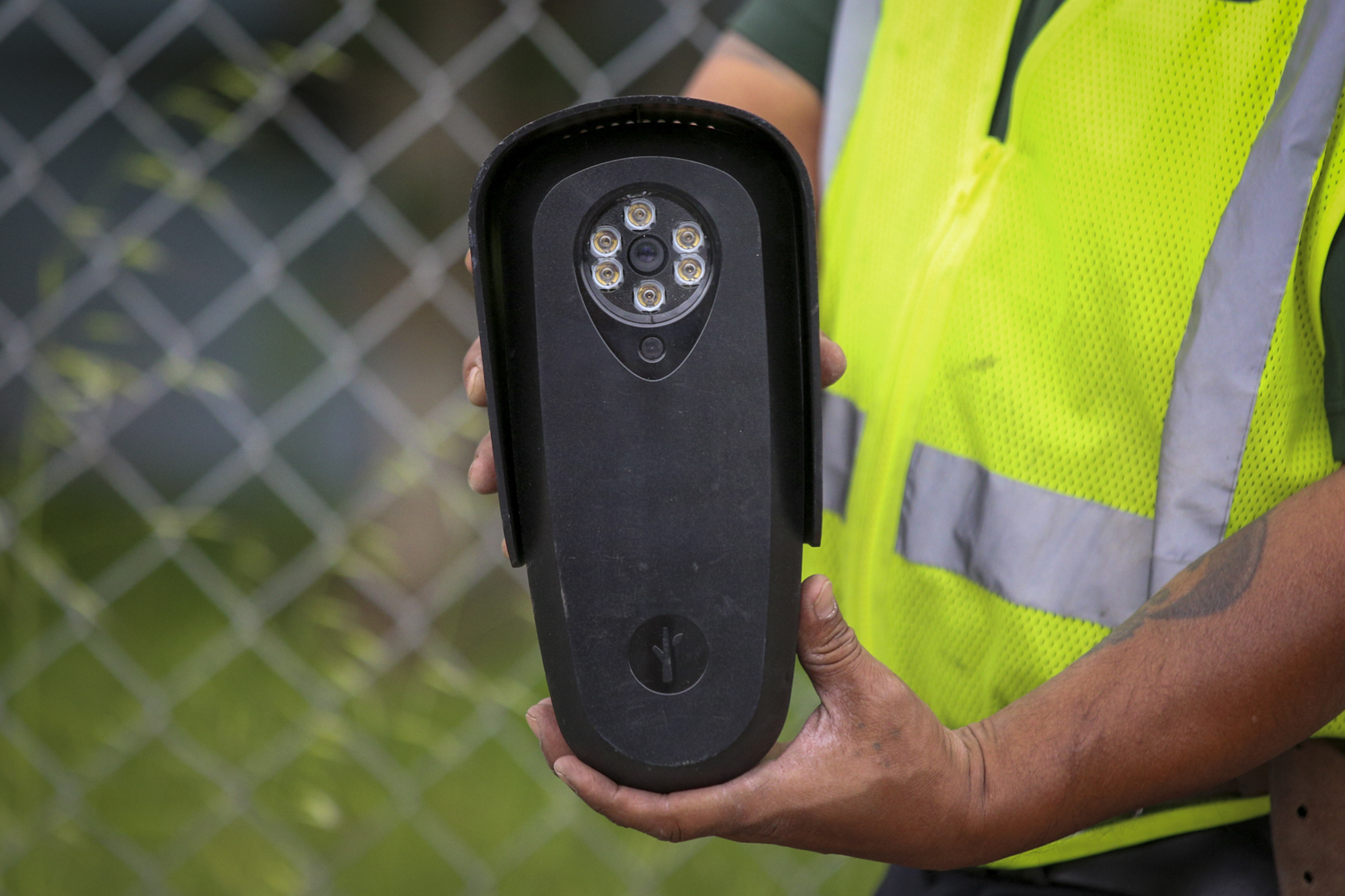 A Flock Safety worker holds up a new automated license plate reader that was being installed in East San José on April 23, 2024. (Joseph Geha/KQED)
Councilmember Carroll Fife, the sole “no” vote Tuesday, criticized her colleagues for advancing a contract with a company that has faced national scrutiny over data sharing with federal entities.
“I don’t know how we get up and have several press conferences talking about how we are supportive of a sanctuary city status but then use a vendor that has been shown to have a direct relationship with Border Control,” Fife said from the dais. “It doesn’t make sense to me.”
Earlier this year, the San Francisco Standard reported that federal agencies had accessed data from Oakland’s cameras. Last month, the city of Richmond deactivated its own camera network after discovering that federal officials could search their database.
The Oakland Police Department, meanwhile, has defended the technology as an essential tool for solving violent crimes.
Lt. Gabriel Urquiza told the council that since the cameras were first deployed in July 2024, the system has led to 232 arrests and the recovery of 68 firearms. Department data shows carjackings dropped from an average of 40 per month before the cameras were installed to 17 per month in 2025.
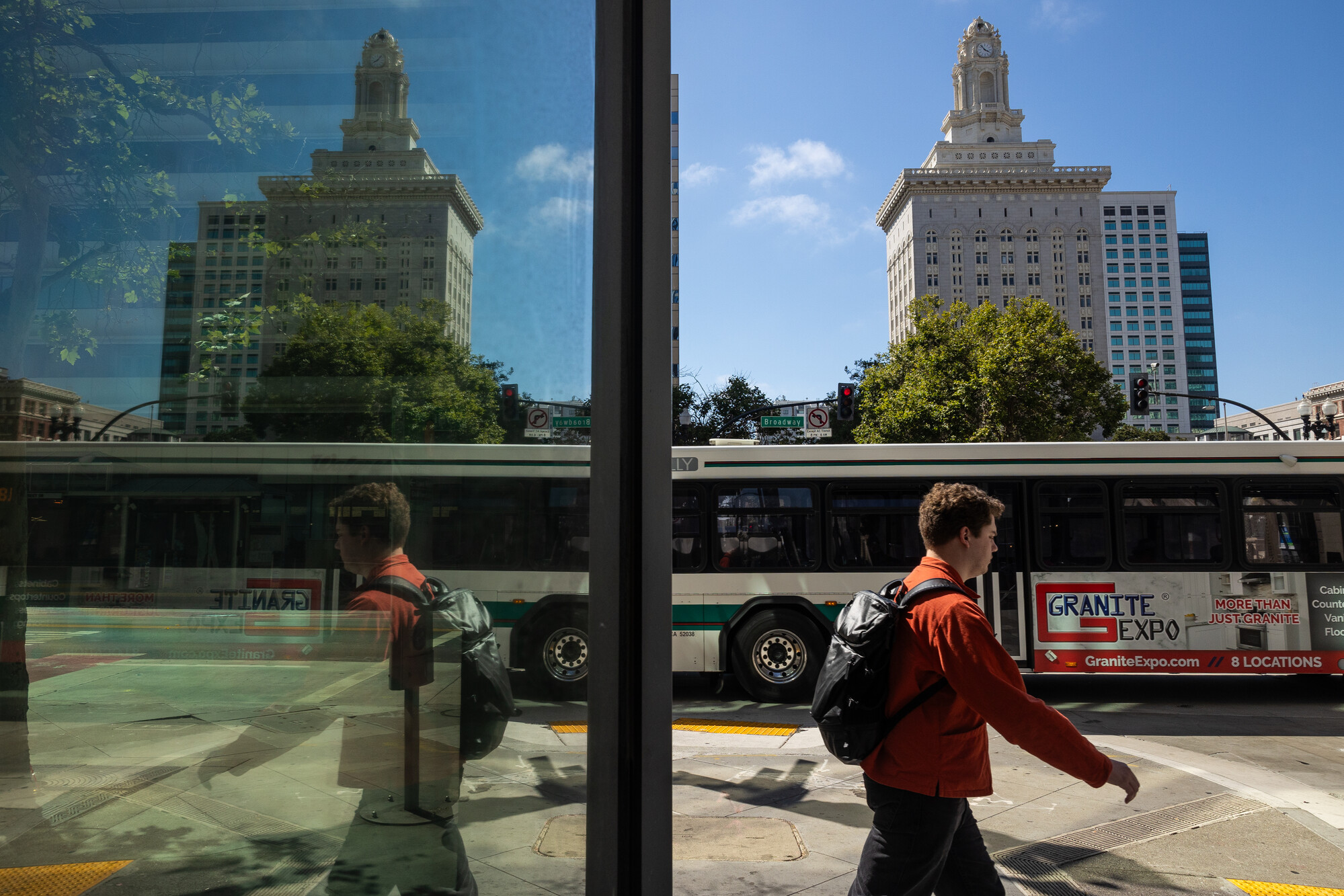 Oakland City Hall in downtown Oakland on Aug. 2, 2023. (Martin do Nascimento/KQED)
To address privacy concerns, the council adopted a series of amendments proposed by Councilmembers Charlene Wang and Rowena Brown. The new contract includes:
A strict prohibition on sharing data with federal immigration agencies or out-of-state law enforcement for the purpose of investigating reproductive health care or gender-affirming care.
A “two-key” approval system requiring both the city’s chief privacy officer and the OPD information technology director to authorize any new data-sharing relationships.
A mandate for quarterly independent compliance audits overseen by the city auditor.
A requirement that the city begin a request for proposal process within 18 months to identify potential alternative vendors, preventing an automatic renewal with Flock.
Many of the provisions, such as the prohibition on sharing data with Immigration and Customs Enforcement or for out-of-state abortion investigations, reiterate existing Oakland sanctuary policies and California state law.