
Sacramento State just graduated its latest class of students following a period of record enrollment. It’s been a year of significant change at the university, including department reductions announced in the fall after the state reduced the California State University system’s budget by 3%.
Meanwhile, President Luke Wood has been trying to evolve the university beyond being a commuter campus. His recent initiatives include boosting athletics and establishing a new housing policy that would require many first-year students to live on campus their first two years.
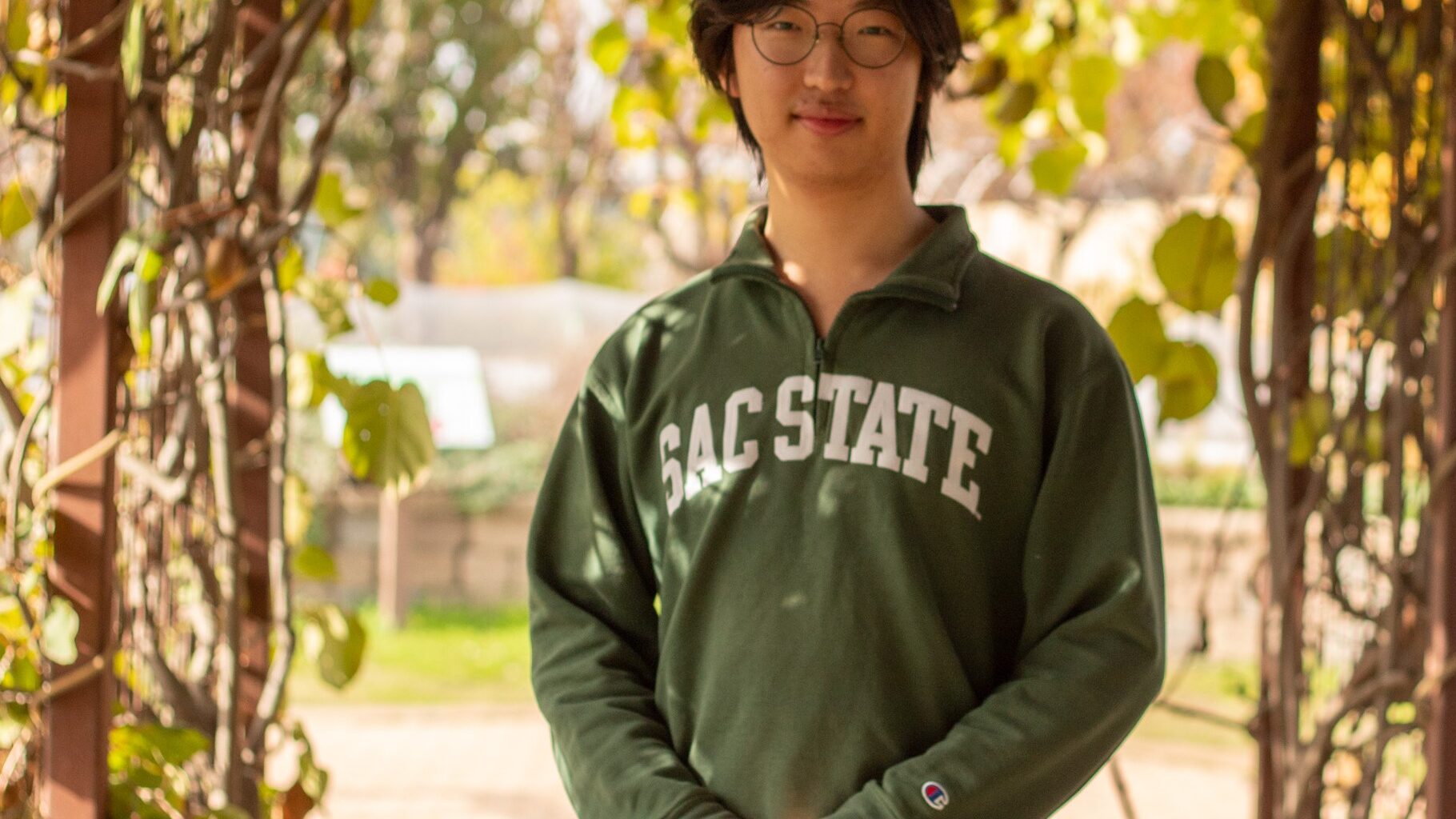
These changes have been met with a range of responses, including some raising questions regarding cost or necessity. Sac State senior Michael Lee-Chang is a student advocate who isn’t shy about voicing concerns about decisions that impact students. He recently wrote an op-ed in the Sacramento Bee titled “I’m worried about the direction of my university.”
He joined Host Vicki Gonzalez on Insight to share his perspective.
This interview has been edited for length and clarity.
Interview highlights
What made you want to attend Sac State and become a Hornet?
I was about to graduate high school and I was looking at what colleges I should apply to. Honestly, I never really thought about going to college.
I had an interest in political science… and everyone I asked had said, “Well, if you want to study political science, Sacramento’s the place to be.” It’s the state’s capital and they have a great pathway into the legislature. Had Sac State not been available, I really don’t think I would have gone to college.
How has your experience been?
I love the university. I love my professors. I think it’s really a university that works for anyone, and I love that accessibility. I think that’s what makes Sac State great.
You were part of an organization called Students for Quality Education. What is its mission?
It’s the fight for affordable, accessible, and quality education in the CSU system. The CSU system was opened up, really crafted by the California Master Plan for Higher Education, as the people’s university. It was this promise to Californians that it doesn’t matter how much money you have, it doesn’t matter if you’ve never been to college, that there’s a place for you.
You published an op-ed highlighting some key criticisms and concerns you have with the direction that the university is going in. What inspired you to write this?
I think the real wake up point was the new housing requirement, and I’ve sort of just been seeing our university priorities shift and the budget deficit that only gets bigger.
And I’m seeing courses cut. There’s a post pretty much every day on Sac State forums about students not being able to find classes they need, students having to delay graduation because they can’t find classes that are required for them to graduate.
When it comes to the on-campus living requirement, it starts for students who live beyond 50 miles from campus and then becomes more narrow for students that live 30 miles or further away. There are also other exceptions for financial hardship. Is that not enough?
I think that it tries and I understand the intention behind the on-campus requirement.
I think it is a great idea and I don’t refute the research that students who live on campus may feel more connected to campus. I mean, I lived on campus myself.
I question if there is enough housing. I lived on campus for the last three years, had priority registration, and I was waitlisted. That’s why I have to live off campus, I’m actually finding that it’s been cheaper.
But I think just on a bigger scale, [many] of the CSU campuses don’t have on-campus housing requirements, and many of them are actually cutting back on that requirement, making them more lenient. And that’s partly because, you know, a commuter campus is intentional. It’s not because the university doesn’t want students to be integrated. It’s because that’s what makes university work for a lot of these students. I mean for me, my first semester was working five jobs, taking a full load of classes, supporting my single mom. And that’s the story for most CSU students… you’re juggling so many different things, and college is a glimpse of a better future but you have to make things work.
And for a lot of these students, it’s not exactly that normal, you know, college lifestyle that you see in movies. One-third of our student body are student parents. And so I think the exemptions try, but really if we’re trying to shift away from a commuter campus, it’s more about: who are we serving? Sacramento is very intentionally crafted for the Sacramento region. And if we start shifting away from a model that works for the students here, you’re going to see reliance from students in our region decrease. If anything we should lean on those students and really be serving those students.
President Wood’s own experience as a student is similar to a lot of what you just laid out. He experienced homelessness and struggled in school. Does that resonate with you?
Absolutely. I say with full confidence that I was really really excited when President Wood became our university president, and I was really excited for some new changes. The reason he was hired is because he was able to tell that vision and story. And yeah, there’s a lot of students who have to live in their cars because they can’t afford housing.
This new requirement has been sold as a solution, or to possibly address, that student homelessness crisis. I don’t fully see how requiring students to pay $20,000 a year helps them not live in their cars. If anything that’s going to force students to live in their cars or more likely, it’s going to get students to not want to come here.
I think affordability is a real big part in where students decide to go to college and if you’re being required to pay $20,000 a year to live on campus, when there may be cheaper options off campus or with family that may not exactly be immediate [family]… that 30-mile and 50-mile radius only applies if it’s with immediate family.
Clearly you have a lot of passion and love for the university that you are attending. Are there any improvements that the university has made in your time, that benefit the campus in the way that you would like to see?
I really admire and respect President Wood’s academic projects. The Black Honors College is great, and even just the support for the Guardian Scholars project to support foster students. I think really supporting the academic aspects of the university have been great.
Has this experience of being an advocate on campus shaped what you want to do professionally in life?
I ask that myself every single day and the simple answer is I don’t know. But what I think is really great is this seeing this shift. College isn’t easy for Sac State students. The students who go to Sac State are juggling a lot of things and it’s really been nice to see this consciousness, and I think it’s always been there: “What’s the university that I want to attend, and what does this university owe me? I’m paying so much money to attend it, I should be able to have a say in it.”
I think it is really exciting to see Sac State become this huge athletic institution that draws in students, but usually you want to take on expansion in a good budget year, not when you’re having to slash courses, not when you’re having to make difficult choices that may lead into layoffs.
Editor’s note: CapRadio is licensed to Sacramento State, which is also an underwriter.
Follow us for more stories like this
CapRadio provides a trusted source of news because of you. As a nonprofit organization, donations from people like you sustain the journalism that allows us to discover stories that are important to our audience. If you believe in what we do and support our mission, please donate today.