
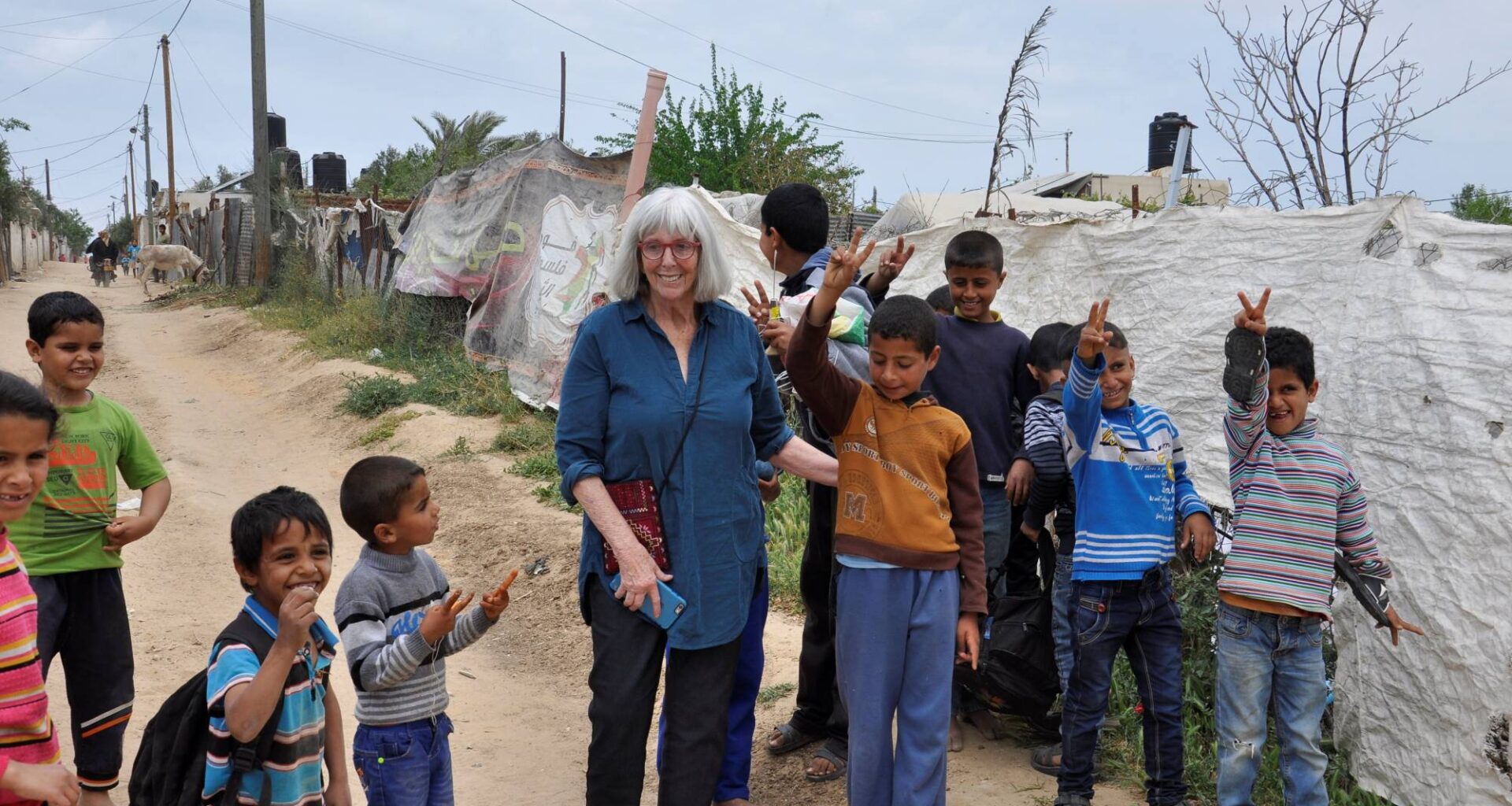
The tour, in early 1988, took place shortly after Palestinian civilians launched an uprising against Israel’s military occupation and documented human rights violations, including home demolitions, forced deportations and the suppression of political and educational activities. The uprising, which included both nonviolent protests and deadly attacks, was met with violent and brutal crackdowns by Israeli forces.
“She saw Palestine for the first time, and she saw many of the forests that her family contributed money to develop through the Jewish National Fund when she was a little kid,” Alex said. “And she was appalled. She was sickened by the injustice she saw. She had always believed that what was good enough for Charlie, what was good enough for her kids, was good enough for all kids.”
Within a year, Lubin formed the Middle East Children’s Alliance with Levine, a journalist who became Lubin’s husband and partner. The organization’s early board included luminaries such as Edward Said, a Palestinian-born postcolonial academic and literary critic; Sen. James Abourezk, the first Arab to serve in the U.S. Senate; and poets Allen Ginsberg and Maya Angelou.
The organization today is one of the leading groups raising funds and awareness for the plight of Palestinian children, as well as children across the Middle East. Under Lubin’s leadership, the alliance built playgrounds and safe water infrastructure in refugee camps in Gaza, donated ambulances, delivered medicine and food, and led dozens of American delegations to the Middle East.
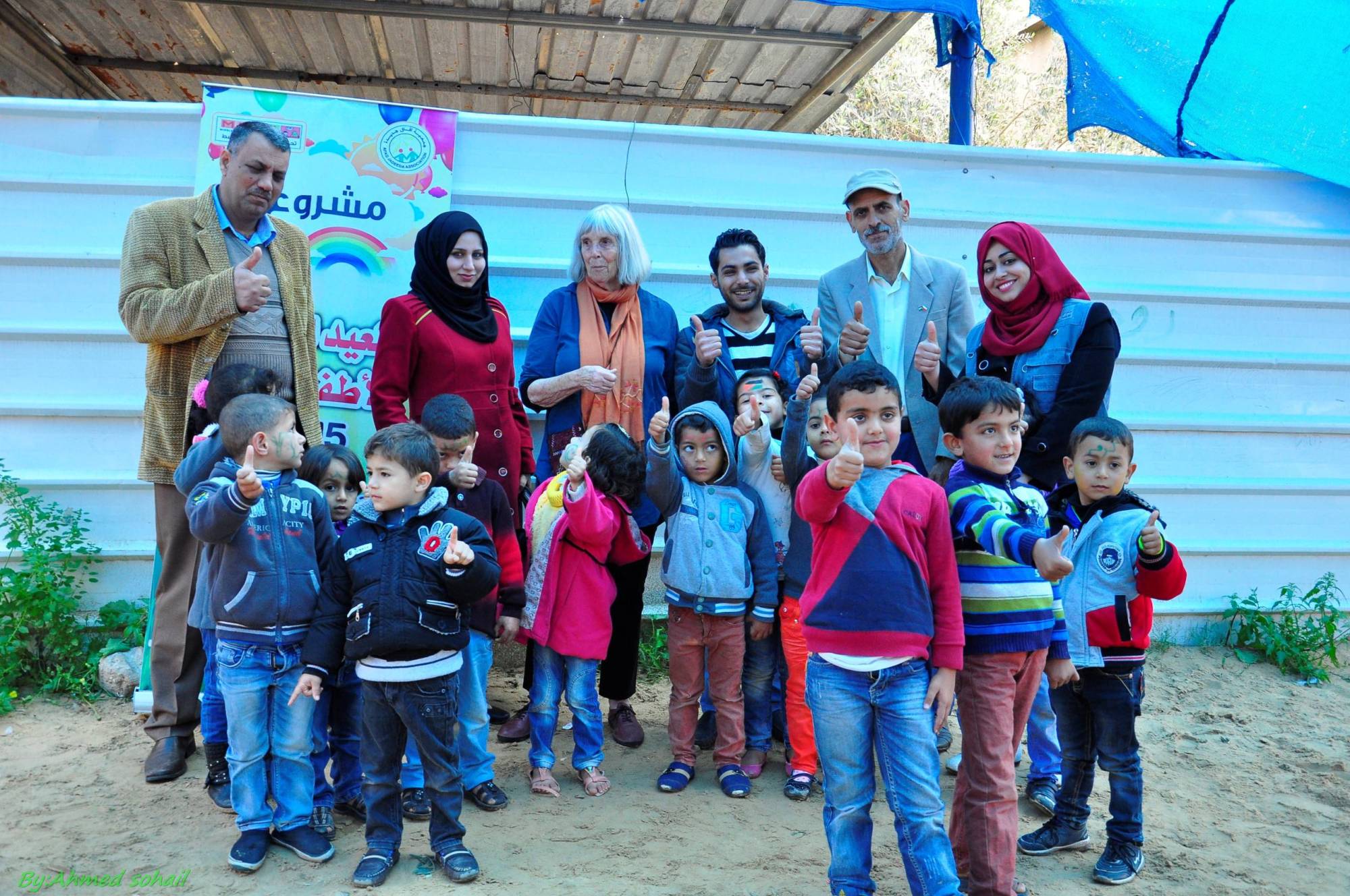 Barbara Lubin and other Middle East Children’s Alliance staff pose with children in Gaza in 2012. (Courtesy of the Middle East Children’s Alliance)
In the 1990s, Lubin smuggled food and medicine into Iraq during the U.S.-led international sanctions. In 1999, MECA sponsored the first and only U.S. tour of Ibdaa, an internationally acclaimed youth dance troupe from the West Bank, which introduced thousands of Americans to the stories of Palestinian refugees, farmers and prisoners through traditional dance and choreography. The tour included a performance at the Alcatraz Indigenous Peoples’ Sunrise Ceremony on Thanksgiving.
Abbas, who has helmed MECA since Lubin’s retirement in 2018, recalled meeting her for the first time in the early 1990s, when he was a young man living in Bethlehem’s Dheisheh refugee camp, surrounded by a fence that was “eight meters high.” He was put off at first, he said, by her intense questioning about his and other Palestinians’ circumstances, but he quickly grew to respect and value her fearlessness and pragmatism as she returned time and time again.
“She was in no way someone who would take a few steps back,” Abbas said. “All the time, she moved forward. Her legacy will live with us with all the work we are doing.”
On May 29, 2018, the Berkeley City Council proclaimed June 4 “Barbara Lubin Day” in Berkeley to honor her decades of extraordinary activism.
According to Nora Barrows-Friedman, a friend and journalist who worked with Lubin on her unreleased memoir, much of the work Lubin spearheaded in Gaza — as well as MECA’s ongoing efforts following her retirement — has been destroyed or severely damaged by Israeli military campaigns over the past two years.
“I think what carries me on is my anger at injustice,” Lubin said, in a statement shared by MECA. “I know a lot of people say it’s not good to be angry, but in reality, it’s the anger at the unfairness in this world that just spurs me on. When I think something is really wrong, I’m not going to be quiet. I get up, and I fight, and I try and change it.”