
At a book launch party, I was telling a friend about Dorland Mountain Arts, the longest-running year-round artist residency in Southern California. Another author overheard and playfully shushed me. Then, more seriously, she leaned in: “We don’t want them to find out.”
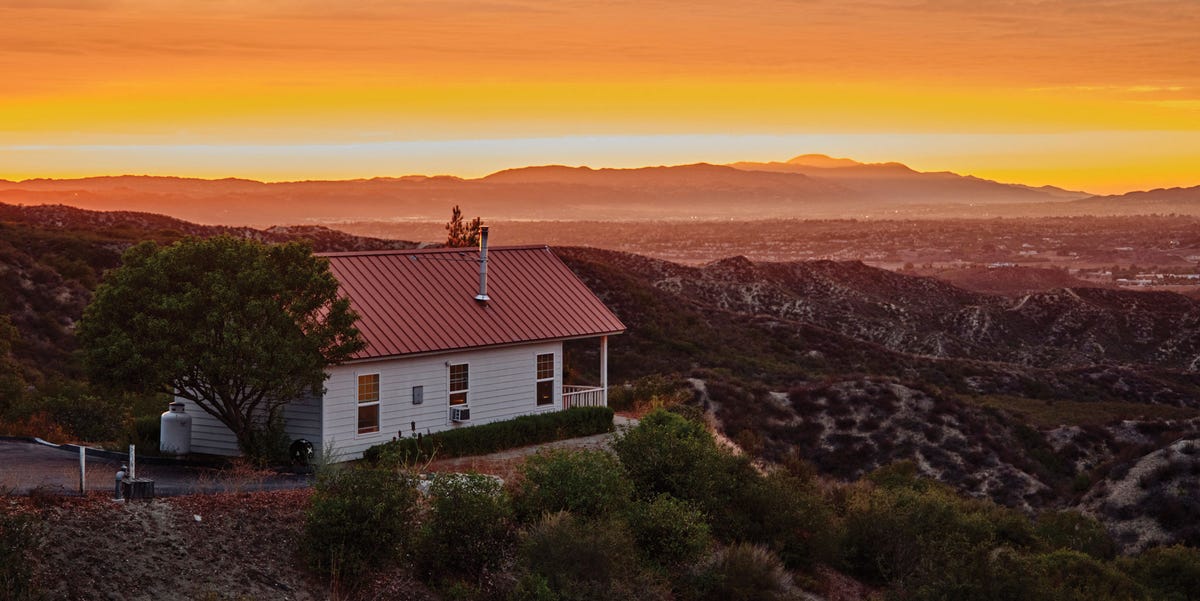
Located on the northern end of the Palomar range, with sweeping views of the Temecula Valley, Dorland’s 10 acres sit on a 300-acre nature preserve. Despite the residency’s lengthy history, Dorland has remained relatively unknown—and improbably, it was resurrected after near destruction.
I stumbled on Dorland in 2024, when I saw an Instagram post about the residency. Desperate for space and solitude to work on my novel, I applied and was accepted. I drove up the mountain, about 100 miles southeast of my home in Los Angeles, and felt instantly transported. Since then, I’ve stayed five more times—my shortest visit a week, my longest a month—in all five of the private cottages, each with a kitchen, a workspace, and a porch and two with a baby grand piano. Most of my time has been spent alone, reading, writing, and taking long walks on the trails. Though solitude is the ethos, I’ve also made lasting friendships.
This article appears in Issue 34 of Alta Journal.
SUBSCRIBE
From the mountain, Temecula’s sprawl—beige tract homes, Trump flags, an Old Town with biker bars—feels distant. Up on the mountain, the land still thrums with the presence of the Pechanga Band of Indians, whose ancestors lived in the valley for at least 10,000 years. Temeku, the Luiseño name for the area, roughly means “the place where the sun breaks through the mist.” And the first thing that struck me at Dorland was the sheer breadth of the sky. In the mornings, hot-air balloons drift in the distance above the Temecula Valley wineries, as if in a fairy tale. Sweeping sunsets commandeer the valley at dusk. As night falls, the abundance of stars and bright planets high above the jeweled lights of homes and businesses is otherworldly.
There are better-known residencies in the country—Yaddo in Saratoga Springs, New York, say, or MacDowell in Peterborough, New Hampshire, both of which are idyllic, supportive environments with full-time kitchen staff who have served generations of artists. Dorland is their funky cousin: unpretentious, approachable, and more fun to talk to. Rather than peering over your shoulder to see if anyone more important is around, Dorland makes eye contact.
 Philip Cheung
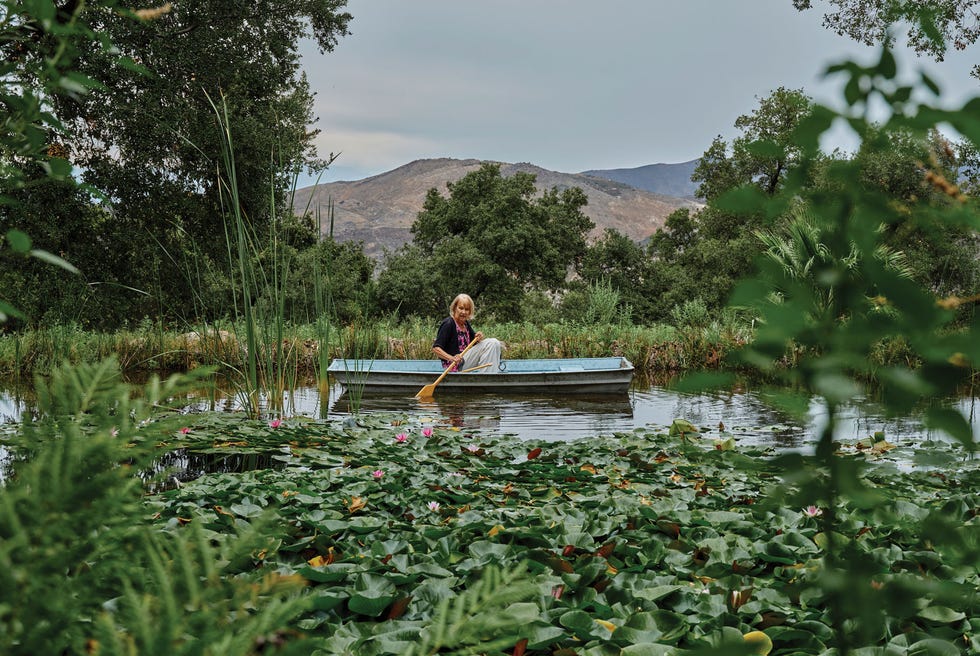
Artist Janice Cipriani-Willis, Dorland’s executive director, takes an idyll on the property’s Lake Ticañu.
BIRTH AND REBIRTH
The reason for that begins with the founders. Dorland’s origins trace to the 1930s, when the internationally accomplished concert pianist Ellen Babcock Dorland and her husband, Robert, homesteaded 10 acres on the mountain. With the help of friends, they constructed rustic buildings—without electricity—and they called the compound Rancho Ticañu. Ellen admired MacDowell but wanted to retain the rancho’s inimitability. She opened the place to artists and students, who fell under the spell of the live oaks and Ellen’s philosophy: “Simplify, simplify, simplify!”
In 1974, Ellen’s friend and collaborator Barbara Horton, a ballet teacher, author, and pioneering environmental activist, worked with the Nature Conservancy to secure the 300 acres as a preserve. By 1979, an artist residency had been formally established. Cottages remained off-grid, lit by kerosene and propane lamps. Privacy was paramount; residents left notes to one another in postboxes. A brochure at the time warned, “Dorland Mountain Colony is not for every artist,” yet many thrived in its “primitive working retreat,” among them renowned poet May Swenson and, later, novelist Alice Sebold.
The first resident, poet David Trinidad, arrived in 1979 while recovering from a car accident that had killed his best friend, fellow poet Rachel Sherwood. “I hobble around on one crutch / afraid of encountering rattlesnakes / or bobcats on the dirt paths,” he wrote in “Moonlight in Temecula.” His typewritten acceptance letter, scribbled over and signed by Horton, advised him to bring binoculars, a magnifying glass, even a sketch pad.
Trinidad describes Ellen as formidable and patrician. “When I first arrived,” the poet Roberta Swann concurs by email, “I observed Ellen from afar flinging the walking stick around. After a week, I realized she was flipping aside the rattlesnakes that were everywhere.”
Multidisciplinary artist Gilah Yelin Hirsh credits her significant time at Dorland in the ’80s with sparking her lifelong exploration of the connections between art, science, and spirituality. Ellen visited Hirsh regularly in her cottage to critique her work. Hirsh often wandered the grounds at night, and Ellen told her that she had “eyes in the soles” of her feet.
Ellen, who’d lived at Dorland for 50 years, spent the greater part of her final months beneath an oak, sunlight sprinkling her wheelchair. She died in 1986, at 98 years old. Horton remained a vital presence until her own passing in 2003, at 86.
The next year, disaster struck when the Eagle Fire scorched 9,000 acres along Highway 79 and decimated Dorland, destroying hundreds of antiques and manuscripts, as well as Ellen’s grand piano once played by Rachmaninoff. Dorland’s existence seemed over. Yet through communal effort—and the introduction of modest fees—it was brought back to life.
 Philip Cheung
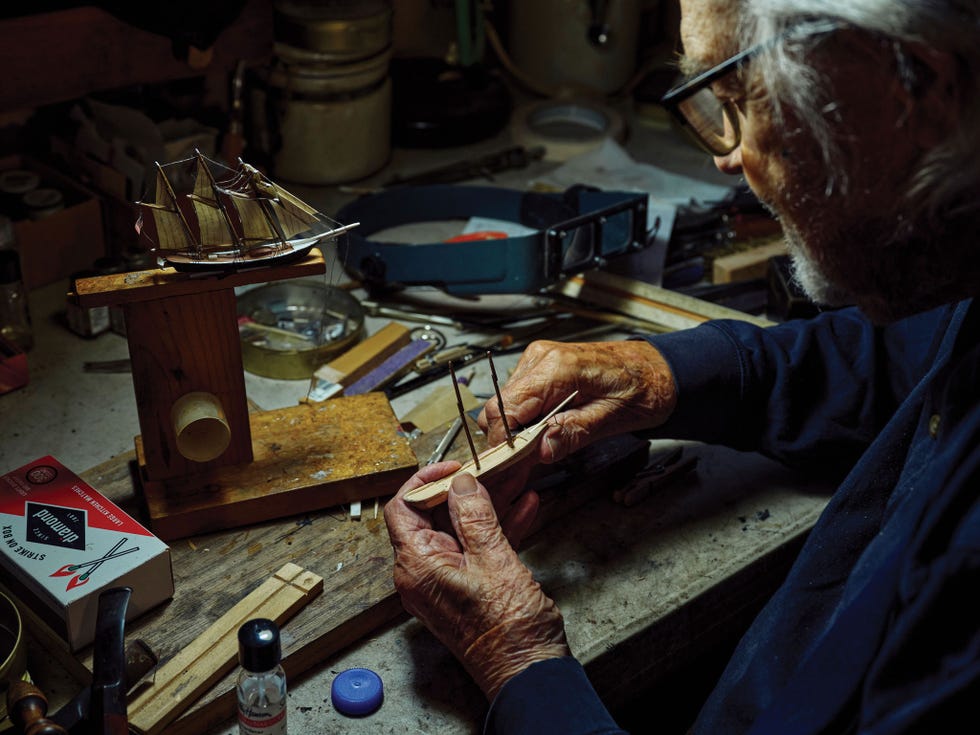
Artist in residence Robert Willis, 102, carves a wooden ship. Known as the “heart of Dorland,” he’s been there since 1992.
A key figure in its survival was artist Robert Willis, who had arrived in 1992. After the fire, he lived in his van with his dog on the charred land for four years, guarding against looters. Eventually, new cottages—prefab houses, this time with electricity—were built. Now 102, Willis is celebrated as the “heart of Dorland,” still living on-site with his wife, fellow painter Janice Cipriani-Willis, the residency’s executive director.
Though rebuilt, Dorland retains its spirit: minimalist, survivalist, irreverent. Its address—P.O. Box 6, Temecula, California—has remained unchanged since the 1930s. Its nonprofit board, led by Horton’s son, Curtis, has kept residencies affordable and open to as many artists as possible, many of whom return again and again. Novelist Michelle Huneven recalls her 1987 stay as “rustic and dusty and romantic,” with Aladdin lamps for light and chores to share. Once, when she spotted a black widow spider, the caretaker gently released it outside. “I haven’t killed a black widow since,” she says.
At Dorland, the past is always close. The property’s original adobe gathering place, legend says, was completed only after Pechanga Band visitors taught Robert Dorland how to mix clay properly. On my most recent stay, I sat with composer Bruce Trinkley at Sunset Point, where residents often gather. He pointed out the twisted harp of Ellen’s piano, charred in the fire, still half hidden in the chaparral.•
Related Stories
The author of three novels and two story collections, Victoria Patterson lives with her family in South Pasadena and teaches fiction in Antioch University’s master of fine arts program.