
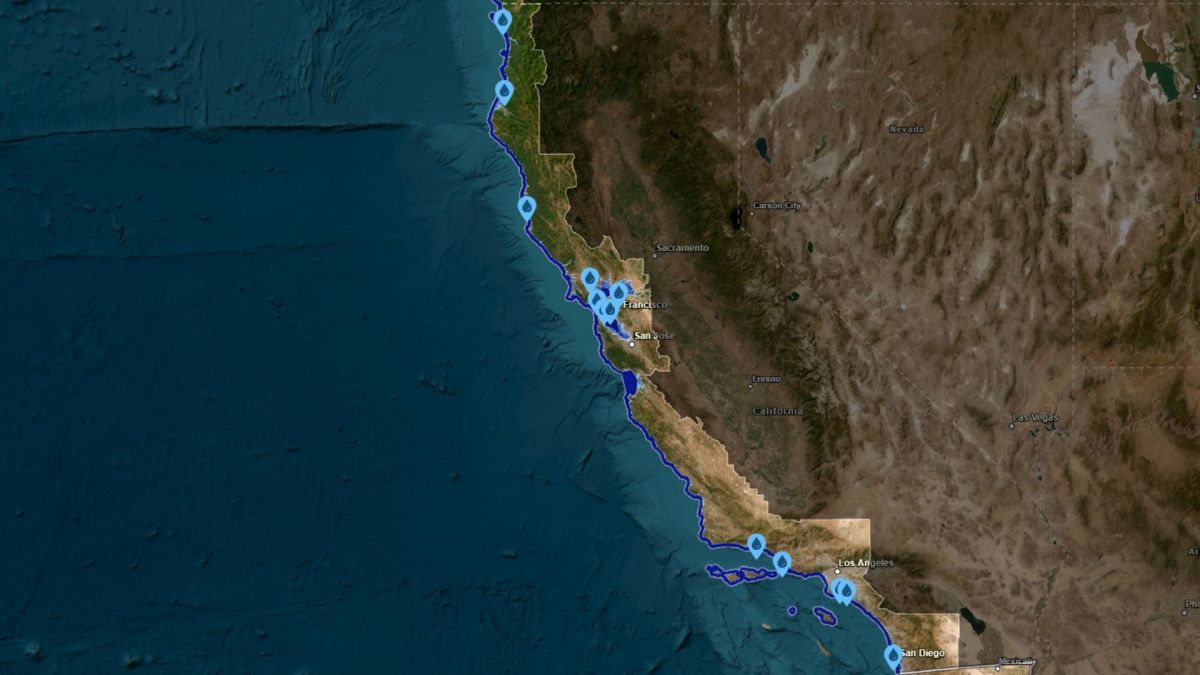
If sea levels rose by 10 feet, California’s coastline would be considerably impacted, a projection map by the National Oceanic and Atmospheric Administration (NOAA) shows.
“A 10-foot sea level rise would “render significant portions of one-third of coastal cities in the U.S. uninhabitable,” J. Derek Loftis, a professor with the Center for Coastal Resources Management at the Virginia Institute of Marine Science, College of William & Mary, told Newsweek.
Loftis said that the “compounding impacts” of storm surge caused by hurricanes and nor’easters, a kind of storm on the East Coast, alongside the sea level rise would be “the driving force behind abandonment of less resilient coastal communities.”
Even without such a significant rise in sea levels, the issue is already “directly impacting coastal cities across the U.S., with many dedicating significant monetary resources to developing resiliency plans in response to interruptions in transportation systems imposed by nuisance flooding during the fall tidal flooding season,” he added.
Why It Matters
Higher global temperatures due to increased greenhouse gas emissions, and increased sea volume as glaciers and ice caps melt, are among the major factors contributing to rising sea levels.
Experts have warned that not enough is being done to reduce greenhouse gas emissions, and that even if these emissions hit zero today, there would still be a continuation sea level rise for some time to come.
Loftis said that a sea level rise of 10 feet “would not occur before 2100.” He said most projections estimate that this sort of sea level rise would happen, at the earliest, around a century from now. However, he said that it’s important not to forget that “even small increases in sea level rise can impact coastal cities.”
 Which Cities, Areas In California Would Be Affected?
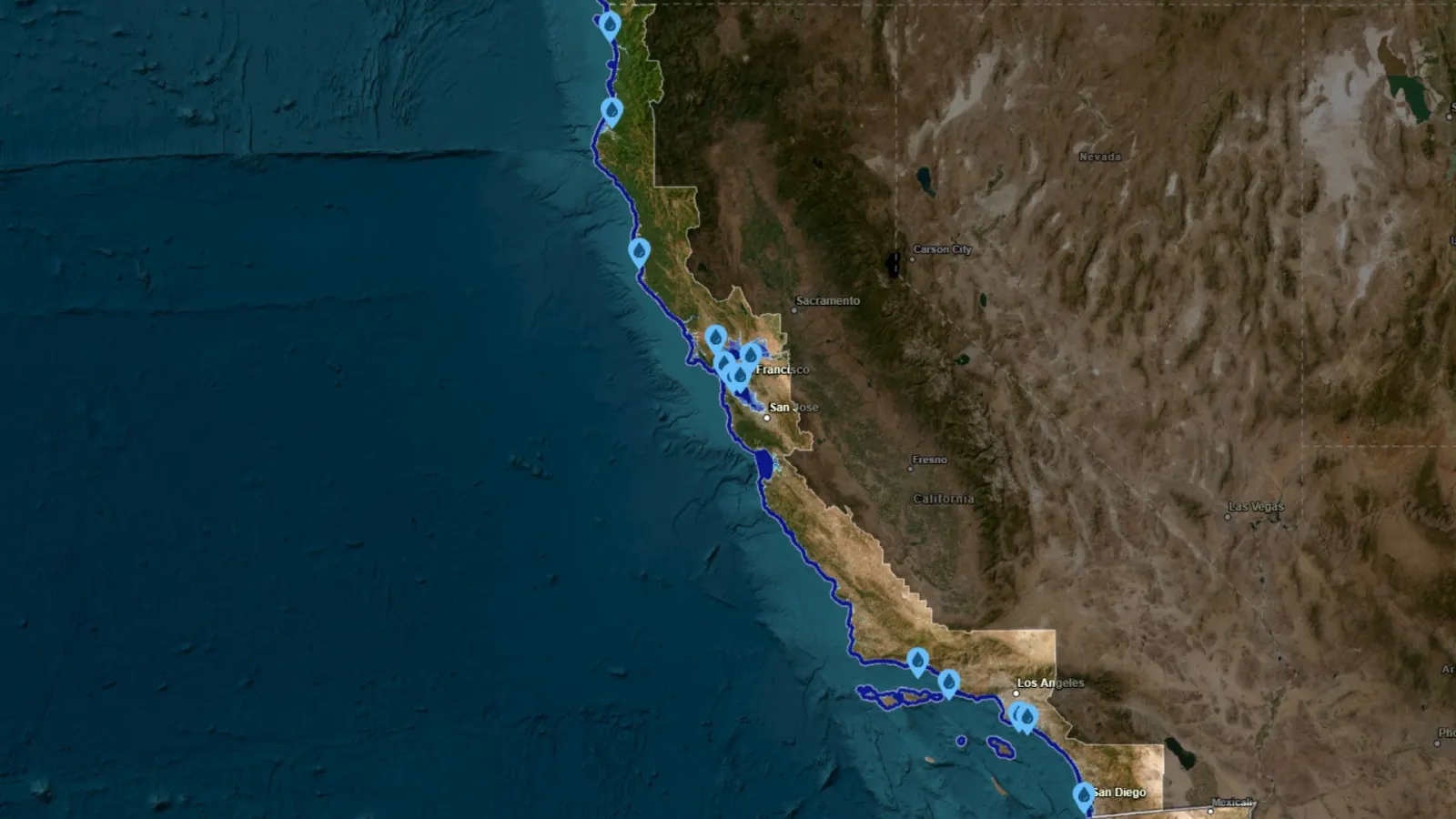
According to NOAA’s projection map, many coastal cities in California would be partially underwater, including Crescent City, Trinidad, San Francisco, Oakland, Long Beach, Seal Beach, Huntington Beach, Newport Beach and San Diego.
Notable parts of the landscape and wildlife reserves would also be affected, including Big Lagoon, the Brush Creek/Lagoon Lake Wetlands and Coastal Dunes Natural Preserve, the Ventura County Game Reserve as well as vast amounts of the California Coastal National Monument.
Humboldt Bay would also likely flood into the neighboring communities like Bayside and Bracut, and parts of the city of Eureka. The Humboldt Bay National Wildlife Refuge would also be submerged in seawater.
Tendrils of seawater would also make their way into the state by circling around Cock Robin Island, partially submerging it, and overflowing the Eel River.
Huge expanses of the area around the Golden Gate National Recreation Area and San Francisco would be submerged, with water covering the area of the San Pablo National Wildlife Reserve and overflowing Grizzly Bay and San Francisco Bay.
It appears to be one of the most affected states, alongside Florida, which would also see a vast expanse of its famous coastline and beaches disappear underwater if sea levels rose by 10 feet.
What Should Be Done?
“10 feet of sea level rise seems far off, and not likely to impact most of us to half that degree within our lifetimes, but planning for resiliency cannot abide complacency,” Loftis said.
He said that mitigating impacts of sea level rise in coastal cities will “require a balanced effort in improved stormwater management, construction of sea walls, levees and living shorelines, and electrical infrastructure enhancements to support essential facilities and power pumps during major storms to drain rainwater trapped behind flood walls.”
He added that while these flood mitigation strategies seem “fairly obvious,” most of the world’s population resides in coastal areas, and “inevitably, the next century will see an increase in divisive rhetoric turning critical flooding resiliency strategies into partisan politics.”
Loftis said that significant investment will be needed to support mitigation measures that “will only increase in cost and decrease in effectiveness over time as sea levels rise.”
“Sea level rise science is wrought with compounding uncertainty as many things impact global sea level rise on a local level, but one thing is for certain, resiliency solutions aren’t getting cheaper the longer communities wait to address them,” he said.