
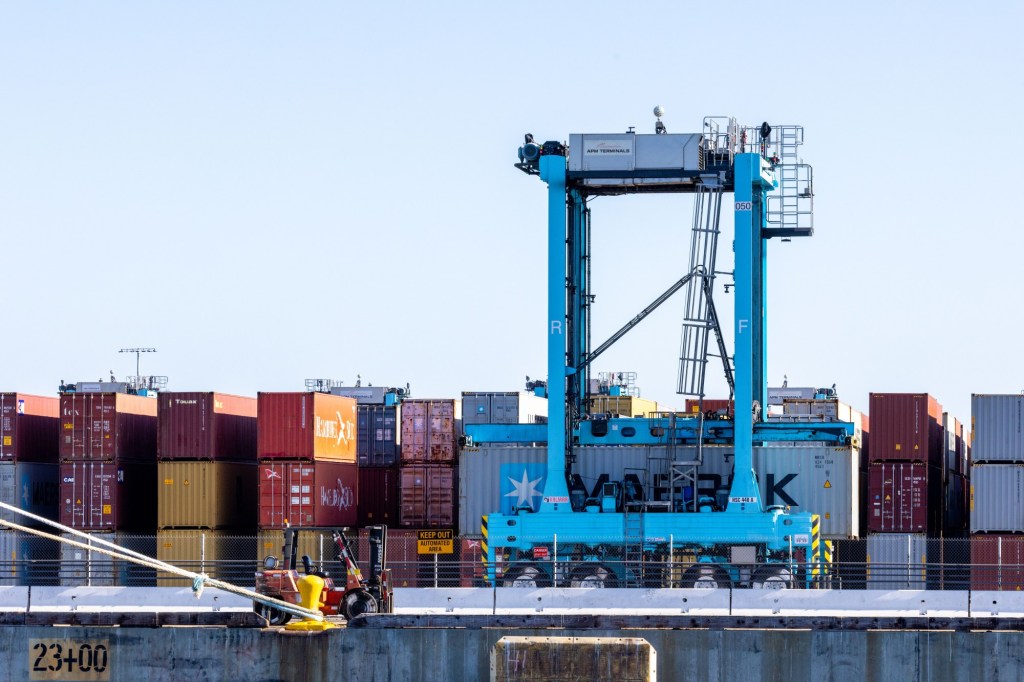
Officials at both the Ports of Los Angeles and Long Beach, despite late-year slowdowns, said the cargo gateways were still on track to achieve strong numbers by the end of 2025, despite a year of economic uncertainty with tariffs. The comments came following the release by both ports this month of their November cargo numbers.
In the Port of Long Beach, a record year for 2024 is anticipated. That port is on course to reach its “all-time busiest year, exceeding the record-setting 9.6 million cargo containers moved in 2024,” as reported in a December news release issued by the Port of Long Beach.
Numbers were also strong at the Port of Los Angeles, which processed 782,249 Twenty-Foot Equivalent Units (TEUs) in November, a decrease of 12% compared to last year’s November 2024 elevated cargo levels. With one month left in the year, the port has handled 9,447,731 TEUs, 1% more than 2024.
“Even with all the trade uncertainty, we’ll finish 2025 north of 10 million TEUs, putting this year firmly in our top three of all time,” Port of L.A. Executive Director Gene Seroka said at a media briefing in December, noting also that the traffic is flowing smoothly. “All that cargo moved without congestion and not a single ship backed up.”
The Port of Long Beach achieved its second-busiest November, with dockworkers and terminal operators moving 817,561 twenty-foot equivalent units (TEUs) of cargo, down 7.5% from the record set in November 2024.
“Cargo moved at a steady rate with no congestion or disruptions at the Port of Long Beach as consumers, businesses and supply chain partners endured an extraordinary amount of uncertainty caused by shifting trade policies throughout 2025,” said Port of Long Beach CEO Mario Cordero. “We will continue to move trade smoothly through the end of the year, and look forward to a moderate increase in cargo for 2026.”
During his monthly virtual news briefing earlier in December, Seroka described 2025 as “a rollercoaster.”
When the new trade policy came out, he said, “many importers simply slammed on the brakes.”
But when policies softened and trade negotiations extended, he said, “importers saw windows of opportunity and they really brought a lot of cargo through the supply chain.”
Noting that “July was the second month in our storied history that we moved more than a million container units,” Seroka noted that the Port of L.A. was “the only port to do that even once.
“So,” he added “as we land here at the end of 2025, even with all these ups and downs that were largely based on information about policy, we land on our third busiest year ever at more than 10 million container units.”