
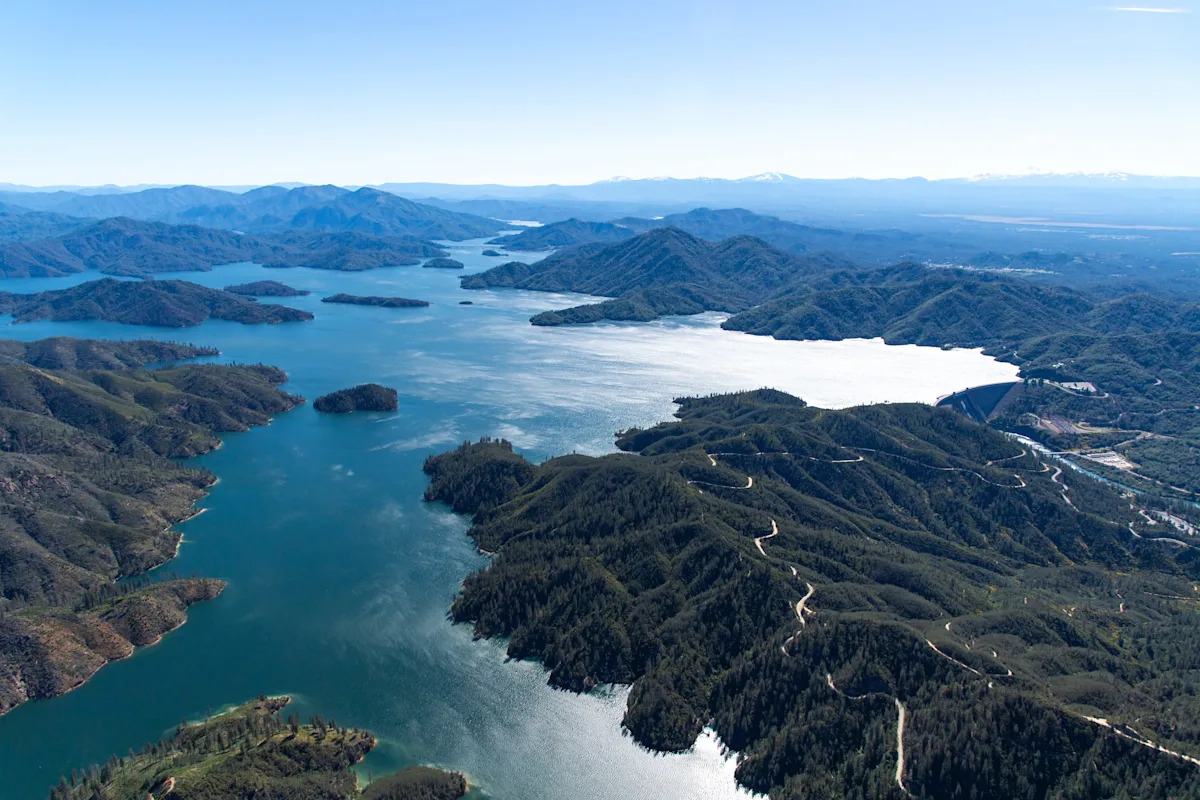
Lake Shasta waters lapped higher after a series of atmospheric rivers dumped up to a foot of rain in the region.
Not counting runoff, storms added 7-12 inches of rain to all areas of the lake between Dec. 19 — when the series of wet winter storms started — and the afternoon of Christmas Eve, said meteorologist Katrina Hand with the National Weather Service in Sacramento. That’s what you’d see if you put out a rain meter on Dec. 20, she said.
Rainwater drained off the land into the lake, too, raising its water level 8.74 feet in four days, according to the California Department of Water Resources: From just over 994 feet on Dec. 19 to nearly 1,003 feet on Tuesday, Dec. 23.
Forecasters predicted another 3-4 inches between Christmas Eve and Friday, Dec. 26, Hand said, so the water will keep coming into Lake Shasta.
There’s still plenty of room in the state’s largest reservoir, according to the California Water Resources Department data. Lake Shasta was 64% full on Tuesday — 5% more full than it was before the storms started rolling over Shasta County. Lake Shasta waters would have to climb to 1,061 feet to reach the top.
But the lake is more full than it usually is in December, on average the wettest month in Redding, according to the weather service. Water data showed the reservoir was 11% more full than it usually is on Dec. 23.
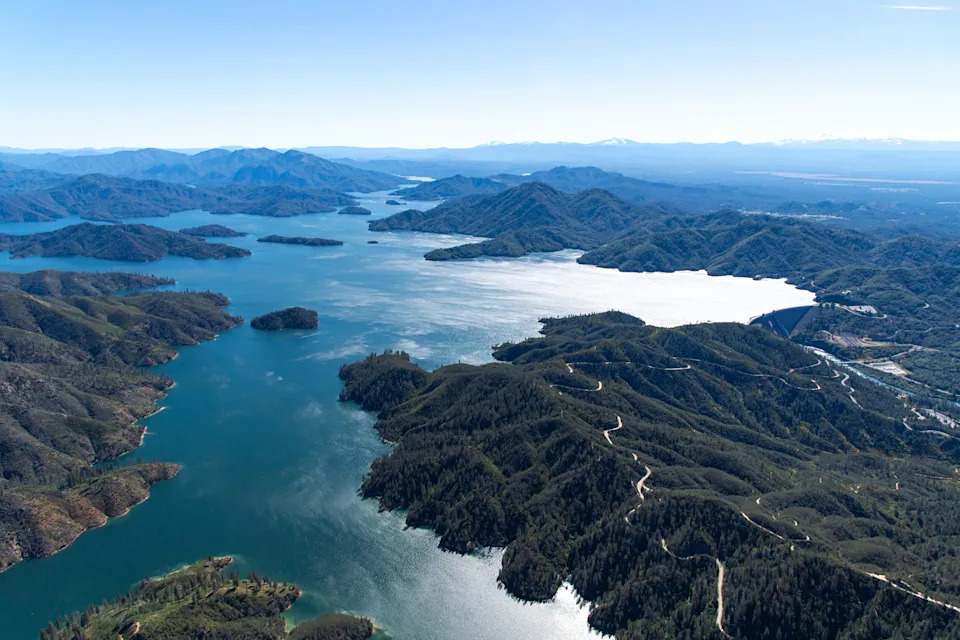
An aerial view of Lake Shasta and the dam in Shasta County, California on May 9, 2024. On this date, the reservoir storage was 4,380,600 acre-feet (AF), 96 percent of the total capacity. Operated by the U.S. Department of the Interior Bureau of Reclamation, Shasta Dam backs up water from the Sacramento River for more than 35 miles to form the lake and controls flood waters, while supplying water for irrigation, municipal and industrial use, wildlife habitat maintenance and power generation.
How much water is in Trinity Lake reservoir?
A slower filling water body, Trinity Lake was 77% full on Tuesday.
That’s 130% of its historical average on Dec. 23, according to water department data.
On Dec. 19, Trinity was 74%, 126% of usual on that date.
Note to readers: If you appreciate the work we do here at the Redding Record Searchlight, please consider subscribing yourself or giving the gift of a subscription to someone you know.
How full are other Northern California reservoirs?
Here’s how full some other Northern California state reservoirs were as of midnight Tuesday, Dec. 23 compared to Dec. 19.
Lake Oroville: 59% full, 111% of its historic average — up from 51% full, 97% of average
Folsom Lake: 50% full, 124% of its historic average — up from 48% full, 118% of average
New Bullards Bar (Yuba County): 70% full, 114% of its historic average — up from 60% full, 100% of average
Lake Sonoma: 61% full, 112% of its historic average — up from 57% full, 106% of average
San Luis Reservoir (San Joaquin Valley): 65% full, 108% of its historic capacity — up from 62% full, 107% of average
Camanche Reservoir (southeast of Stockton): 78% full, 128% of its historic capacity — up from 74% full, 125% of average
New Melones Reservoir (east of Stockton) remained the same: 69% full, 126% of its historic capacity.
Jessica Skropanic is a features reporter for the Record Searchlight/USA Today Network. She covers science, arts, social issues and news stories. Follow her on Twitter @RS_JSkropanic and on Facebook. Join Jessica on Record Searchlight Facebook groups Get Out! Nor Cal , Today in Shasta County and Shaping Redding’s Future. To support and sustain this work, please subscribe today. Thank you.
This article originally appeared on Redding Record Searchlight: Lake Shasta, California reservoirs rising with new atmospheric rivers