
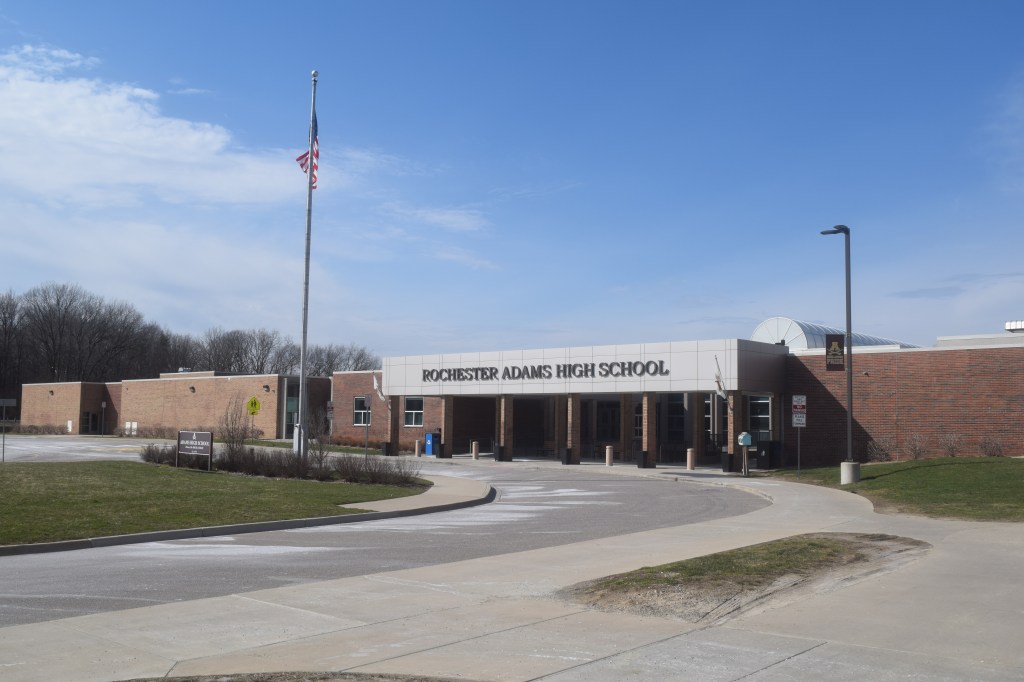
Having faced its first court challenge, new provisions in state grants for safety and mental health appear to be set.
In a year where school districts went through the fiscal guessing game of presenting budgets before the state Legislature approved a statewide budget and the unusual circumstance of the federal government shutdown, new language in the State School Aid budget may have the biggest impact.
The state set aside $321 million in grants for safety and mental health initiatives in the latest budget but districts who wanted the money had to agree to conditions that waived past privilege in mass-casualty events that protected information from disclosure and prosecution.
More than 30 districts and intermediate school districts sued the state education department and state school superintendent challenging the privilege language does not meet the requirements of the state Constitution and is unconstitutionally vague.
The case was heard by Judge Sima Patel in the Michigan Court of Claims and on Dec. 17 she ruled that the new privilege provisions will remain in place.
“Section 31aa is coercive, but it does not coerce the relinquishment of a constitutional right in exchange for essential public funding,” Patel said in her ruling.
But she did go on to clarify that the “privilege waiver will be triggered only during a comprehensive investigation following a mass casualty event” and that “Section 31aa applies only to the school district, and not to individuals.”
According to Adam Blaylock, an attorney at the Miller Johnson law firm, who has been consulting with districts around the state, an appeal has been filed with the state Court of Appeals.
“They requested immediate consideration and an expedited appeal. The motion was granted in part and so the Court of Appeals is going to hear this on an expedited basis,” said Blaylock.
Patel also ruled that there would be no extension in the Dec. 30 deadline for school districts to opt-out of funding.
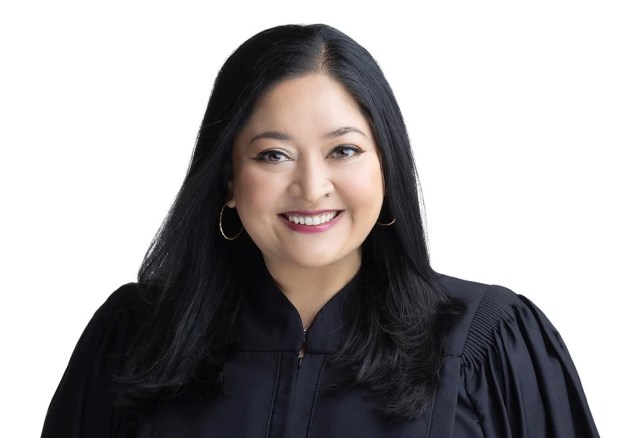 Judge Sima Patel handed down her ruling on Dec. 17 upholding the new language in the School State Aid Act.
file photo
Toni Harris, representing the state education department, said the court’s decision and possible appeals afterward could be an issue in distributing funds for the current school year.
“The effect of this request for some indeterminate date 30 days from the last date on an appeal could have and likely will have unintended consequences,” she said. “This could go on for months. This could extend into the next fiscal year and that would create issues.”
Blaylock said the $321 million in grants will be distributed on time.
“The statute requires disbursement of the funds by Dec. 31, 2025, so my assumption is that the education department is going to cut the checks and disperse those funds consistent with the statutory timeline,” said Blaylock. “That will be one of the things that the court will have to grapple with if they make a decision that is going to modify the statute in the future.”
Over the past six weeks, all districts in Oakland County voted to accept the grant funding, which Huron Valley Superintendent Paul Salah estimated to be $140 per student enrolled in each district. None have announced plans to change their votes based on the recent court ruling.
The grants can be significant. For example, Rochester schools voted to accept an estimated $2.1 million, while estmates for Farmington is $1.2 million and Lake Orion about $1 million.
According to the publication Bridge Michigan, about 982 or 82% of the state’s schools and districts, excluding nonpublic schools, or 82%, have opted in and agreed to the conditions. One district, Midland schools, says it will not be applying for grant funds based on the ruling.
“These requirements contain ambiguous language that isn’t clearly defined, promote a shift away from prevention-focused funding, potentially expose our districts to legal risk, and remove local control over how school safety decisions are made,” the district said on its website. “We are concerned that accepting Section 31aa funds as currently offered could have detrimental effects on our ability to provide a safe, supportive, and secure environment for our students and staff. Midland Public Schools have all decided not to apply for Section 31aa funds this year as they are currently offered.”
Blaylock said he knows of another district that is seeking to opt-out, but did not disclose which one.
The restrictions are seen as a reaction to the deadly shooting in November 2021 at Oxford High School. An independent report released in 2023 found that only 51 of 143 employees agreed to be interviewed by investigators citing attorney-client privilege.
The school aid provisions come after several bills were signed in January 2025 addressing school safety including redefined terminology for school emergency response procedures and the creation of a school safety and mental health commission within the Michigan State Police.
Several area superintendents have voiced their displeasure with new requirements and how they have been presented.
“The fact that there are lawyers and school districts around the entire state that also can’t make sense of the language tells me that the statute isn’t written appropriately,” said Rochester Superintendent Nicholas Russo.
“Oakland Schools fully supports the State of Michigan’s intent to strengthen transparency and accountability in the aftermath of school tragedies that deeply affect communities,” the Oakland ISD said in a statement. “However, Section 31aa, as currently written, is overly vague and appears to require districts to waive constitutionally protected privileges, raising significant legal and ethical concerns on behalf of our schools, our teachers and our students.”
“From my perspective as a local superintendent, we are deeply concerned,” said Salah. “We feel the language is unethical and it is unfortunately using school safety and mental health as a bargaining chip. It is completely unacceptable.”
Salah declined comment on the Court of Claims decision while the case is being appealed.
“This funding is all about creating a safer environment, but it doesn’t seem to create a safer environment if people are not willing to speak to a state appointed investigator due to a lack of protection that we as a board could provide them if we don’t opt-in to this money,” Lake Orion school board Treasurer Jake Singer said at a Nov. 10 meeting.